FT·SCH·005Major School
Gelug
དགེ་ལུགས
Wyliedge lugsDatefounded 1409
Largest school of Tibetan Buddhism, founded by Tsongkhapa in the early fifteenth century, emphasising monastic discipline, philosophical study and the graded path.
Also known asGelugpa · Geluk · Gandenpa · New Kadam · Yellow Hat School
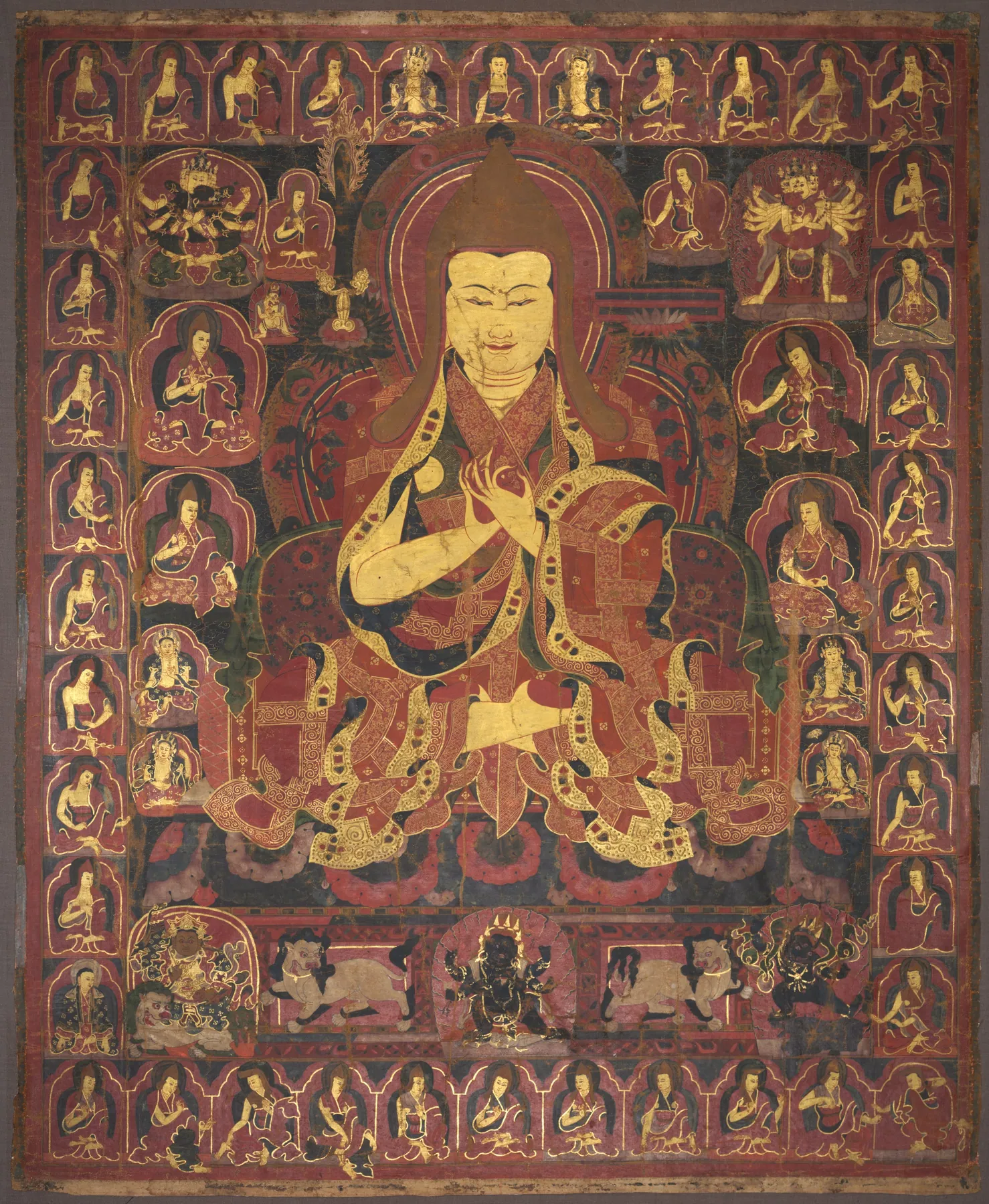
The Gelug, ‘the virtuous tradition’, arose from the teaching of Tsongkhapa (1357–1419). Its founding is dated to 1409, when he established Ganden monastery east of Lhasa; the school was first called Gandenpa, and also ‘New Kadam’, since Tsongkhapa saw his work as a renewal of Atisha’s tradition. His students founded Drepung in 1416 and Sera in 1419, the other two of the ‘three seats’ near Lhasa, and Tashilhunpo at Shigatse in 1447. With Mongol support the school came to political power in 1642 under the Fifth Dalai Lama and governed Tibet until 1959.
Gelug training joins three elements. The first is strict observance of the monastic code. The second is prolonged study of five subjects through memorisation and formal debate: logic and epistemology, the Perfection of Wisdom, Madhyamaka, Abhidharma and monastic discipline, leading after some twenty years to the degree of geshe. In philosophy the school follows the Prasangika Madhyamaka of Chandrakirti as explained by Tsongkhapa, for whom emptiness means the absence of intrinsic existence and leaves conventional cause and effect intact. The third is the lamrim, the graded path set out in Tsongkhapa’s Great Treatise. Tantra is entered only on this basis, chiefly through the Guhyasamaja, Chakrasamvara, Yamantaka and Kalachakra systems.
The head of the school is the Ganden Tripa, ‘holder of the Ganden throne’, an office filled by seniority and scholarship for a seven-year term; it is not held by the Dalai Lama, who is the school’s most prominent teacher. The Dalai Lamas and Panchen Lamas are its best-known incarnation lines. The Gelug became dominant in central Tibet, Amdo and Mongolia, and among the Kalmyks and Buryats of Russia. After 1959 the three seats and the Gyuto and Gyume tantric colleges were re-established in India, the three seats in Karnataka, where they house several thousand monks.
In the collection
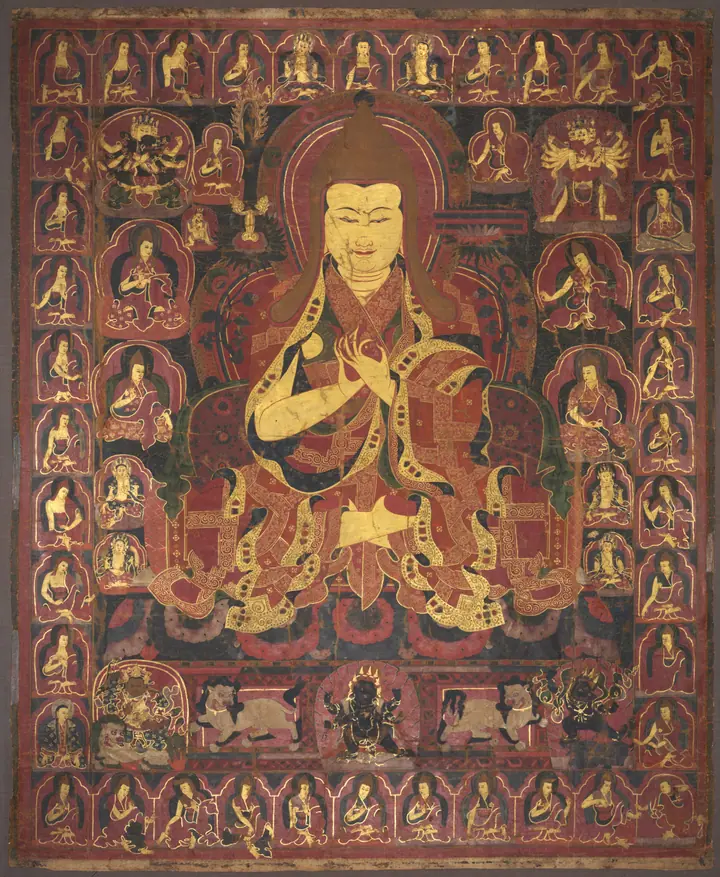
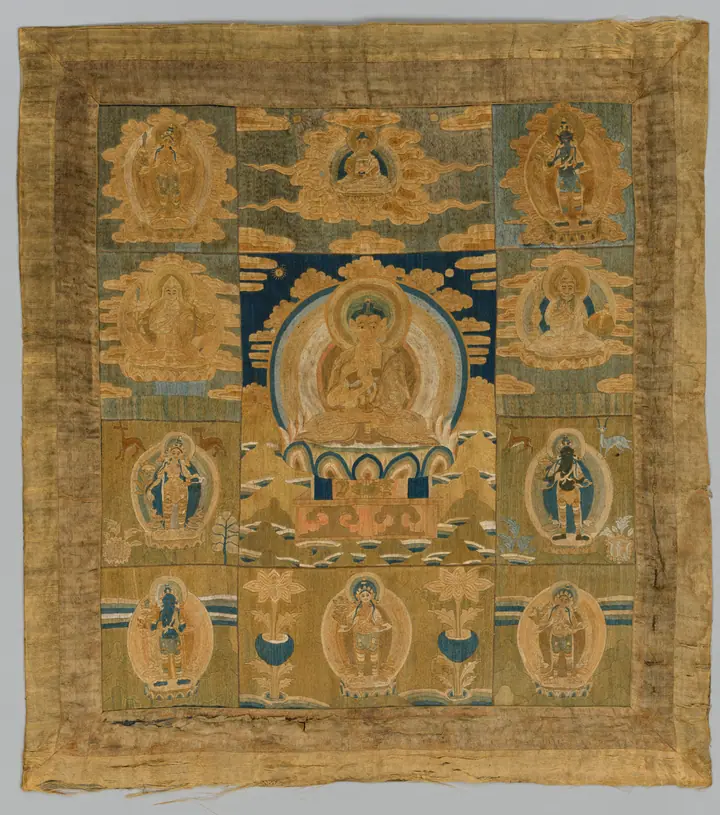
2 works in the collection relate to Gelug.
Connections
57 linked records across the archive.
The Chronicle10
Sources
References consulted for this record.
- 01Gelug — Wikipedia
- 02Gelug — Rigpa Shedra Wiki
- 03Ganden Tripa — Wikipedia
- 04Georges B. J. Dreyfus, The Sound of Two Hands Clapping: The Education of a Tibetan Buddhist Monk (University of California Press, 2003)