FT·DEI·035Meditational Deity (Yidam)
Guhyasamaja
གསང་བ་འདུས་པ
Wyliegsang ba 'dus paSanskritGuhyasamāja
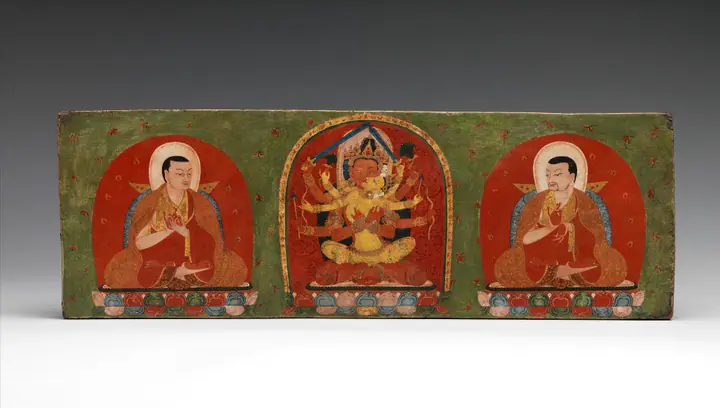
The ‘Secret Assembly’, a blue three-faced, six-armed seated deity embracing his consort, lord of a thirty-two-deity mandala and principal Father tantra of the Gelug school.
Also known asGuhyasamāja · Sangwa Dupa · Sangdu · Akshobhyavajra · Guhyasamaja Akshobhyavajra · Manjuvajra
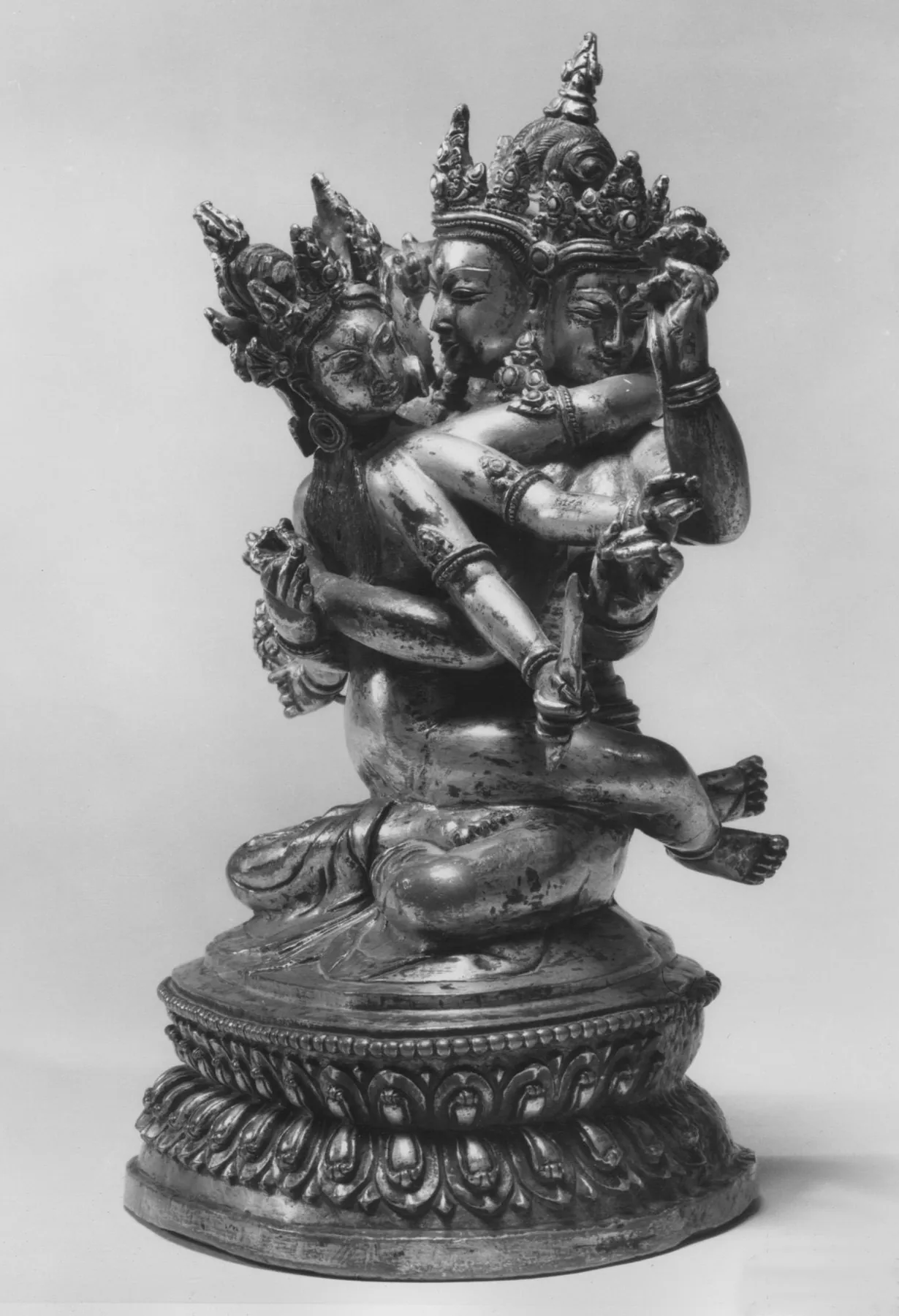
Guhyasamaja, ‘Secret Assembly’, is the deity of the Guhyasamaja Tantra, one of the earliest of the Highest Yoga tantras, generally dated to about the eighth century. Tibetan scholars call it the king of tantras and class it as a Father, or Method, tantra, concerned above all with the illusory body, a subtle form attained through yoga. Two Indian schools of interpretation are followed: the Arya tradition attributed to Nagarjuna and his circle, and the tradition of Jnanapada.
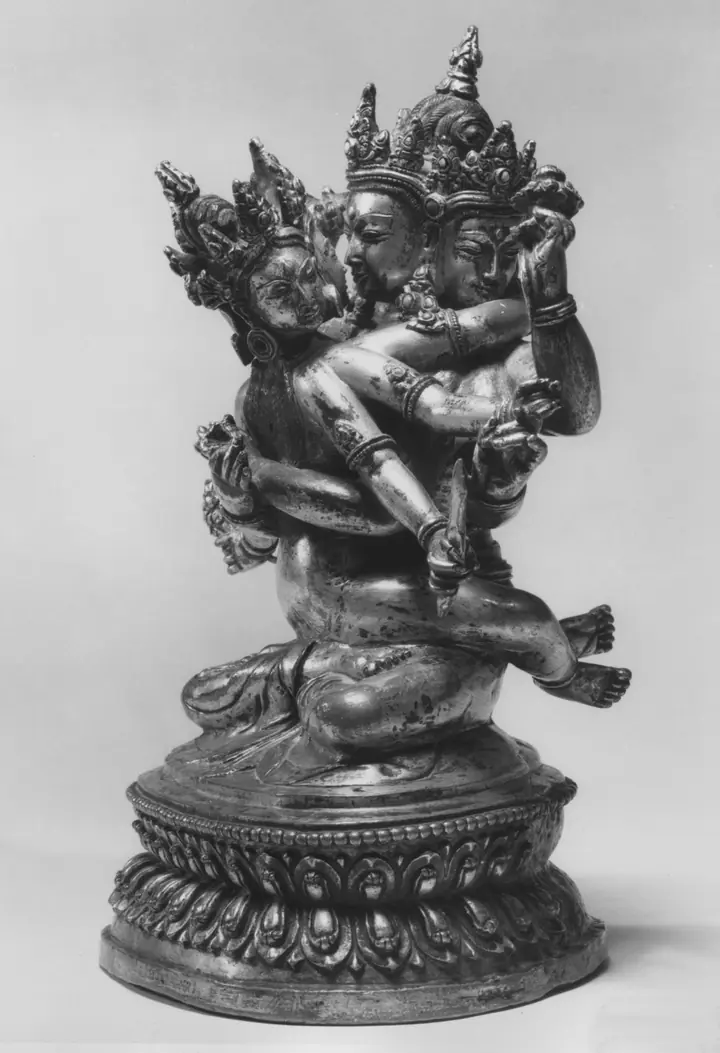
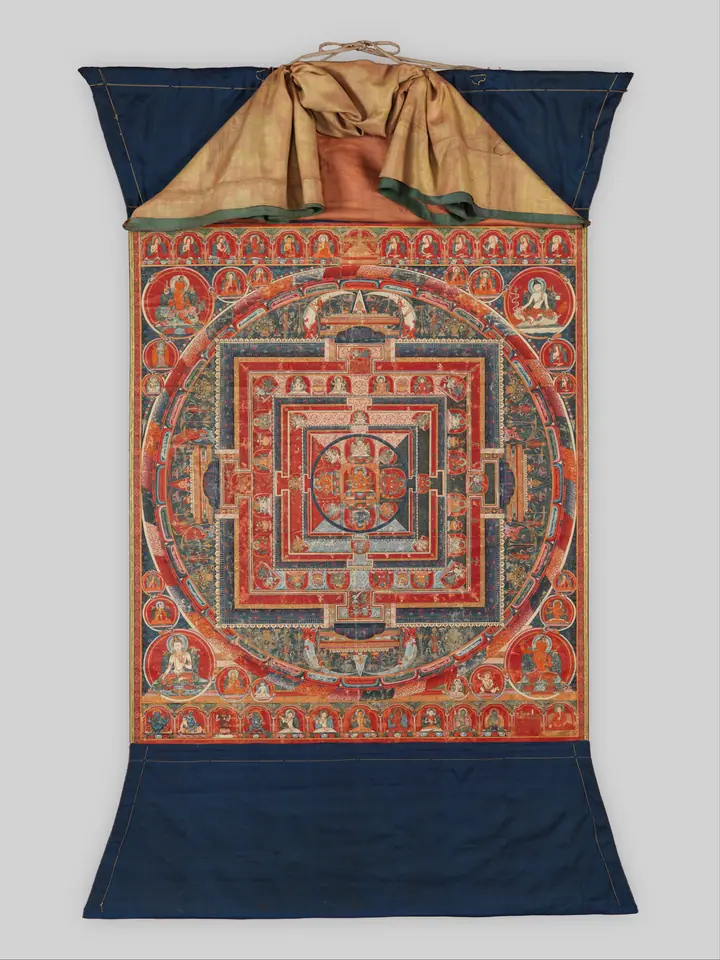
In the Arya tradition the central deity is Akshobhyavajra, who is dark blue, with three faces, blue at the centre, white to the right and red to the left, and six arms. The first pair crosses a vajra and bell while embracing the consort Sparshavajra, who is light blue and likewise three-faced and six-armed. His other right hands hold a wheel and a lotus, the left a jewel and a sword, so that the emblems of all five buddha families are gathered in one figure. He sits in vajra posture, crowned and jewelled, with an expression at once peaceful and stern. Thirty other deities fill the mandala.
The Jnanapada tradition centres on Manjuvajra, an orange form with the same number of faces and arms and a mandala of nineteen deities; a red form identified with Avalokiteshvara also exists. Marpa and the translator Go Khukpa Lhetse brought the Arya system to Tibet in the eleventh century. Tsongkhapa wrote extensively on Guhyasamaja, and the two tantric colleges of Lhasa, Gyume and Gyuto, were founded in the fifteenth century to preserve its ritual. With Chakrasamvara and Vajrabhairava it forms the central triad of Gelug tantric practice.
In the collection
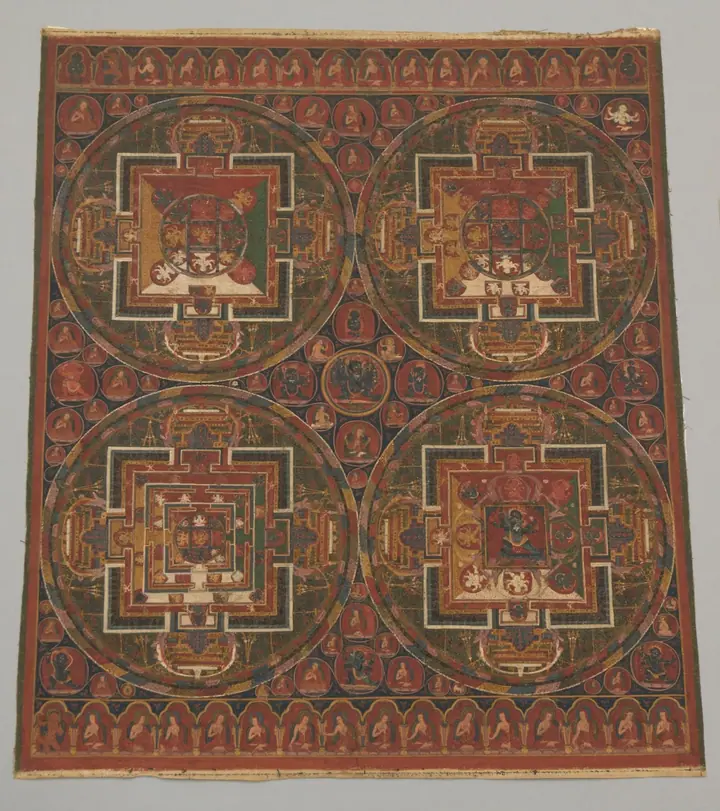
4 works in the collection depict or name Guhyasamaja.
Connections
9 linked records across the archive.
Sources
References consulted for this record.