FT·PLA·001City & Region
Lhasa
ལྷ་ས
Wylielha saDatecapital from the 7th century
Historic capital of Tibet on the Kyichu river, home of the Jokhang and the Potala and the destination of pilgrims from across the Tibetan world.
Also known asLasa · Rasa · Lhasa City · Chengguan
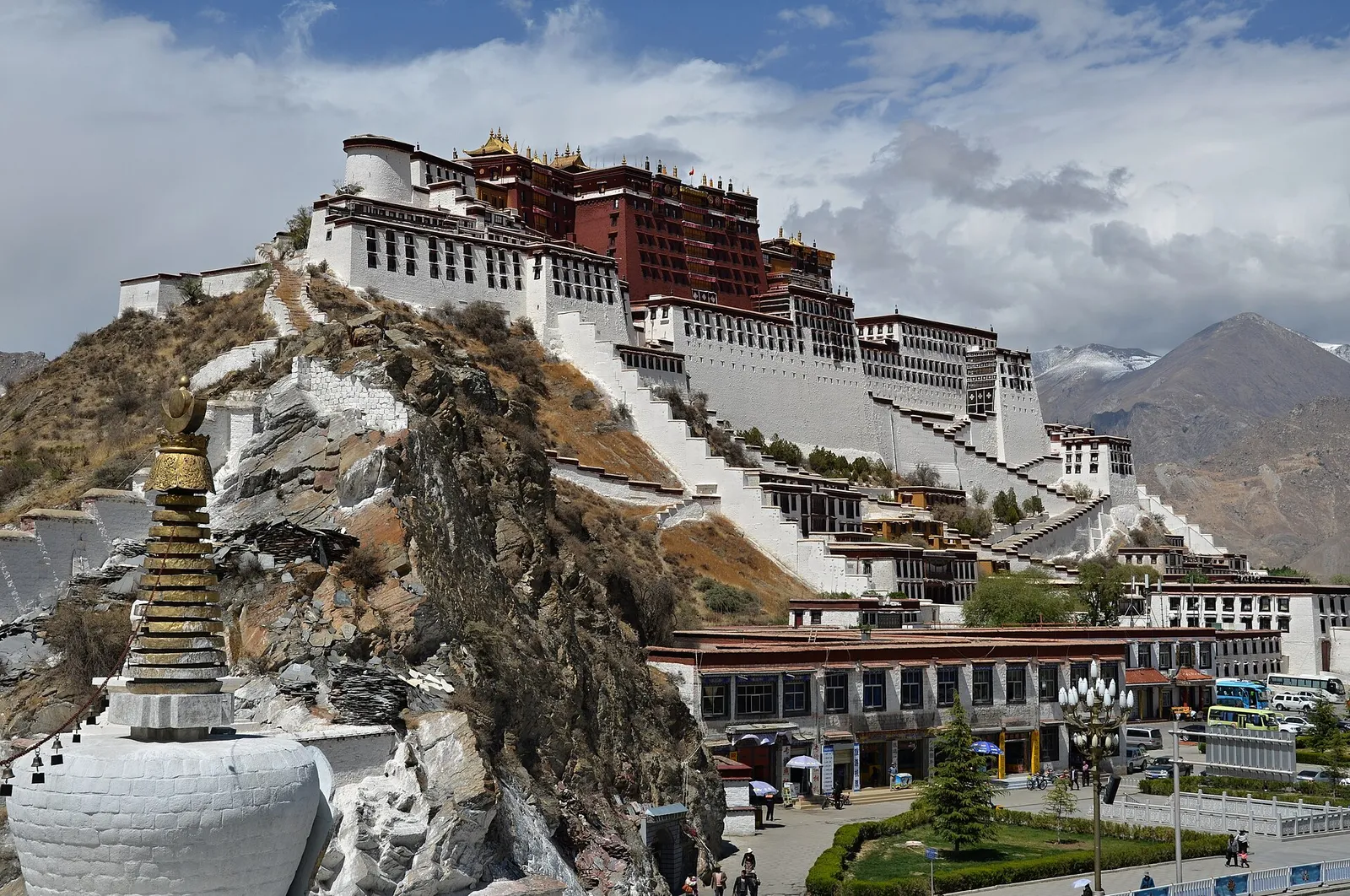
Lhasa, whose name means ‘place of the gods’, is the historic capital of Tibet and the centre of its religious life. It lies at about 3,650 metres in the valley of the Kyichu, a northern tributary of the Yarlung Tsangpo. According to the Tibetan histories, the emperor Songtsen Gampo moved his court here from the Yarlung valley in the 7th century and built the first temples. Early sources call the settlement Rasa. The city regained its role as capital in 1642, when the Fifth Dalai Lama established the Ganden Phodrang government.
The old city grew around the Jokhang temple, ringed by the Barkhor market street and, further out, by the Lingkhor, a pilgrim circuit of about eight kilometres that once enclosed the whole town. To the west the Potala Palace rises on Marpo Ri, the Red Hill, facing the medical hill of Chakpori. Beyond lie the Norbulingka summer palace and, on the valley edges, the great Gelug monasteries of Drepung and Sera. Until the 1950s Lhasa was a small city of perhaps thirty thousand residents, swollen each new year by monks attending the Great Prayer Festival.
Lhasa was the scene of the uprising of March 1959, after which the Fourteenth Dalai Lama left for India. Many religious buildings were damaged or closed during the Cultural Revolution (1966–76), and much of the old town has since been rebuilt. Today Lhasa is the capital of the Tibet Autonomous Region of China, a city of several hundred thousand people linked to the rest of the country by a railway opened in 2006. The Potala, Jokhang and Norbulingka together form a UNESCO World Heritage property, and pilgrims still walk and prostrate around the Barkhor daily.
Connections
59 linked records across the archive.
The Chronicle20
Sources
References consulted for this record.
- 01Lhasa — Wikipedia
- 02Historic Ensemble of the Potala Palace, Lhasa — UNESCO World Heritage Centre
- 03Knud Larsen and Amund Sinding-Larsen, The Lhasa Atlas: Traditional Tibetan Architecture and Townscape (Serindia, 2001)