FT·SCI·002Calendar & Astronomy
Losar
ལོ་གསར
Wylielo gsar
Losar is the Tibetan New Year, falling on the first day of the first lunar month in February or March and celebrated for up to fifteen days.
Also known asTibetan New Year · Lo gsar · Gyalpo Losar · Losar festival
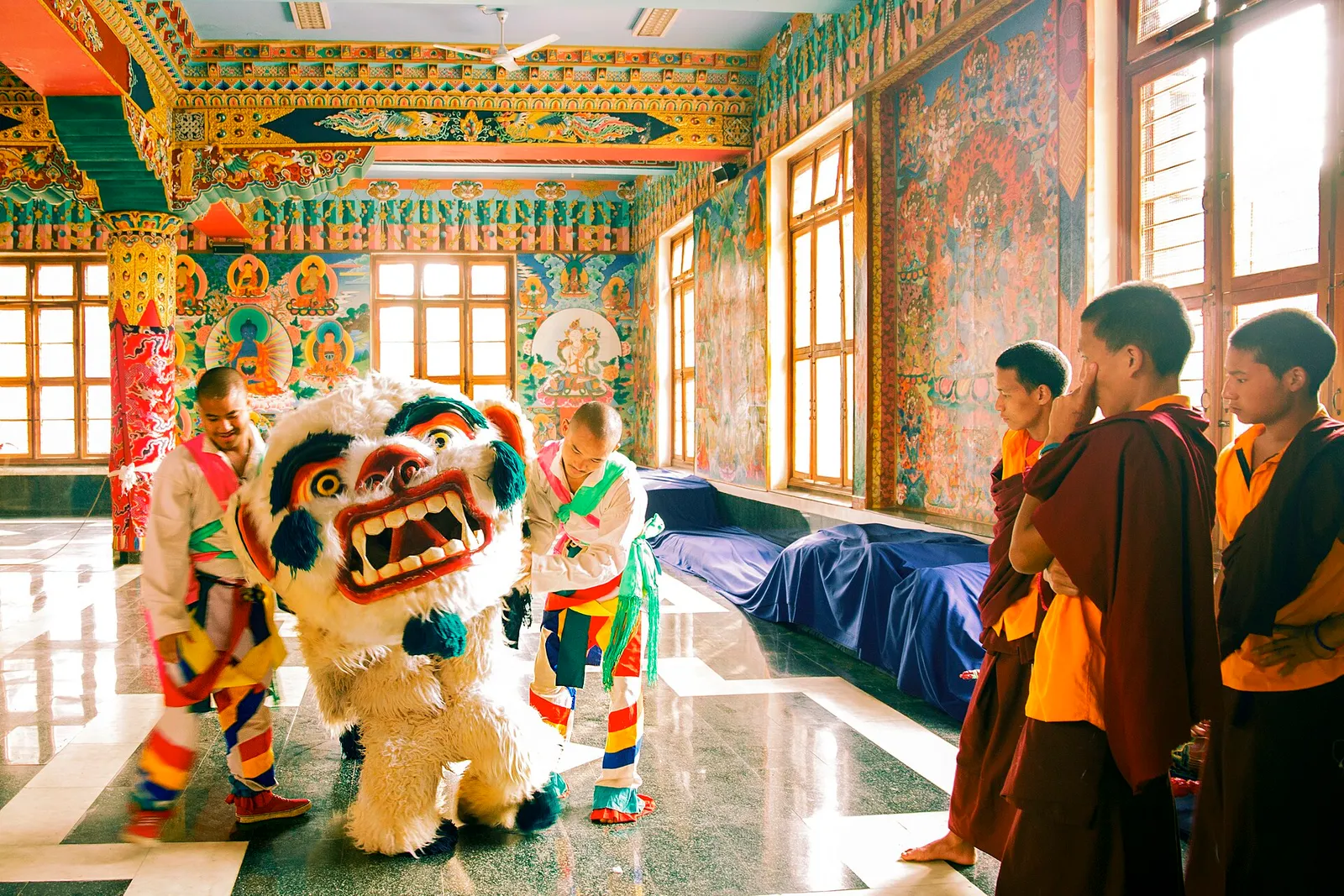
Losar, literally ‘new year’, is the principal festival of the Tibetan calendar. It falls on the first day of the first lunisolar month, which lands in February or March, and is celebrated for fifteen days, with the first three the most important. The date is fixed by astronomical calculation and is often, though not always, the same as or close to the Chinese and Mongolian new years, since all three calendars share a common ancestry.
Preparations begin in the last days of the old year. Houses are cleaned and debts settled. On the twenty-ninth day of the twelfth month families eat guthuk, a soup with dumplings containing tokens that tease each person about the year ahead, and monasteries perform rites to cast out the old year’s misfortunes. On new year’s morning offerings are set out, including fried pastries called khapse and a decorated box of roasted barley flour and grain, and families visit temples and one another.
Tibetan tradition traces the festival to pre-Buddhist times, and it later acquired Buddhist layers, including the Great Prayer Festival founded in Lhasa by Tsongkhapa in 1409, which follows the new year. Regional new years are kept at other times, such as that of Kongpo in the tenth month. Losar is celebrated in Tibet, Bhutan, Ladakh, Sikkim, Nepal and Tibetan communities worldwide. In 2026 it fell on 18 February, opening the male Fire Horse year.
Connections
20 linked records across the archive.
Sources
References consulted for this record.
- 01Losar — Wikipedia
- 02Tibetan calendar — Wikipedia
- 03Philippe Cornu, Tibetan Astrology (Shambhala, 1997)