FT·PLA·060Stupa & Pilgrimage Site
Boudhanath
བྱ་རུང་ཁ་ཤོར
Wyliebya rung kha shorDatepresent form c. 14th century
Great stupa on the old Tibet road east of Kathmandu, one of the largest in the world and the centre of Tibetan Buddhist life in Nepal.
Also known asBoudha Stupa · Bodhnath · Jarung Khashor · Khasti Chaitya · Bauddha
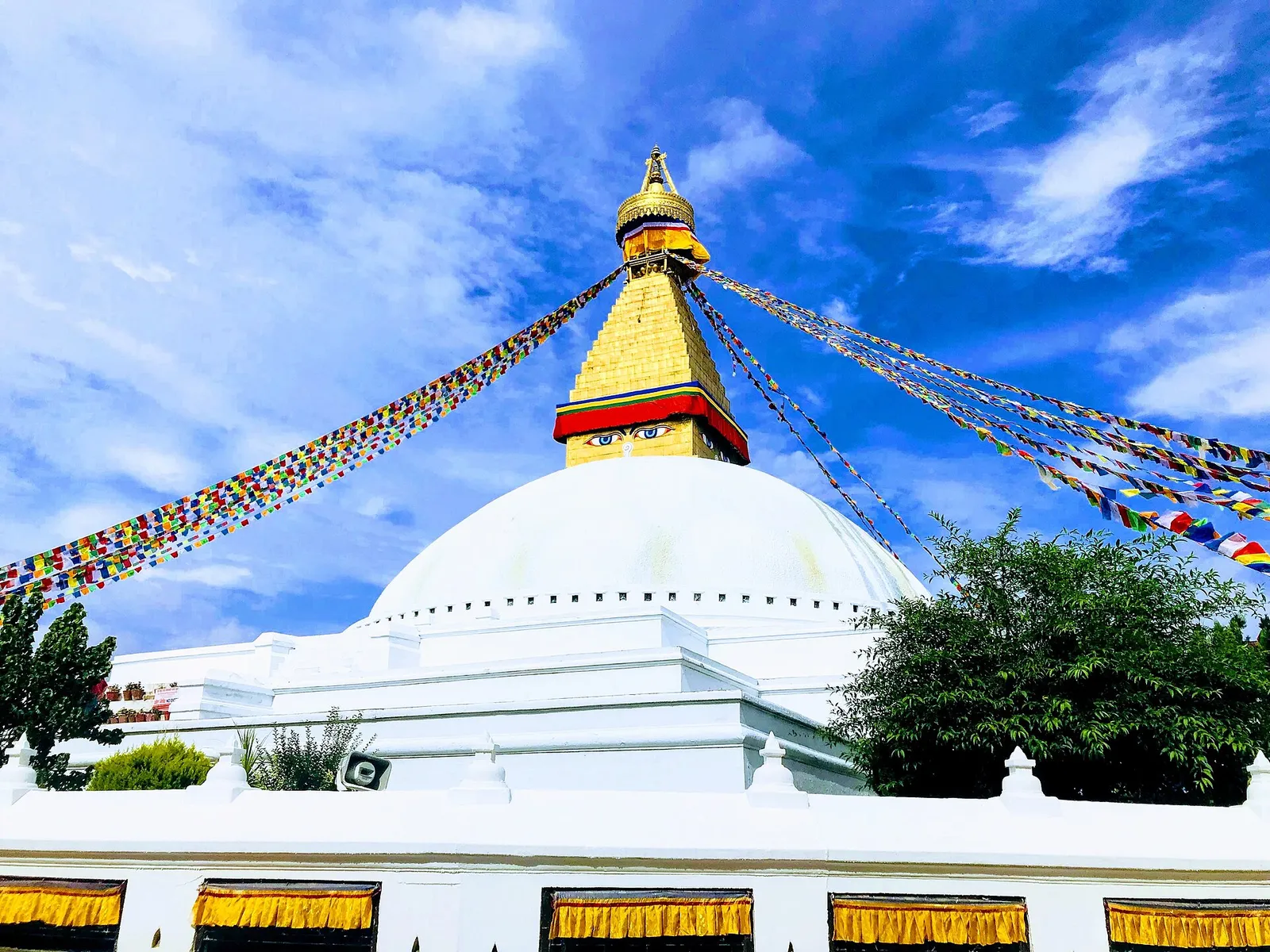
The stupa of Boudha stands on the ancient trade route between Lhasa and the Kathmandu valley and has for centuries been the chief Tibetan sanctuary in Nepal. Newar chronicles attribute its foundation to Licchavi kings of about the 5th or 6th century; the structure seen today probably dates from around the 14th century. Tibetans call it Jarung Khashor. A text revealed as treasure tells how a poultry-keeper and her four sons built it, and how the sons’ prayers led to their rebirth as King Trisong Detsen, Shantarakshita, Padmasambhava and a royal minister, who together established Buddhism in Tibet.
The monument is a vast whitewashed dome set on three stepped terraces in the form of a mandala, about a hundred metres across and thirty-six metres high. Above the dome a gilded cube bears the eyes of the Buddha on each side, and a pyramid of thirteen steps rises to a parasol and pinnacle. Strings of prayer flags run from the top to the perimeter. A ring wall with niches for prayer wheels encloses the base, and around it a circular street of tall houses and monasteries forms the path on which pilgrims circumambulate from before dawn until night.
After 1959 thousands of Tibetan refugees settled around the stupa, and the surrounding village grew into a town of more than fifty monasteries representing every Tibetan school and Bon, together with carpet workshops and schools. It is part of the Kathmandu Valley World Heritage Site, inscribed in 1979. The earthquake of April 2015 cracked the spire, which was dismantled and rebuilt with community funds; the stupa was reconsecrated in November 2016. Its busiest festival is Losar, the Tibetan new year, and it remains a place of daily practice for Tibetans, Sherpas, Tamangs and Newars.
Connections
14 linked records across the archive.
Sources
References consulted for this record.
- 01Kathmandu Valley — UNESCO World Heritage Centre
- 02Boudha Stupa — Wikipedia
- 03Keith Dowman (trans.), The Legend of the Great Stupa and the Life Story of the Lotus Born Guru (Dharma Publishing, 1973)