FT·SYM·057Architecture & Landscape
Stupa
མཆོད་རྟེན
Wyliemchod rtenSanskritStūpa
A reliquary monument of stacked geometric forms that represents the awakened mind of the Buddha and is honoured by walking around it clockwise.
Also known asChorten · Chörten · Chaitya · Reliquary Mound
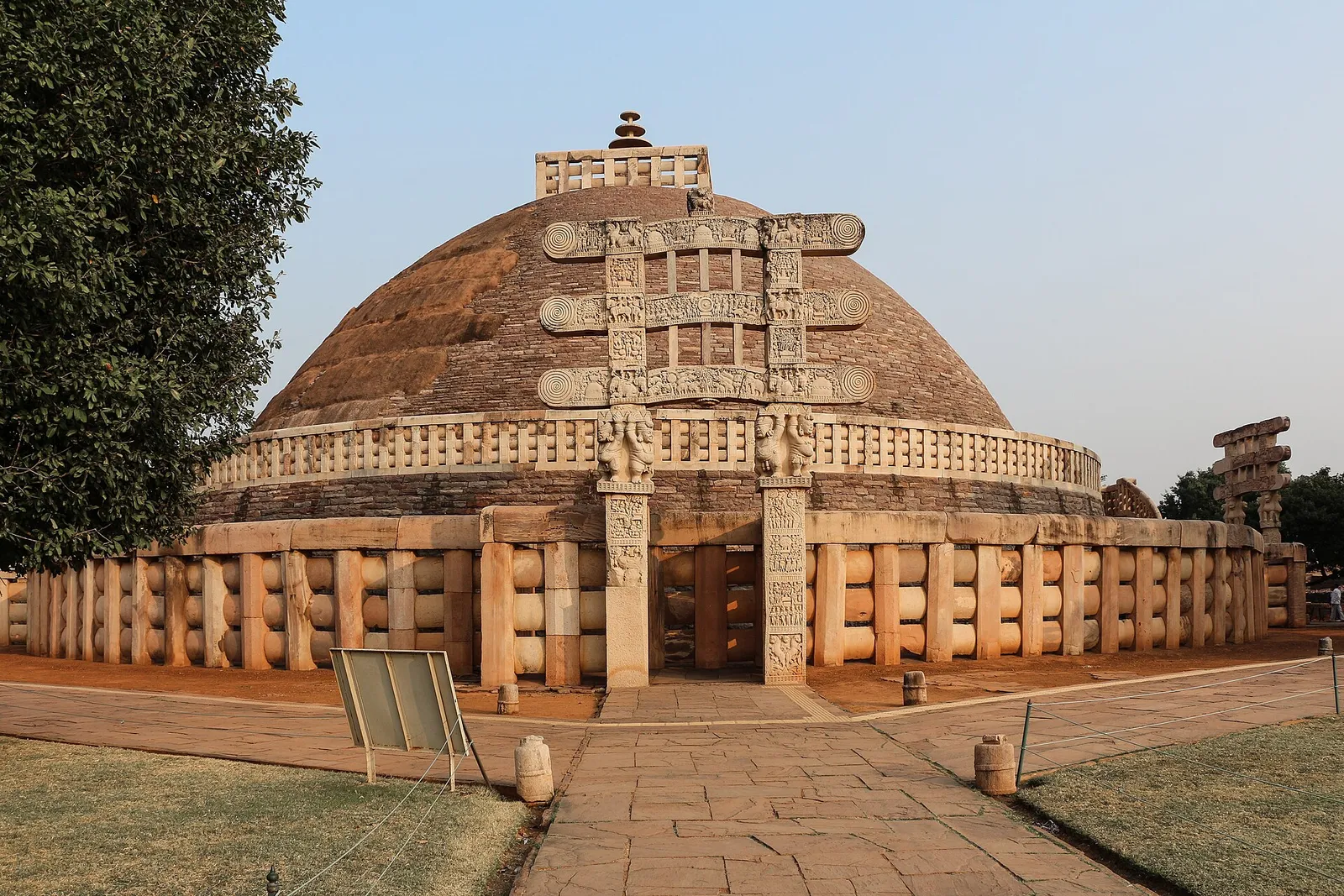
The stupa is the oldest Buddhist monument. It began as a burial mound raised over the cremated remains of the Buddha and his disciples and became the focus of devotion at early Indian sites. The Tibetan name chorten means support for offerings. In the scheme of the three supports, images stand for the Buddha’s body, scriptures for his speech and stupas for his mind. Building, repairing or circling a stupa is held to generate great merit, and stupas are raised to commemorate teachers, to hold relics, to protect a place and to mark gateways and passes.
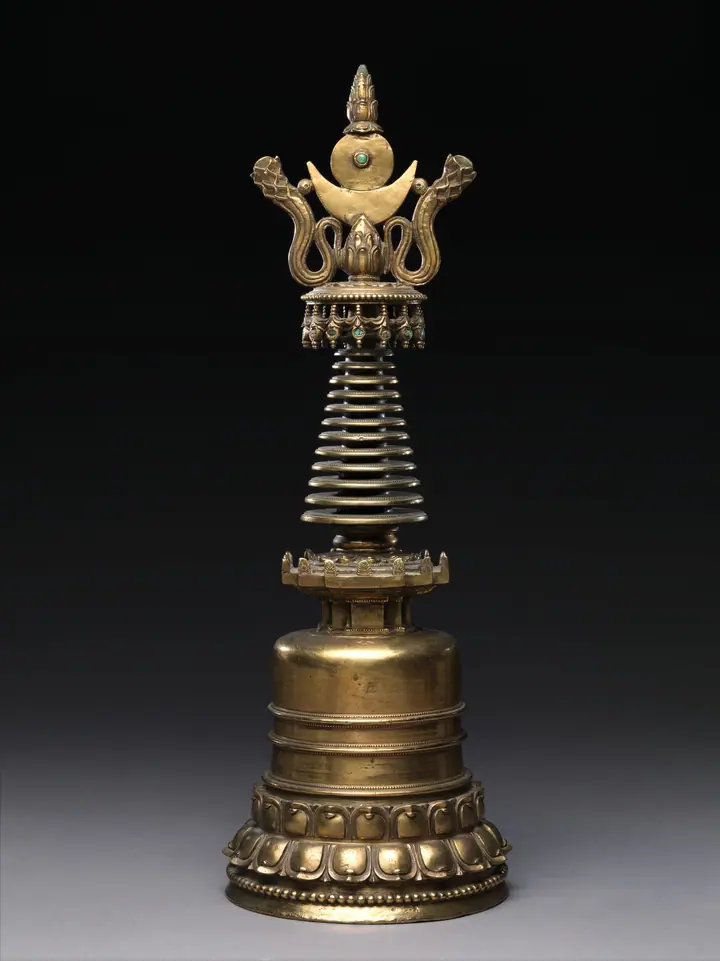
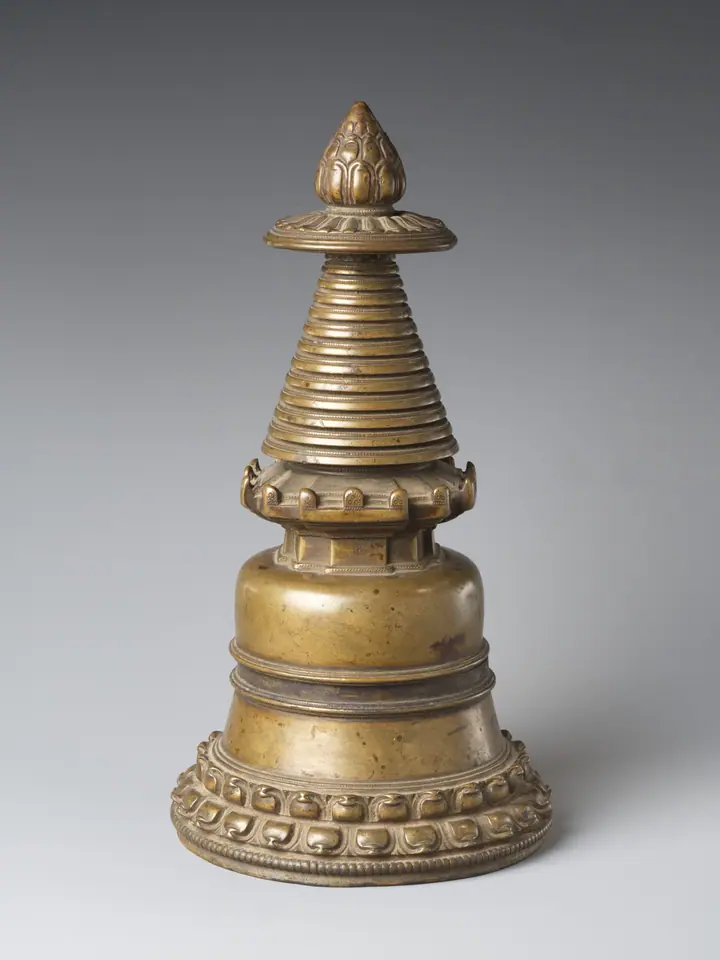
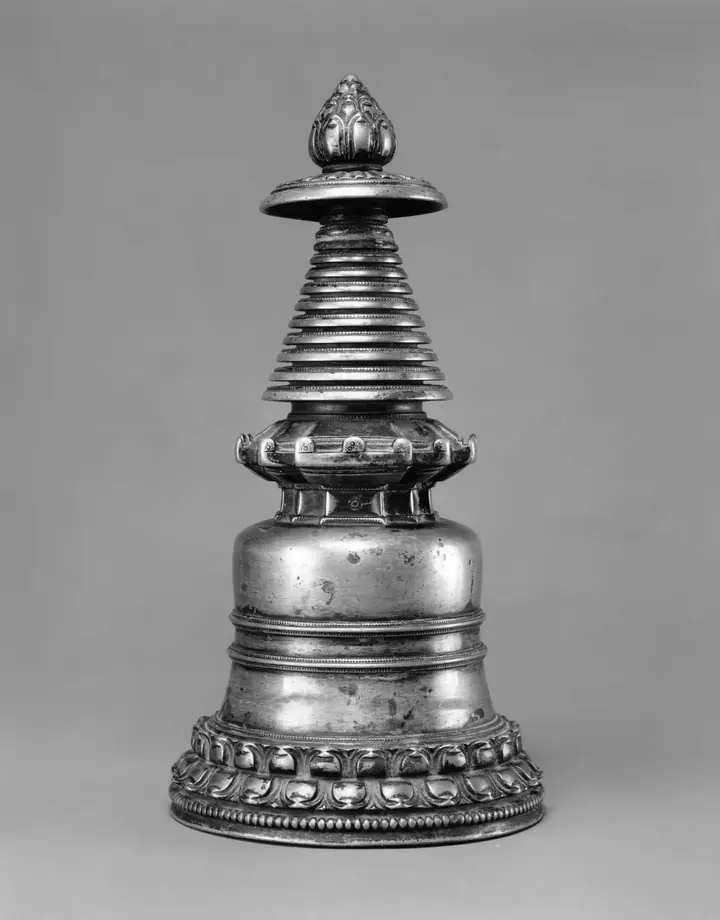
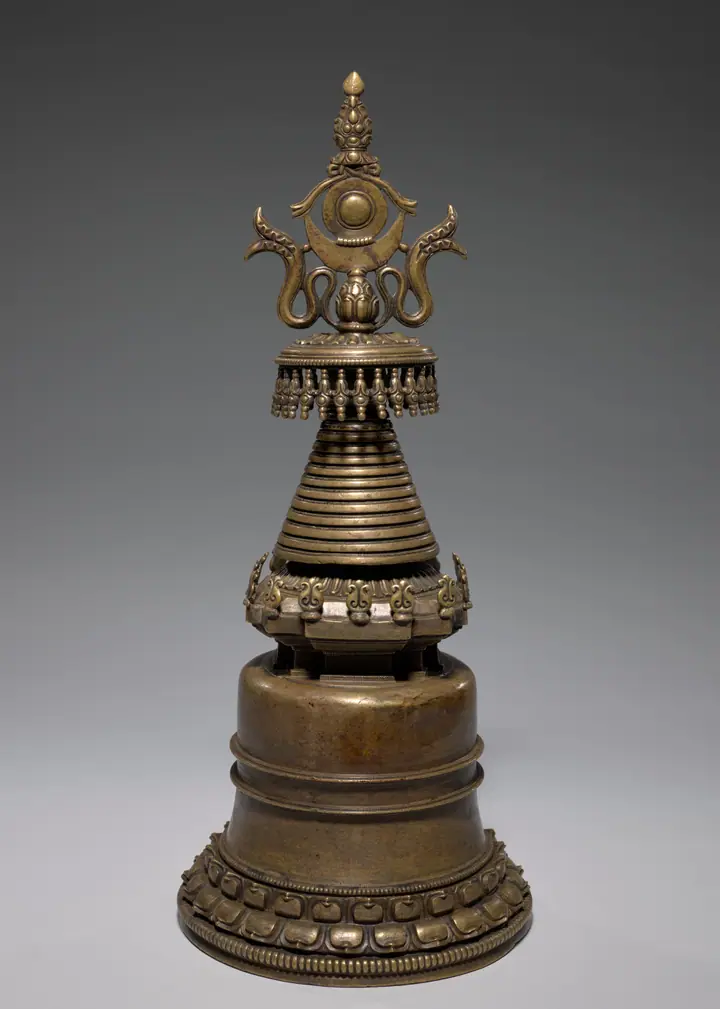
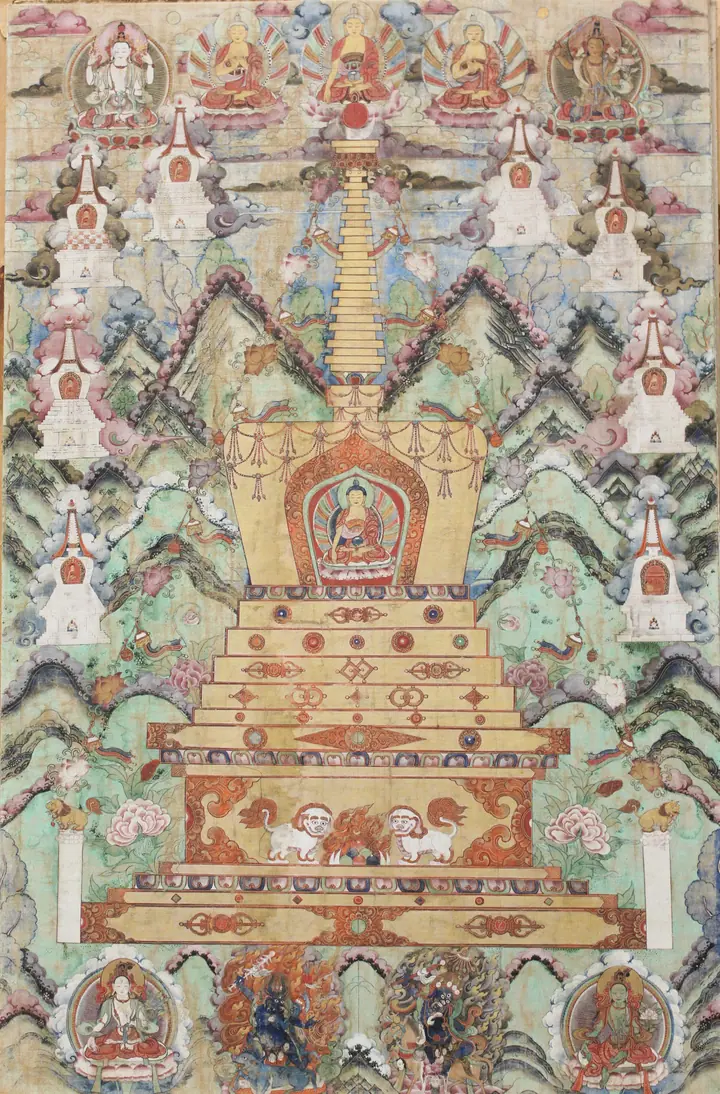
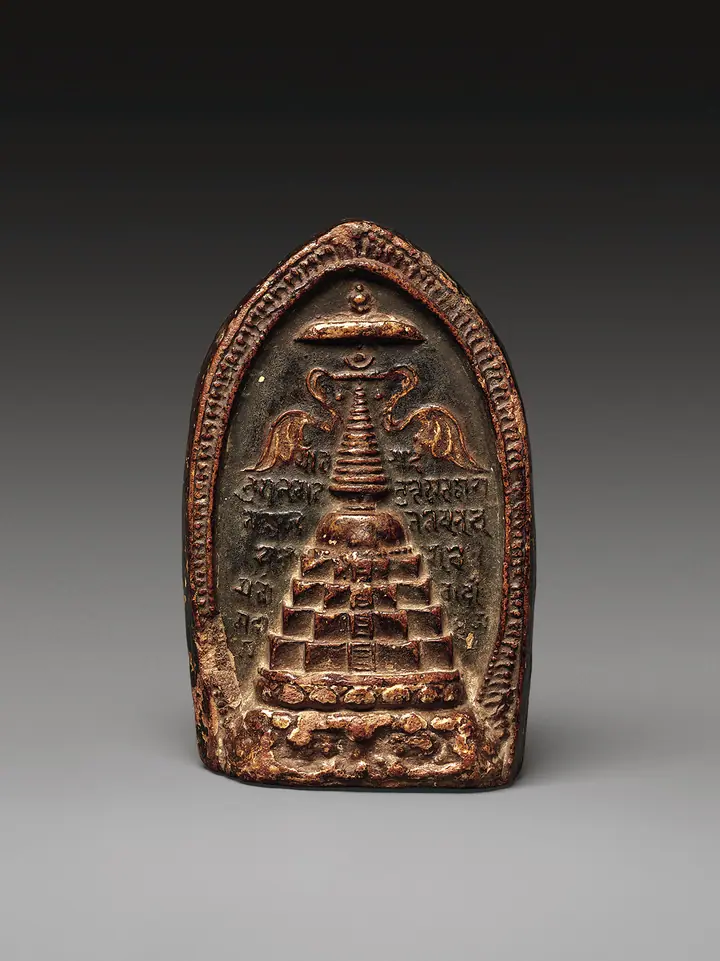
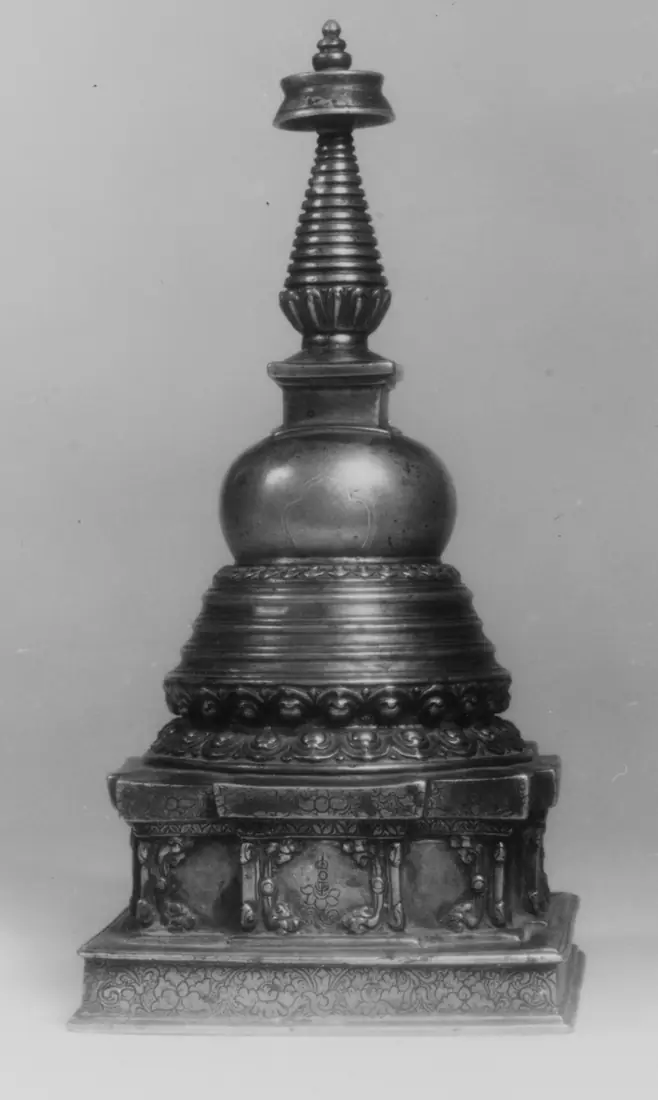
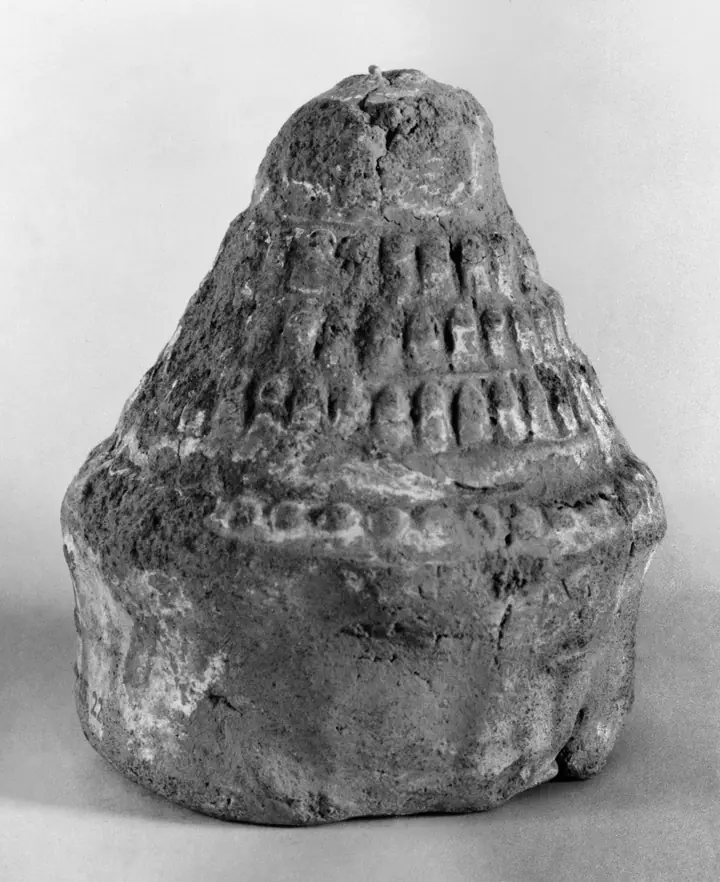
A Tibetan stupa is read from the ground up. A square stepped base, often carried on a lion throne, supports a rounded dome called the vase, which contains the relic chamber. Above it a small square block carries a tall tapering spire of thirteen rings, then a parasol, a crescent moon, a sun disc and a flame-shaped jewel. The five main shapes are equated with earth, water, fire, air and space, and the thirteen rings with stages on the path to buddhahood. Inside are placed relics, scriptures, clay tsa-tsa images and a central wooden axis inscribed with mantras. Most are built of stone or brick, plastered and whitewashed.
Stupas range from hand-sized reliquaries of metal or crystal to monuments such as the Kumbum at Gyantse, completed in the fifteenth century, which contains dozens of chapels on several storeys, and the great stupa of Boudhanath in Nepal. Gilded tomb stupas in the Potala enclose the embalmed bodies of Dalai Lamas. Rows of eight stupas mark the events of the Buddha’s life. Pilgrims walk around a stupa clockwise, followers of Bön counter-clockwise, often turning prayer wheels set in its wall. Many destroyed in the twentieth century have been rebuilt, and new stupas are raised wherever Tibetan Buddhism spreads.
In the collection
8 works in the collection relate to Stupa.
Connections
30 linked records across the archive.
Sources
References consulted for this record.