FT·SYM·032Ritual Implement
Tsa-tsa
ཚ་ཚ
Wylietsha tsha
Small images of buddhas, deities and stupas pressed from clay in a mould, made in large numbers to gain merit and to fill stupas and shrines.
Also known asTsatsa · Tsha-tsha · Votive Tablet · Stamped Clay Image · Satsa
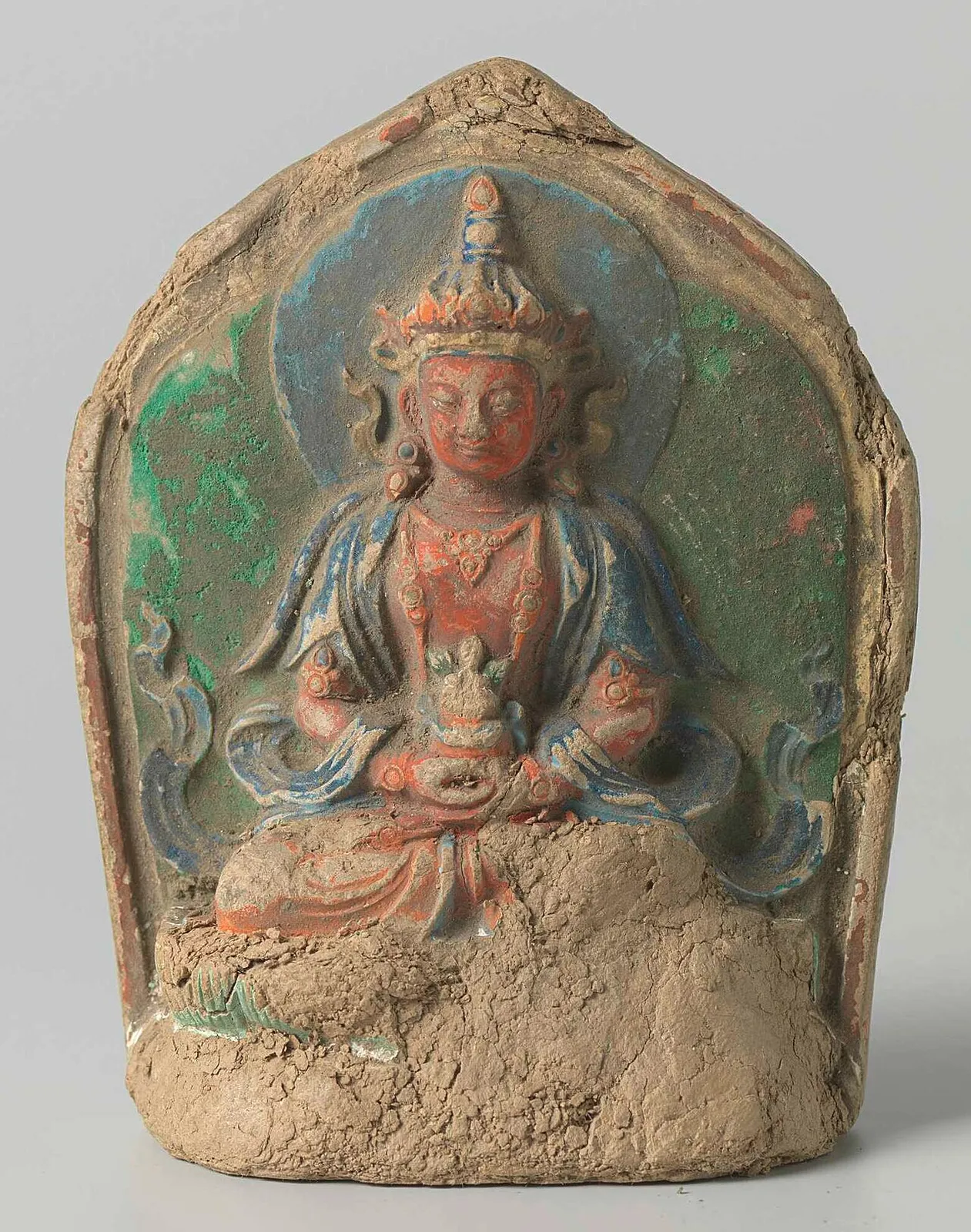
A tsa-tsa is a miniature relief or figurine stamped from a mould. Making them is among the simplest and most widespread acts of merit in Tibetan Buddhism, open to anyone, and is done in multiples to purify misdeeds, to avert illness, to benefit the dead or to complete a vow. The custom came from India, where pilgrims of the first millennium stamped clay tablets with images and with the verse on dependent arising. The word is generally thought to derive from an Indian term for a mould or cast image.
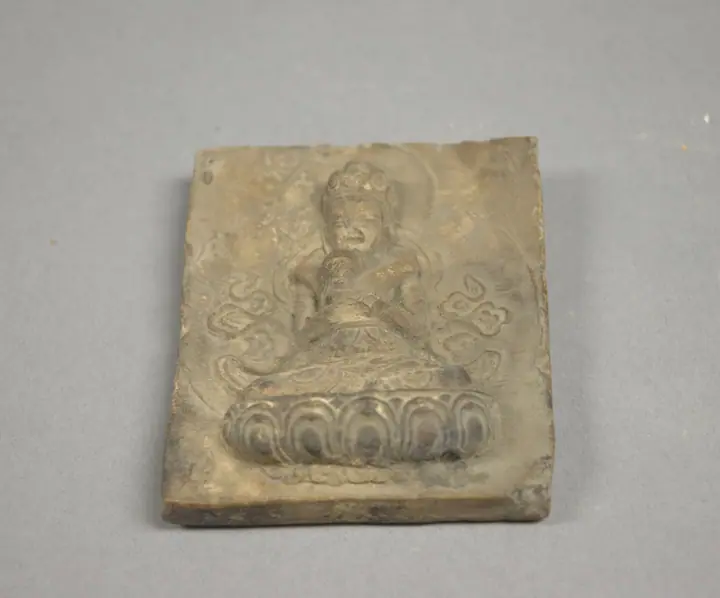
Clay is cleaned, kneaded and pressed into an engraved mould of bronze, copper, brass, stone or wood, then turned out and dried in the sun. Some are fired, and some painted or gilded. The commonest forms are a small stupa, sometimes surrounded by many miniature stupas, and an arched or round plaque bearing a buddha, a bodhisattva such as Avalokiteshvara or Tara, a protector or a teacher. A grain or a rolled mantra may be set in the base. In funerary tsa-tsas the ground bone and ashes of a cremated person are mixed into the clay.
Finished tsa-tsas are consecrated and placed where they will not be trodden on: inside large stupas, in the hollow of statues, in caves, at springs and passes, and in small roofed shelters called tsakhang built along paths. Some practitioners complete sets of one hundred thousand as a preliminary exercise. Others are carried in amulet boxes. Moulds were important monastic possessions and many survive. Early examples from western Tibet and from Indian sites help historians to date iconography, and tsa-tsa making is taught today at Buddhist centres worldwide.
In the collection
1 work in the collection relate to Tsa-tsa.
Connections
7 linked records across the archive.
Sources
References consulted for this record.