FT·SYM·031Ritual Implement
Gau
གའུ
Wyliega'u
A metal amulet case worn on the body or carried on journeys, holding images, relics, blessed substances and written charms for protection.
Also known asGa'u · Amulet Box · Portable Shrine · Kau · Ghau
The gau is a container for sacred objects that protects its owner. Tibetans, Mongolians and Himalayan peoples of both sexes wear one round the neck or across the chest, especially when travelling, and place it on the household shrine at home. It works as a portable shrine: the contents carry the presence and blessing of the buddhas and teachers, and the wearer can set it up for prayer anywhere. A gau is also jewellery, and its size, metal and stones show the wealth and regional origin of its owner.
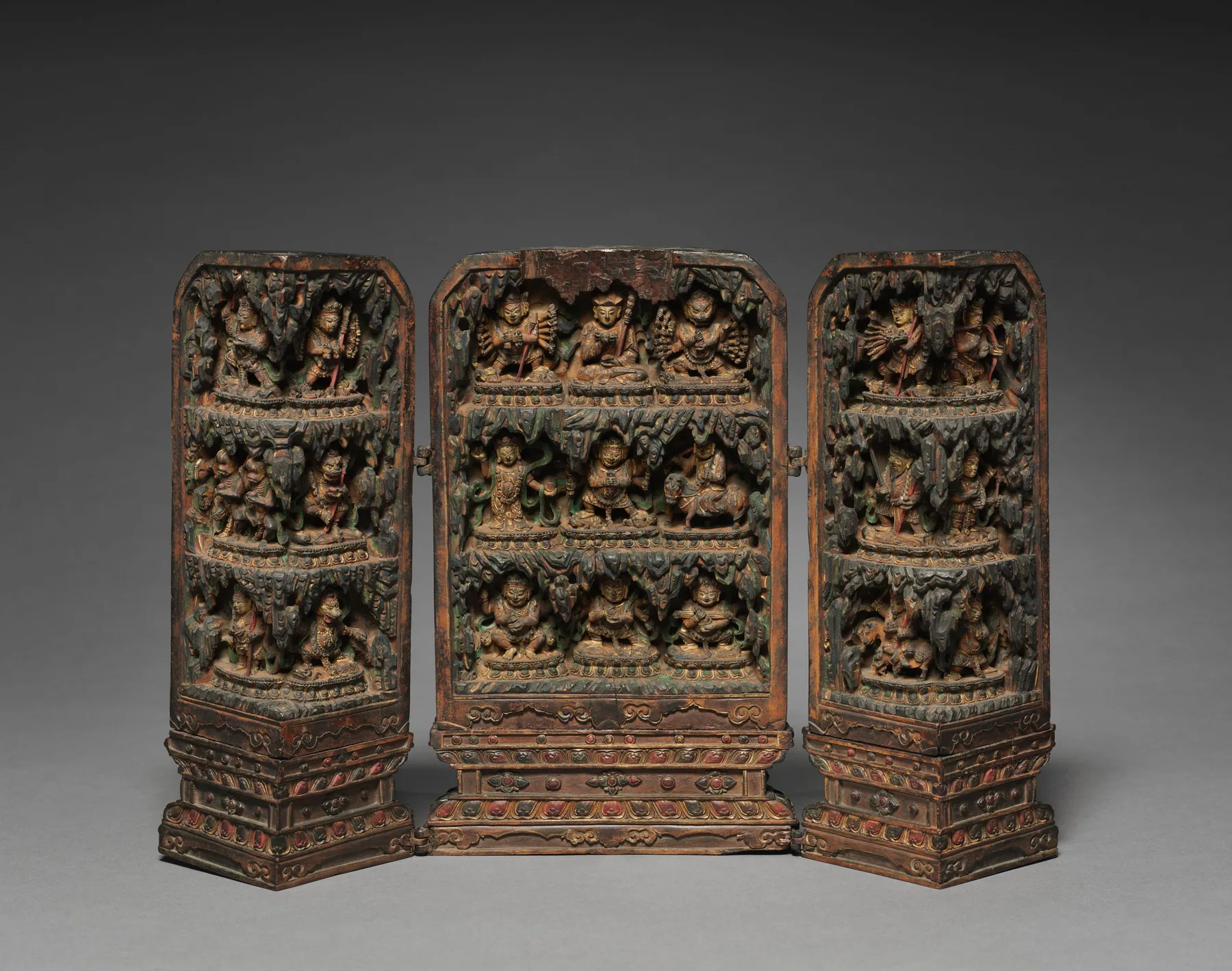
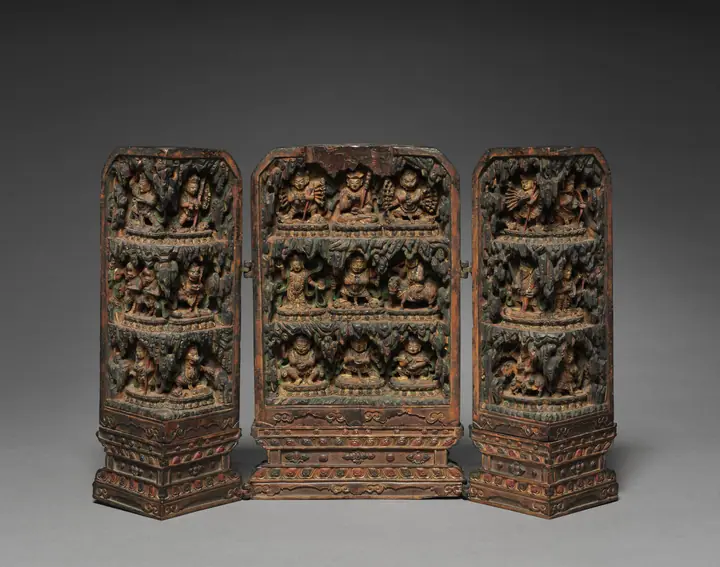
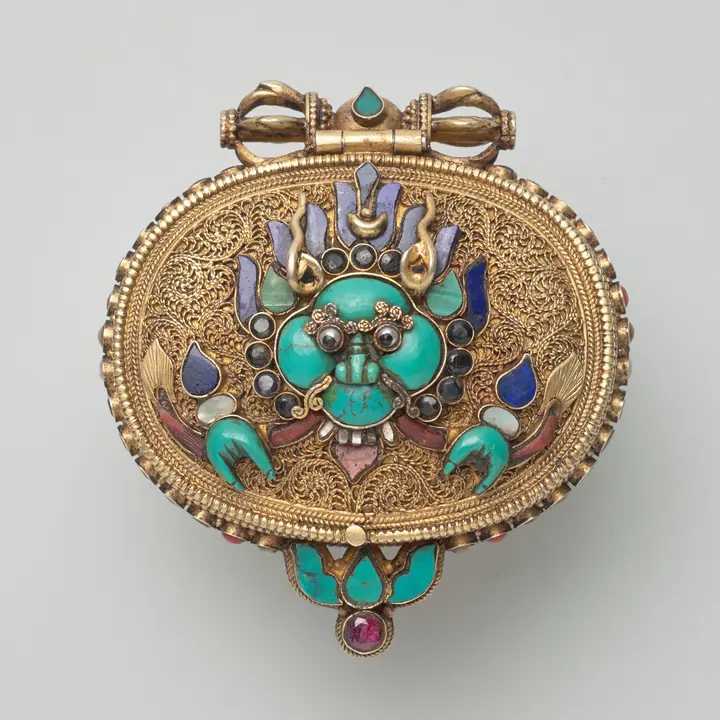
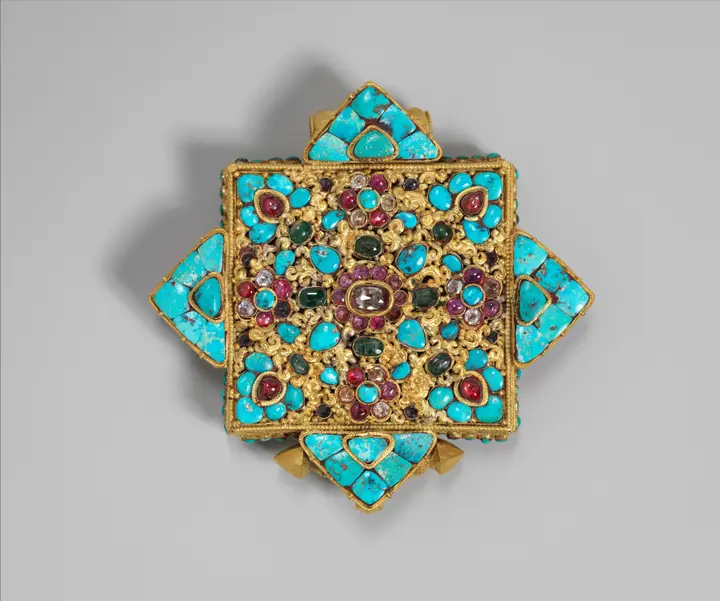
A gau is made in two parts, a decorated front and a plain back that fits into it, with tubular lugs at the sides for a cord or strap. Travelling shrines are tall boxes with an arched, trefoil-shaped top and a window through which a small image can be seen. Women’s gaus are square, round, oval or star-shaped and thickly set with turquoise, coral and other stones. Fronts are of silver, gold or gilt copper worked in repoussé and filigree with the Eight Auspicious Symbols, a monster face or a monogram, and backs are usually of plain copper.
Inside are packed small clay or metal images, pills and cords blessed by lamas, fragments of the robes or relics of saints, grains from consecrations and folded paper printed with protective diagrams and mantras, each wrapped in silk. Soldiers and travellers wore several for protection against weapons and accidents. Historical gaus, some associated with named teachers, are kept in monastery treasuries and museum collections. Silversmiths in Lhasa, Derge, Kathmandu and the Tibetan settlements in India continue to make them, and the form is now also worn as a pendant by Buddhists outside the Himalayan region.
In the collection
3 works in the collection relate to Gau.
Connections
7 linked records across the archive.
Sources
References consulted for this record.
- 01Amulet Box (Gau) with Its Contents — Project Himalayan Art, Rubin Museum
- 02Ritual Object: Amulet Box (Ga'u) Main Page — Himalayan Art Resources
- 03John Clarke, Jewellery of Tibet and the Himalayas (V&A Publications, 2004)