FT·SYM·001Eight Auspicious Symbols
Eight Auspicious Symbols
བཀྲ་ཤིས་རྟགས་བརྒྱད
Wyliebkra shis rtags brgyadSanskritAṣṭamaṅgala
A set of eight emblems of good fortune, inherited from Indian royal ceremony, that forms the most widely used decorative and devotional motif in Tibetan culture.
Also known asTashi Tagye · Ashtamangala · Eight Symbols of Good Fortune · Eight Auspicious Signs
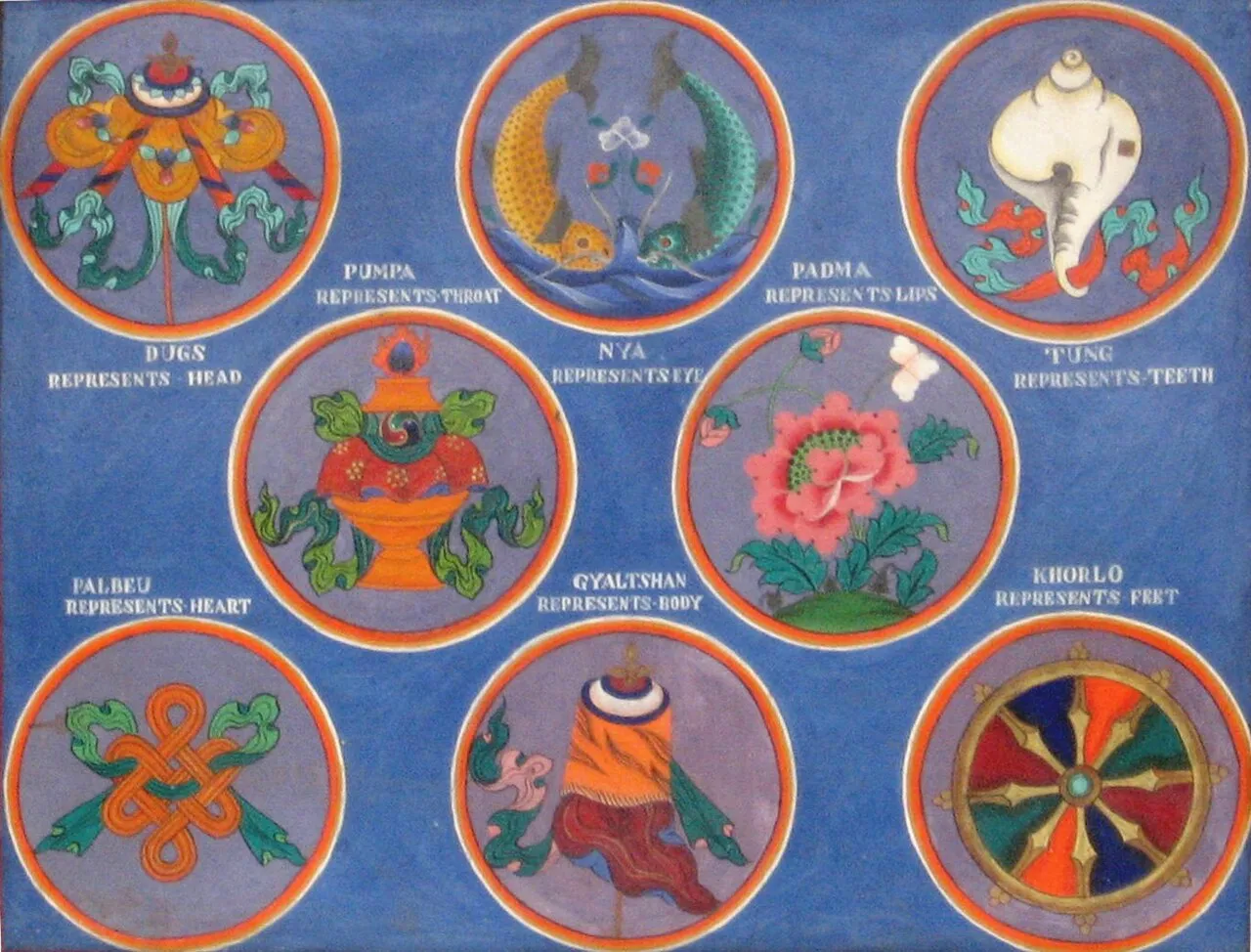
The Eight Auspicious Symbols are the parasol, the pair of golden fishes, the treasure vase, the lotus, the right-turning conch shell, the endless knot, the victory banner and the wheel. The group began in India as emblems displayed at the investiture of a king, and versions of it are shared with Hindu and Jain tradition. Buddhist accounts say that the gods presented these objects to Shakyamuni after his awakening. In Tibet the set became the commonest sign of blessing, and it appears on almost every kind of religious and domestic object.
Tibetan artists draw the eight in a fixed order, singly, in pairs, or stacked into one vase-shaped composite, and each emblem is tied with a fluttering silk ribbon. One Tibetan reading matches the set to the body of the Buddha: the parasol is his head, the fishes his eyes, the vase his neck, the lotus his tongue, the wheel his feet, the banner his body, the conch his speech and the knot his mind. Another reading treats them as offerings, each standing for a quality of the teaching such as protection, fearlessness, abundance or purity.
The symbols are painted on monastery walls and house beams, woven into carpets and ceremonial scarves, cast in metal for altars, and drawn in white powder on the road to welcome a teacher or official. They decorate festival tents and are printed on wedding and New Year gifts. Sets in metal or painted wood stand on shrines, sometimes carried by eight offering goddesses. Because the motif requires no initiation, it is used freely by monastic and lay people of every Tibetan Buddhist school and in Bön communities.
In the collection
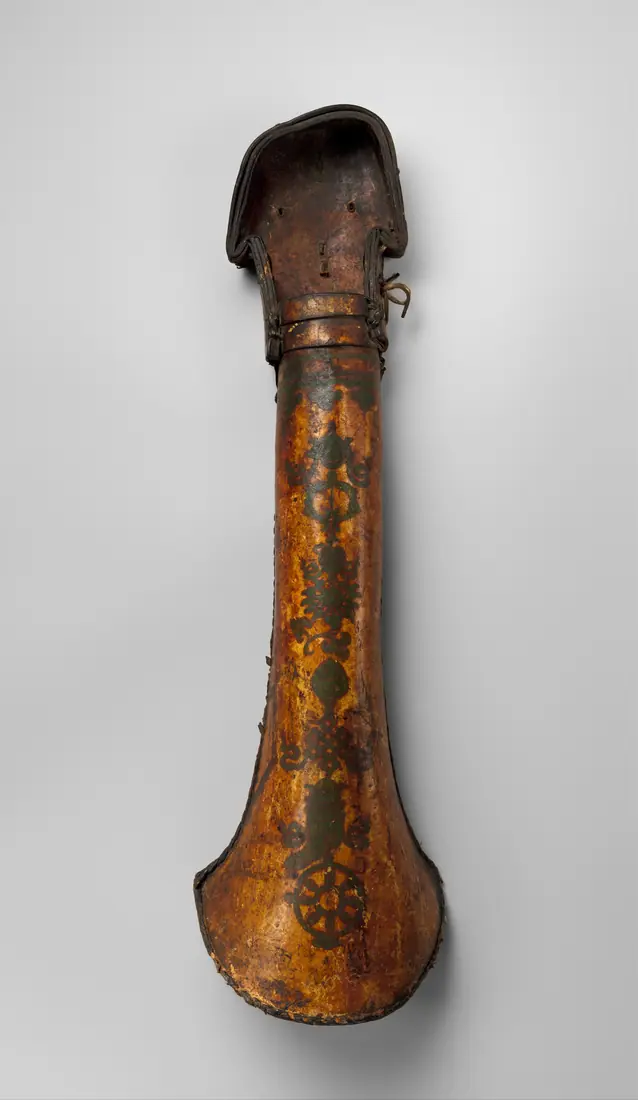
1 work in the collection relate to Eight Auspicious Symbols.
Connections
16 linked records across the archive.
Sources
References consulted for this record.
- 01Ashtamangala — Wikipedia
- 02Subject: Eight Auspicious Symbols — Himalayan Art Resources
- 03Robert Beer, The Encyclopedia of Tibetan Symbols and Motifs (Shambhala, 1999)