FT·SYM·030Ritual Implement
Bumpa
བུམ་པ
Wyliebum paSanskritKalaśa
A ritual vase holding consecrated water, used to purify offerings and participants and to confer the first stage of tantric empowerment.
Also known asRitual Vase · Initiation Vase · Kalasha · Victory Vase · Action Vase
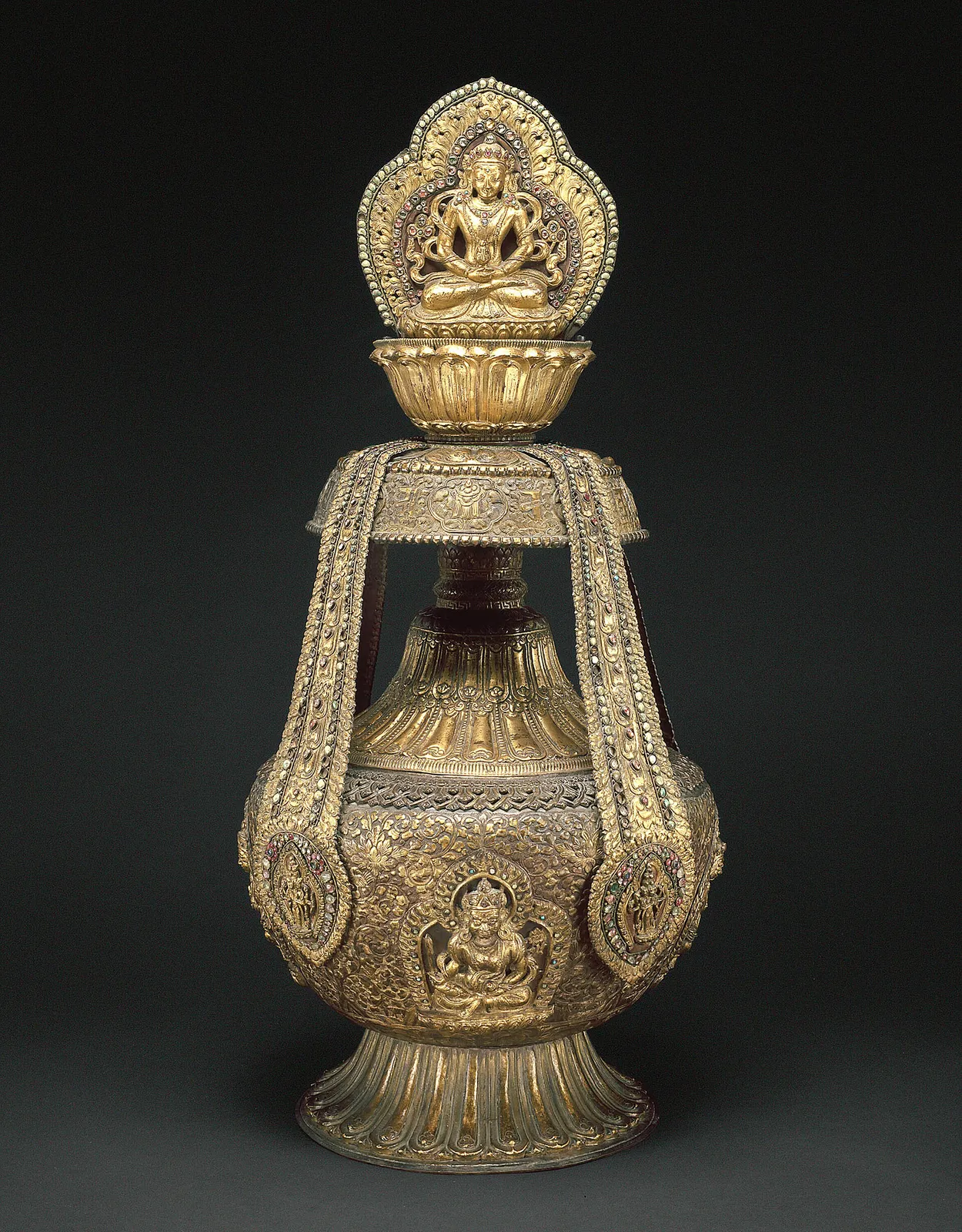
The bumpa is the water vase of tantric ritual. Consecrated water is the medium through which purification and blessing are conveyed, and nearly every major ceremony begins by preparing it. Two vases are normally used. The main or victory vase is the temporary residence of the deities of the mandala, who are invited into the water and dissolve into it. The action vase holds water empowered by the mantra of a wrathful deity and is used to sprinkle and cleanse the site, the offerings and the people. The first of the four tantric empowerments is named the vase empowerment after this vessel.
The vase has a round body, a narrow neck, a wide flat lip and a spreading foot. The action vase has a curved spout, while the main vase usually has none. Silver, copper, brass and bronze are the usual metals, often with gilt bands. A stopper holding a sprinkler of peacock feathers and kusha grass fits the mouth. A silk cloth is tied round the neck, and the main vase may be wrapped in a robe and crowned as a deity. The water is mixed with saffron and a set of twenty-five substances grouped as medicines, grains, jewels, scents and essences.
During an empowerment the master touches the main vase to the crown of each disciple and pours a little water into the cupped hand to drink. Vase water is also used to bathe images through their reflection in a mirror, to bless a house, and to consecrate statues, stupas and thangkas. A related long-life vase, the attribute of Amitayus, is used in longevity ceremonies. The ritual bumpa should be distinguished from the treasure vase of the Eight Auspicious Symbols and from the dome of a stupa, which is called by the same Tibetan word.
Connections
7 linked records across the archive.
Sources
References consulted for this record.
- 01Bumpa — Wikipedia
- 02Kalasha — Wikipedia
- 03Ritual Object: Main Page — Himalayan Art Resources
- 04Robert Beer, The Encyclopedia of Tibetan Symbols and Motifs (Shambhala, 1999)