FT·SYM·029Ritual Implement
Prayer Wheel
མ་ཎི་འཁོར་ལོ
Wyliema ṇi 'khor lo
A cylinder packed with written mantras and turned clockwise on its axis, each revolution counted as a recitation of everything it contains.
Also known asMani Wheel · Mani Khorlo · Mani Chökhor · Lakhor · Hand Prayer Wheel
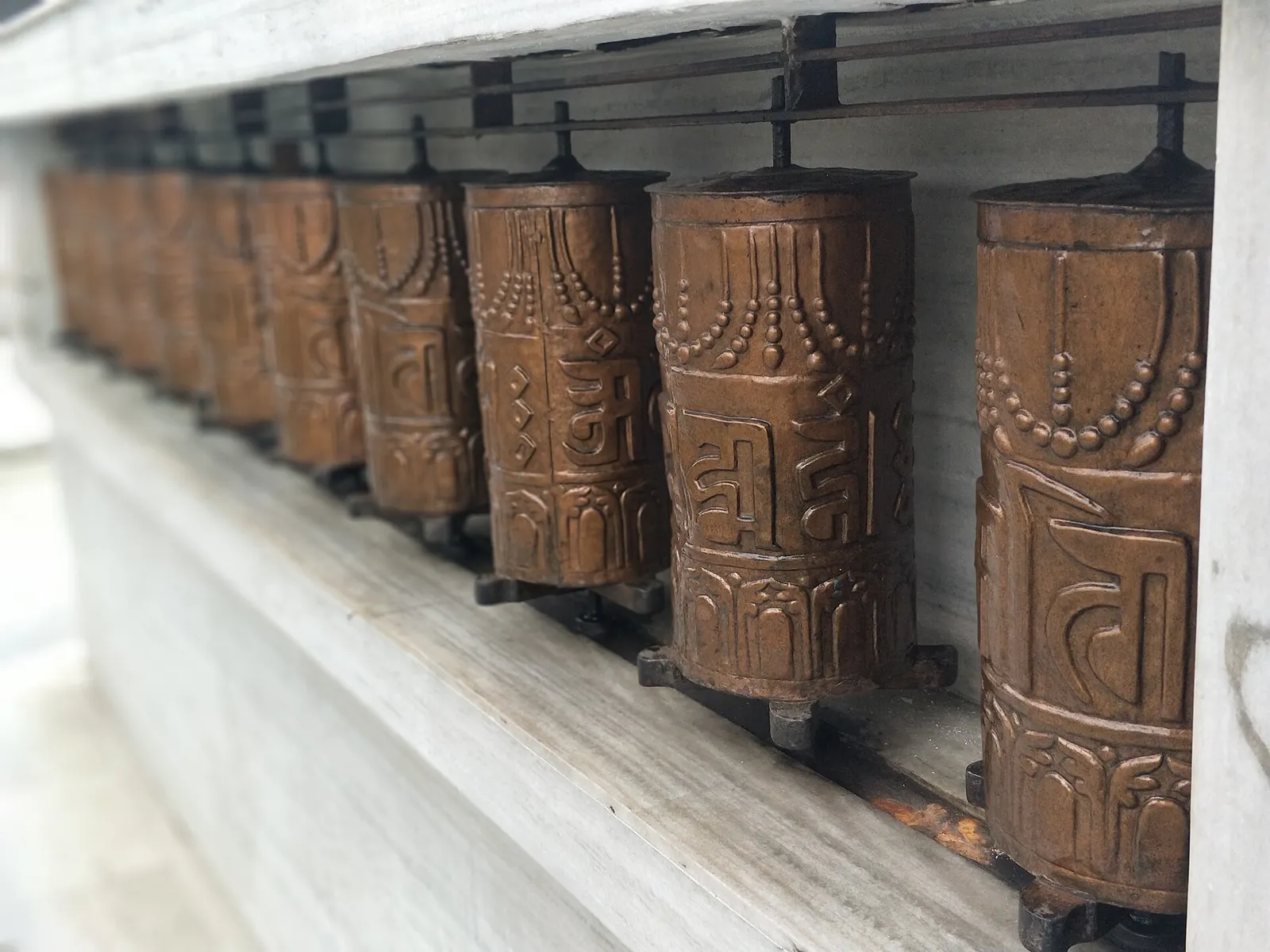
The prayer wheel is a device for multiplying the recitation of mantras. A cylinder is filled with long strips of paper printed with a mantra, most often the six syllables of Avalokiteshvara, and each clockwise turn is held to be equal to saying every mantra inside. Tibetan texts trace the practice to Indian masters, naming Nagarjuna, who is said to have received it from the nagas. Historians note that firm evidence appears later and point to the revolving scripture cabinets of Chinese Buddhist monasteries as a likely relative. The wheel is used across the Tibetan Buddhist world and in Bön, where it turns the other way.
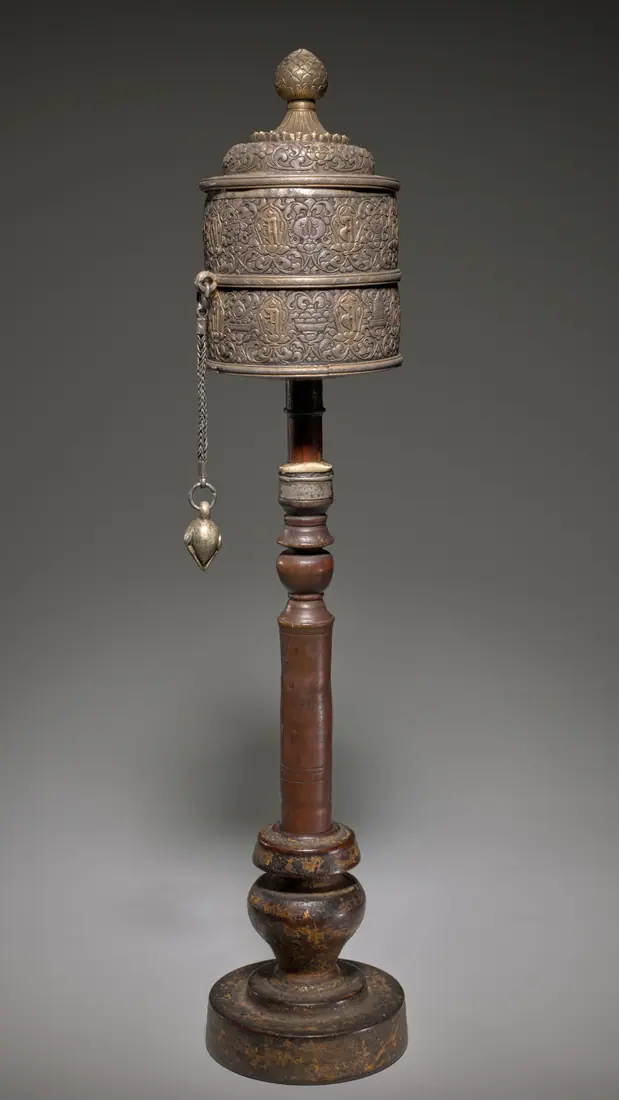
The hand wheel is a drum of copper, brass or silver, a few centimetres high, mounted on a metal pin set in a wooden handle. A short chain with a small weight is attached to the side, and a slight movement of the wrist keeps it spinning. Inside, the paper strip is wound tightly round the central axle, called the life-tree. The cap and base are decorated with lotus petals, and the body is embossed with the mantra in raised letters. Large fixed wheels are made of wood, hide or metal on an iron spindle and are painted or gilded.
Rows of fixed wheels line the walls of monasteries and the circuit paths around stupas, and pilgrims spin each one in passing. Wheels the height of a room, housed in small chapels, strike a bell at each turn. Others are driven by streams, by wind or by the rising heat of a butter lamp, and modern versions use electric motors or microfilm that holds millions of mantras. The hand wheel is especially the practice of older lay people, who turn it while walking, talking or resting, often with a mala in the other hand.
In the collection
1 work in the collection relate to Prayer Wheel.
Connections
13 linked records across the archive.
Sources
References consulted for this record.
- 01Prayer wheel — Wikipedia
- 02Prayer Wheel — Project Himalayan Art, Rubin Museum
- 03Ritual Object: Prayer Wheel — Himalayan Art Resources
- 04Dan Martin, 'On the Origin and Significance of the Prayer Wheel', Journal of the Tibet Society 7 (1987)