FT·PLA·061Stupa & Pilgrimage Site
Swayambhunath
འཕགས་པ་ཤིང་ཀུན
Wylie'phags pa shing kunSanskritSvayambhūDate5th century onward
Hilltop stupa west of Kathmandu, among the oldest Buddhist sanctuaries of Nepal, sacred to Newar and Tibetan Buddhists as a self-arisen site of the primordial Buddha.
Also known asSwayambhu · Swayambhu Mahachaitya · Phagpa Shingkun · Monkey Temple
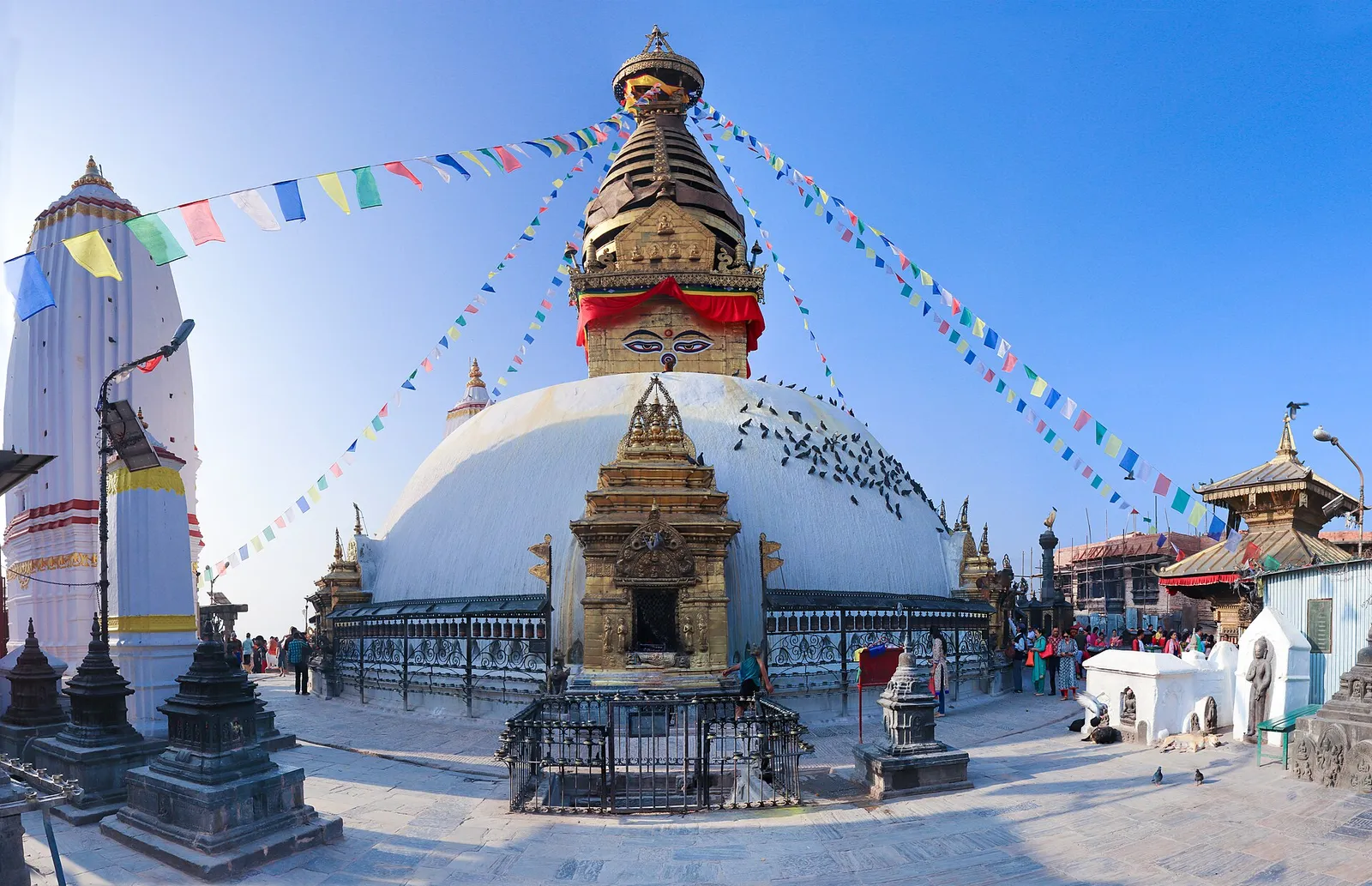
Swayambhu, ‘the self-arisen’, crowns a wooded hill on the western edge of Kathmandu and is the most sacred Buddhist site of the Newar people of the valley. According to the Swayambhu Purana the valley was once a lake on which a lotus bloomed, radiating the light of the primordial Buddha; the bodhisattva Manjushri cut a gorge with his sword to drain the water, and the hill is where the lotus came to rest. Chronicles credit a Licchavi king with building or restoring the shrine around the 5th century. Tibetans call it Phagpa Shingkun and rank it with Boudha.
A stairway of 365 stone steps climbs the eastern slope past painted Buddhas and troops of monkeys to a terrace dominated by the stupa: a white hemisphere with gilded shrines of the five Buddhas set into its sides, a cube painted with all-seeing eyes, and a tower of thirteen gilded rings. Before it lies a great gilt vajra on a drum carved with the twelve animals of the calendar. The crowded platform also holds the two-tiered temple of Harati, protector of children, the sealed tantric shrine of Shantipur, two tall brick towers, and Tibetan and Bhutanese monasteries.
Swayambhu has been repaired many times, often with Tibetan patronage: lamas from Tibet and Bhutan sponsored major renovations between the 13th and the 20th century. The stupa was regilded in 2008–10. It belongs to the Kathmandu Valley World Heritage Site, inscribed in 1979. The 2015 earthquake damaged shrines and houses on the hill, most of which have since been repaired. Hereditary Newar Buddhist priests conduct the daily rites, while Tibetan pilgrims walk the long circuit at the foot of the hill, lined with prayer wheels and large images of the Buddha, Padmasambhava and Avalokiteshvara.
Connections
8 linked records across the archive.
Sources
References consulted for this record.
- 01Kathmandu Valley — UNESCO World Heritage Centre
- 02Swayambhunath — Wikipedia
- 03Alexander von Rospatt, 'The Past Renovations of the Svayambhucaitya', in Light of the Valley: Renewing the Sacred Art and Traditions of Svayambhu (Dharma Publishing, 2011)