FT·SYM·020Ritual Implement
Vajra
རྡོ་རྗེ
Wylierdo rjeSanskritVajra
A short metal sceptre with a central sphere and symmetrical prongs, the chief emblem of Vajrayana, standing for indestructible reality and skilful method.
Also known asDorje · Thunderbolt Sceptre · Diamond Sceptre · Vajra Scepter
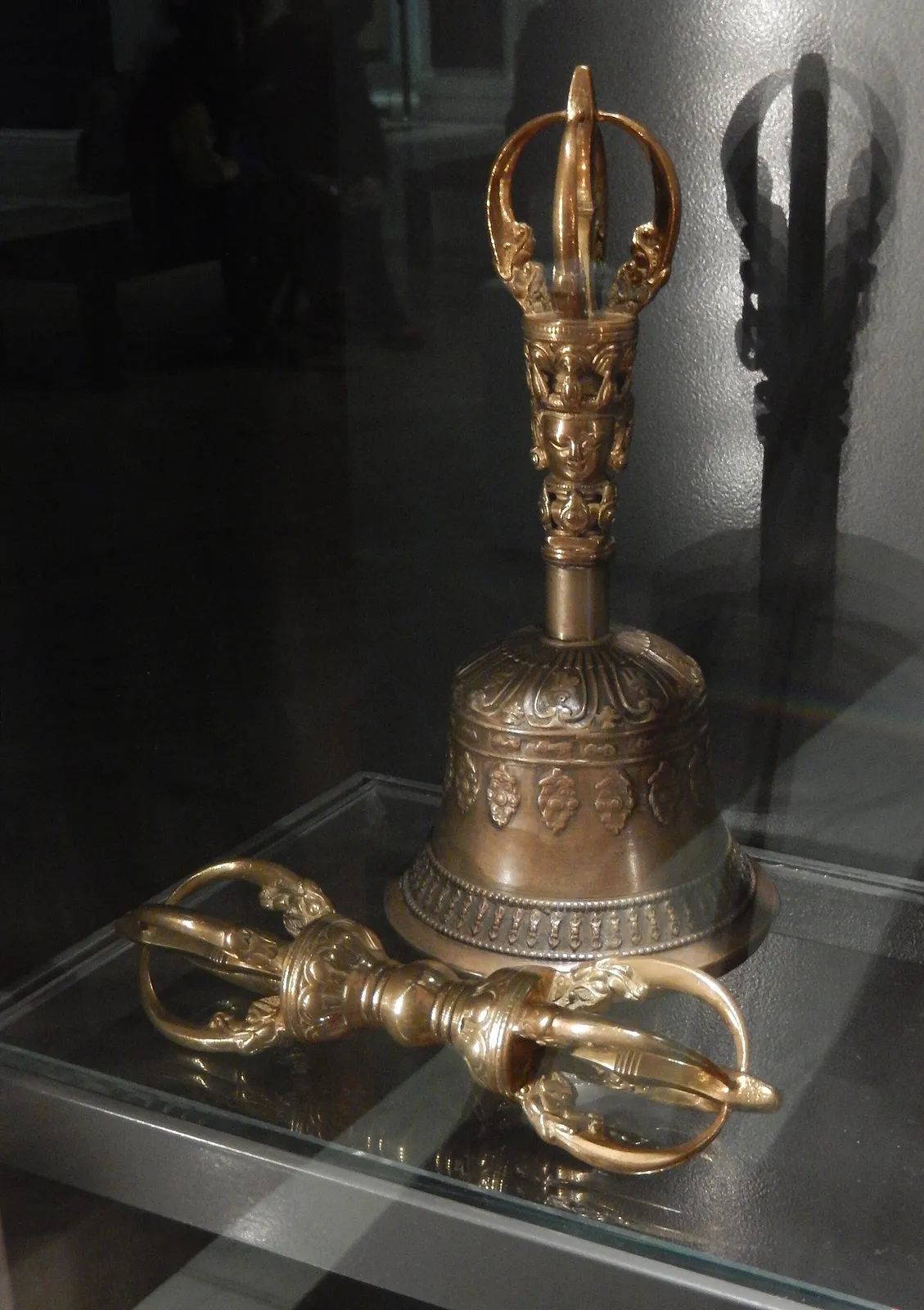
The vajra is the defining implement of tantric Buddhism, which takes from it the name Vajrayana, the vajra vehicle. In the Vedas the vajra was the thunderbolt weapon of the god Indra. Buddhism kept the sense of irresistible force and added that of the diamond, the hardest substance, to describe the unbreakable and unchanging nature of awakened mind. The Tibetan translation dorje means lord of stones. In ritual the vajra represents method or compassion, the active and masculine principle, and it is always used together with the bell, which represents wisdom.
A vajra is symmetrical about a central sphere, which stands for the nature of reality. On each side a ring of pearls and an eight-petalled lotus support a moon disc, from which a straight central prong and four curved outer prongs emerge and meet at the tip. The outer prongs issue from the mouths of makaras, mythical water creatures. In the five-pronged form the upper set is read as the five buddhas and the lower as their five consorts. Nine-pronged vajras are used in the Nyingma school. Vajras are cast in bronze or brass, sometimes gilded, and those said to be of meteoric iron are specially valued.
The vajra is held in the right hand, between thumb and two fingers at the heart, and is rotated and moved through prescribed gestures during recitation. Tantric practitioners who have received empowerment keep a vajra and bell as a pledge. The form recurs throughout the iconography: it is the attribute of Vajrapani, Vajrasattva, Vajradhara and Akshobhya, it tips the handles of bells, ritual daggers and choppers, it rings the outer circle of mandalas, and the seat of the Buddha’s awakening at Bodh Gaya is called the vajra seat. Dorje is also among the most common Tibetan personal names.
In the collection
9 works in the collection relate to Vajra.
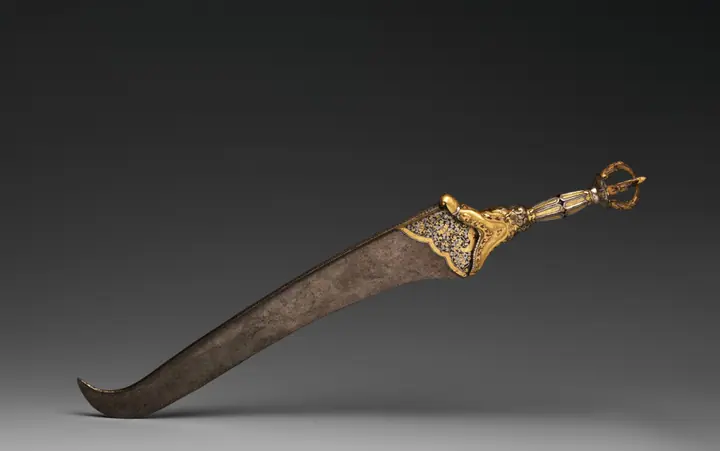
Vajra Flaying Knife
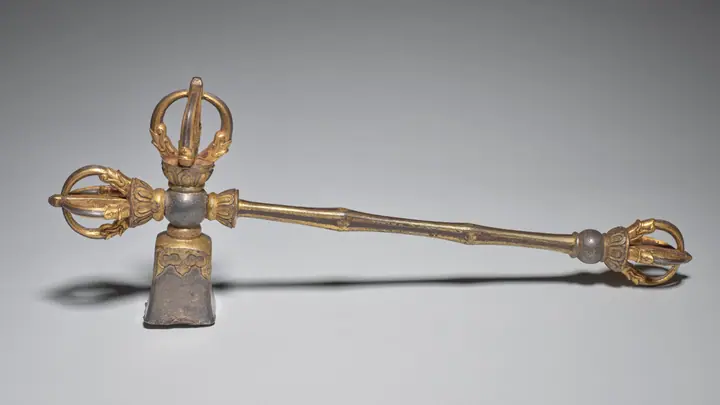
Vajra hammer
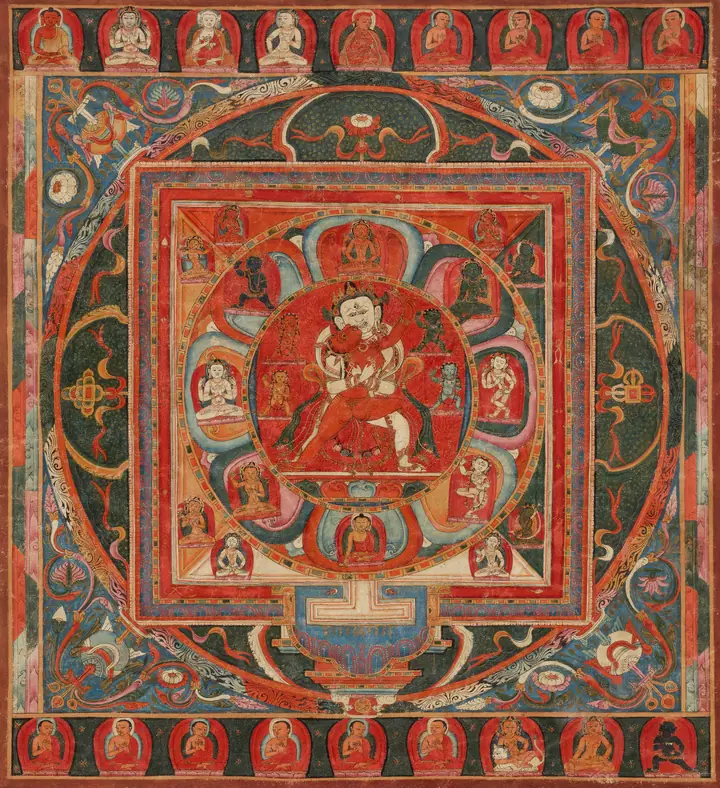
Khorlo Demchog (Chakrasamvara) and Dorje Pakmo (Vajravarahi) Mandala
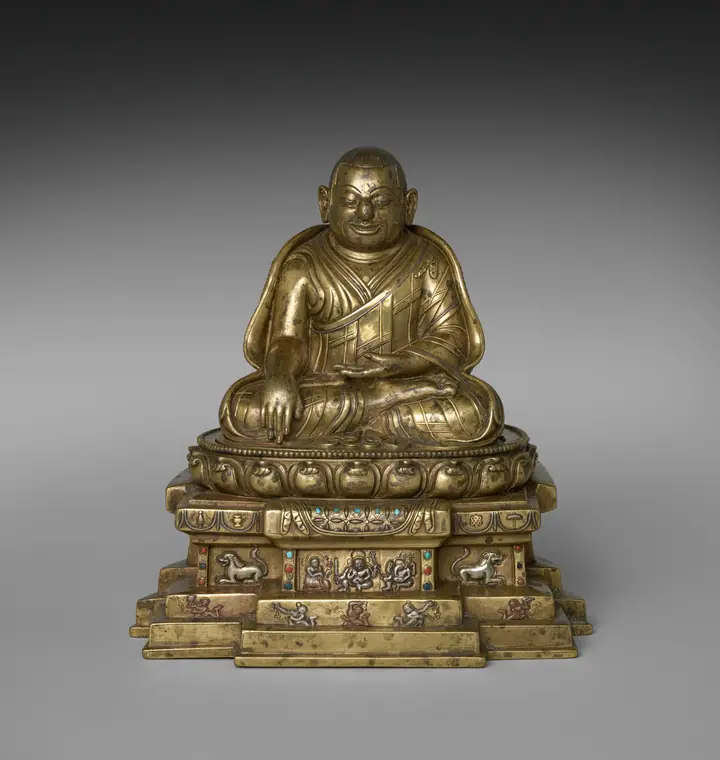
Portrait of Phagmo Drupa Dorje Gyalpo (1110–1170)
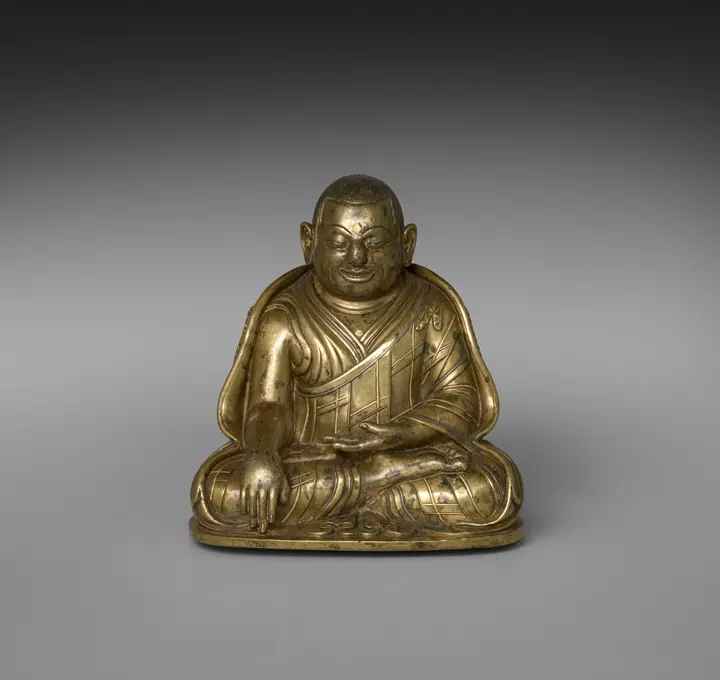
Portrait of Phagmo Drupa Dorje Gyalpo (1110–1170)
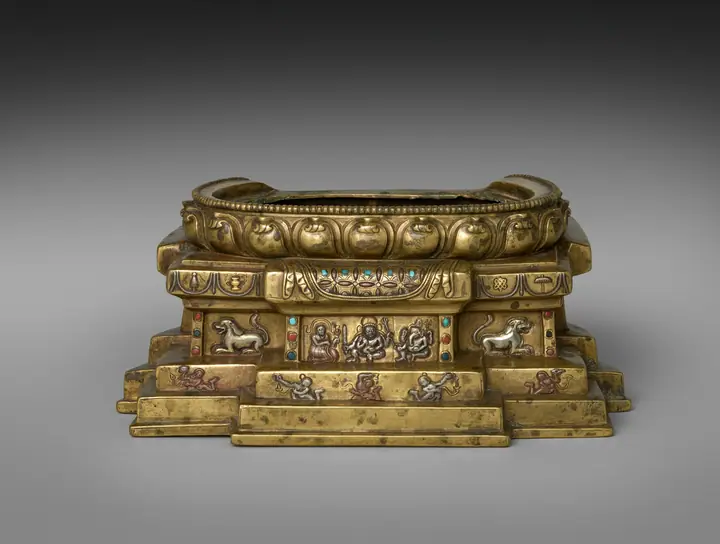
Base for Portrait of Phagmo Drupa Dorje Gyalpo (1110–1170)
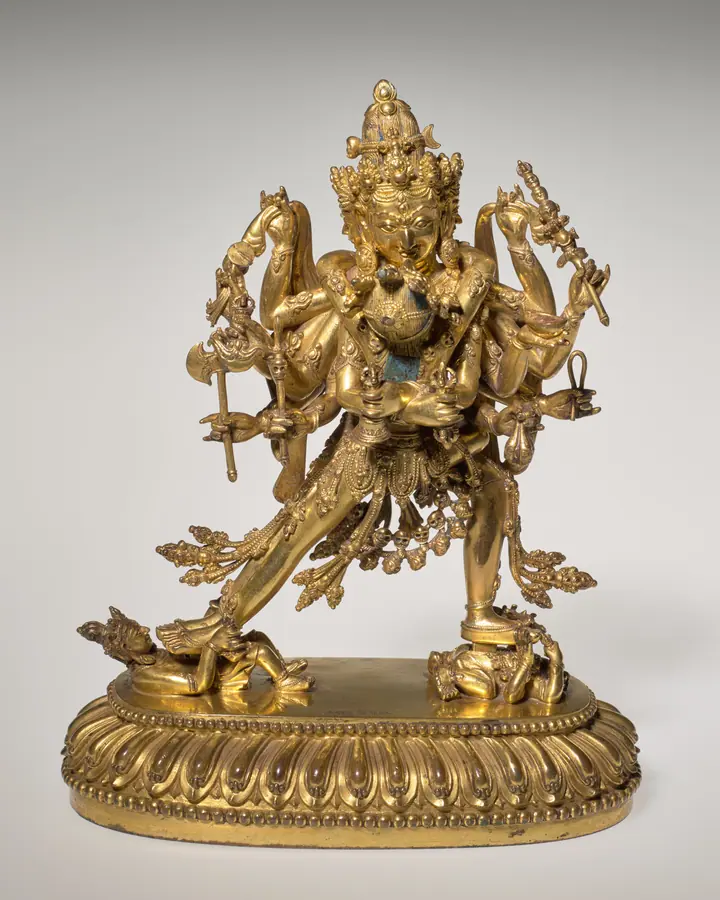
Khorlo Demchog Embracing Dorje Phagmo
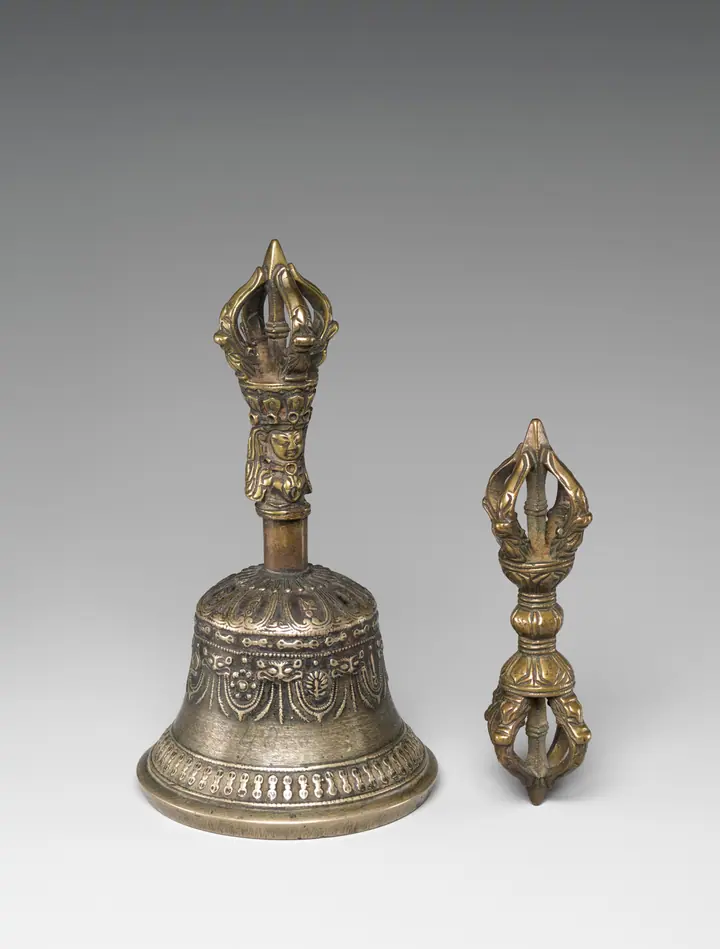
Dril-Bu and Dorje
Connections
15 linked records across the archive.
Sources
References consulted for this record.
- 01Vajra — Wikipedia
- 02Vajra and Bell — Project Himalayan Art, Rubin Museum
- 03Ritual Object: Vajra & Bell Main Page — Himalayan Art Resources
- 04Robert Beer, The Encyclopedia of Tibetan Symbols and Motifs (Shambhala, 1999)