FT·DEI·011Buddha
Vajrasattva
རྡོ་རྗེ་སེམས་དཔའ
Wylierdo rje sems dpa'SanskritVajrasattva
The white Buddha of purification, who holds a vajra at his heart and a bell at his hip and whose hundred-syllable mantra is recited to cleanse broken vows and harmful acts.
Also known asDorje Sempa · Dorsem · Vajrasatva · Vajrasattva Yab-Yum · Vajra Being
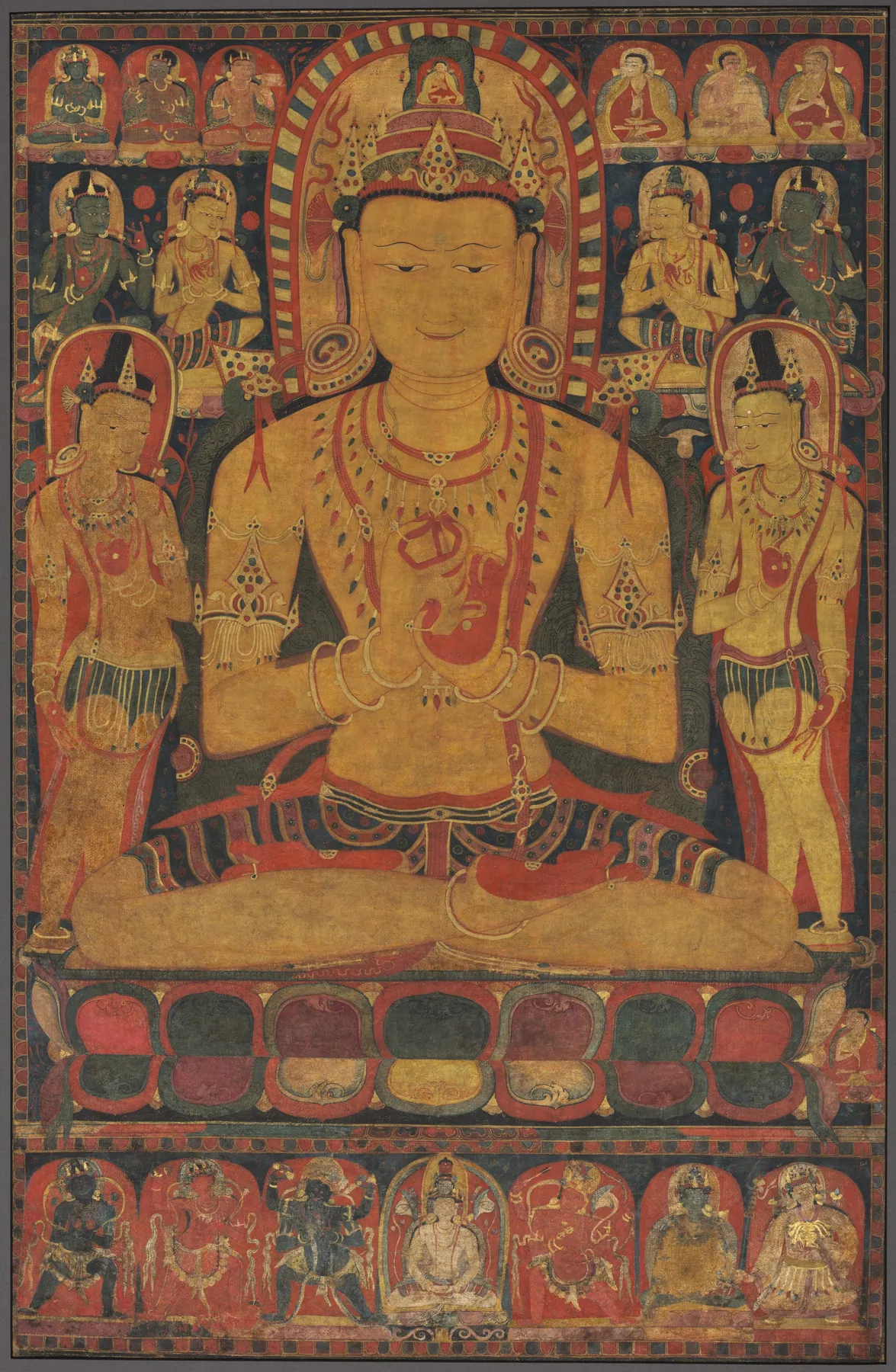
Vajrasattva, ‘Vajra Being’, is the buddha most closely associated with purification in Tibetan Buddhism. In the Yoga tantras he appears as the first of the bodhisattvas around Akshobhya and as the model of the tantric practitioner; in later tantras he is treated as a sixth buddha who unites the five families. Reciting his hundred-syllable mantra one hundred thousand times is one of the standard preliminary practices (ngondro) undertaken before advanced tantric meditation in every school.
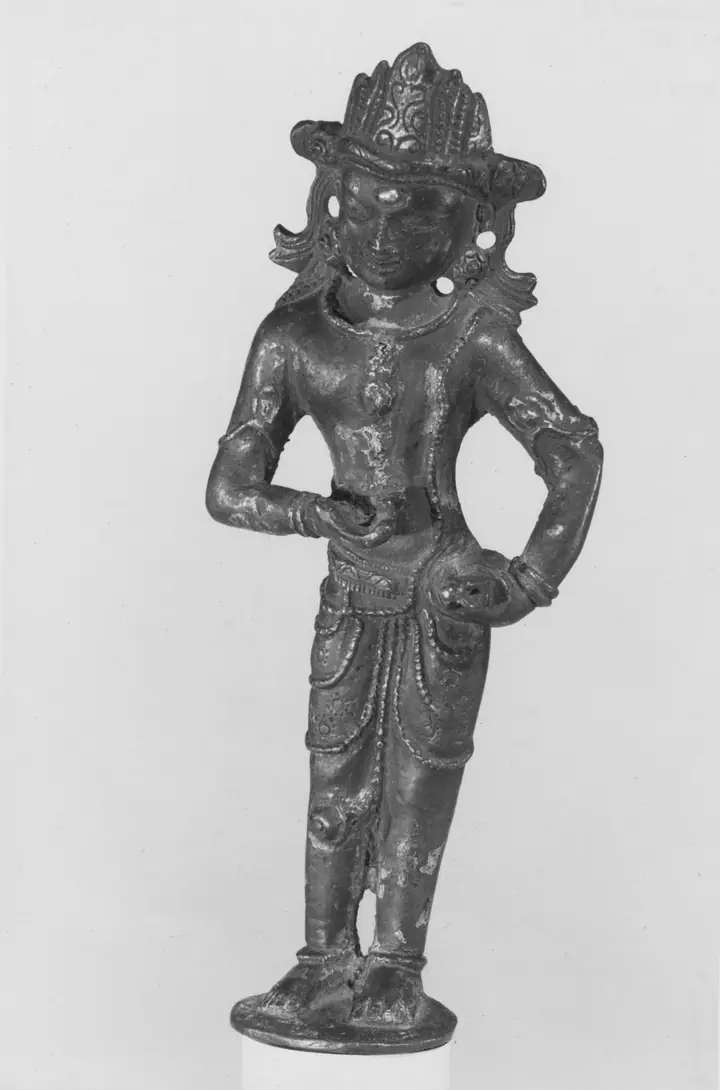
He is white, with one face and two arms, seated in vajra posture or with the right foot slightly extended. The right hand holds a five-pronged vajra upright at the heart; the left rests at the hip holding a bell with its mouth turned upward. He wears a jewelled crown, earrings, necklaces and silks, and his body often leans in a gentle curve. In the form with consort (yab-yum) he embraces Vajragarvi, known in Tibetan as Dorje Nyema, who holds a curved knife and a skull cup. Peaceful two-armed forms of Vajrapani are easily mistaken for him.
Vajrasattva is central to the Nyingma Mahayoga tantras, in which the Hundred Peaceful and Wrathful Deities are regarded as his display, and to the confession liturgies of all schools. Practitioners visualise him above the crown of the head, pouring a stream of nectar that washes away illness and misdeeds. Small metal images of him were produced in great numbers in Kashmir, western Tibet and Nepal from about the tenth century, and he is a frequent subject of later gilt bronzes.
In the collection
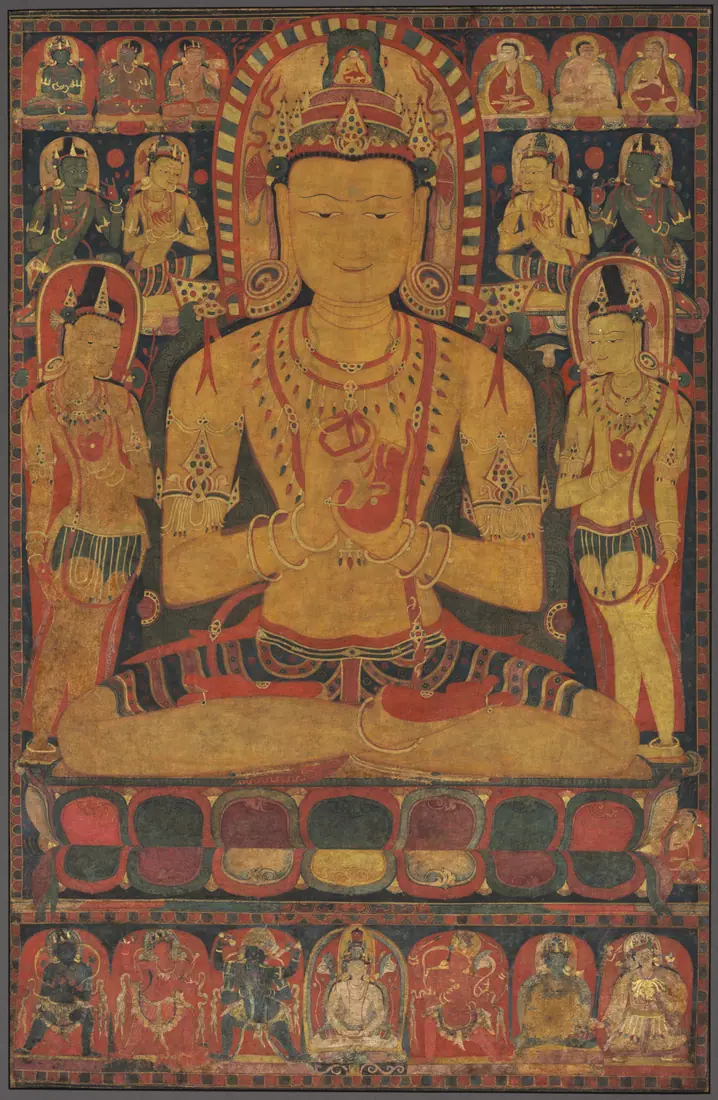
2 works in the collection depict or name Vajrasattva.
Connections
14 linked records across the archive.
Sources
References consulted for this record.