FT·DEI·073Arhats & Assemblies
Thirty-five Confession Buddhas
བདེ་གཤེགས་སོ་ལྔ
Wyliebde gshegs so lnga
The thirty-five buddhas invoked by name in the Sutra of the Three Heaps, visualised and painted as an assembly before whom monastics and laypeople confess their faults.
Also known asThirty-five Buddhas · 35 Buddhas of Confession · Buddhas of Confession · Tungshak · Thirty-five Sugatas · Sutra of the Three Heaps
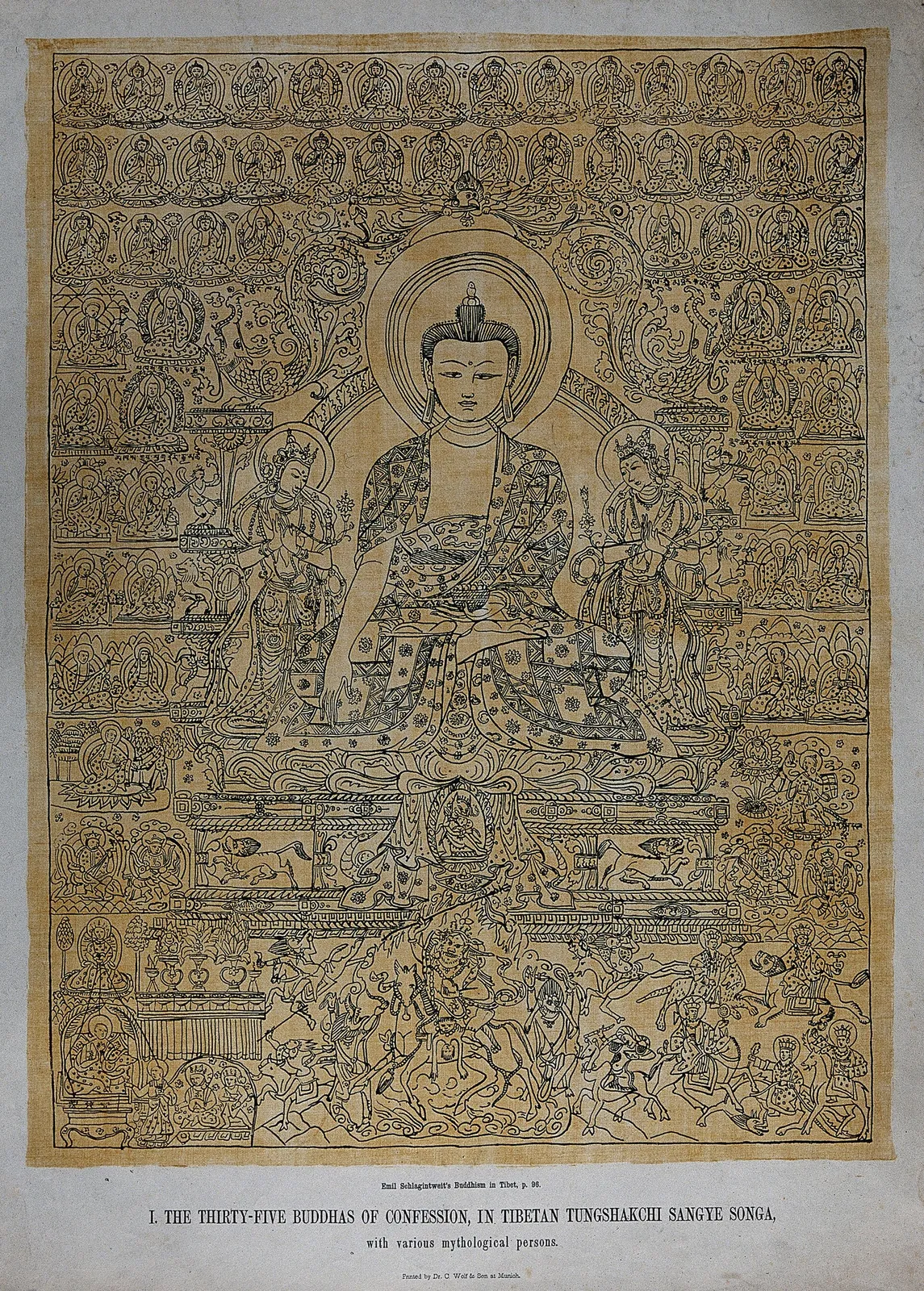
The Thirty-five Confession Buddhas are named in the Sutra of the Three Heaps (Triskandhaka), a short Mahayana text preserved in the Tibetan Kangyur. Its three ‘heaps’ are homage, confession and dedication. The practitioner bows to each buddha in turn, beginning with Shakyamuni, admits misdeeds committed in this and earlier lives, rejoices in virtue and dedicates it to awakening. In Tibet the rite is called Tungshak, the ‘confession of downfalls’, a downfall being a breach of the bodhisattva vow.
All thirty-five have the form of a buddha: one face, two arms, monastic robes and the vajra posture. Three systems of depiction are followed. In the one attributed to Sakya Pandita the figures hold no objects and are divided into five groups of seven that copy the colours and gestures of the five buddha families. A system attributed to Nagarjuna gives each buddha an individual colour and a hand attribute. Tsongkhapa’s system, said to rest on his own vision, gives attributes to a few, among them Nageshvararaja, who is blue with a white face, and leaves the rest with gestures only.
Paintings usually arrange the buddhas in rows around a larger Shakyamuni, or around Tsongkhapa, who is said to have made one hundred thousand prostrations to each of them during his retreat at Olkha in the 1390s. The subject is often paired with the Sixteen Arhats, the two representing the bodhisattva and monastic disciplines respectively. Daily recitation of the confession with full-length prostrations is a standard preliminary practice in the Gelug school and is common to all Tibetan traditions.
Connections
9 linked records across the archive.
Sources
References consulted for this record.