FT·DEI·001Buddha
Shakyamuni Buddha
ཤཱཀྱ་ཐུབ་པ
WylieshAkya thub paSanskritŚākyamuniDatec. 5th century BCE
The historical Buddha, sage of the Shakya clan, whose awakening at Bodh Gaya in about the fifth century BCE is the source of every Buddhist tradition practised in Tibet.
Also known asBuddha Shakyamuni · Gautama Buddha · Sakyamuni · Shakya Thubpa · Śākyamuni · Siddhartha Gautama
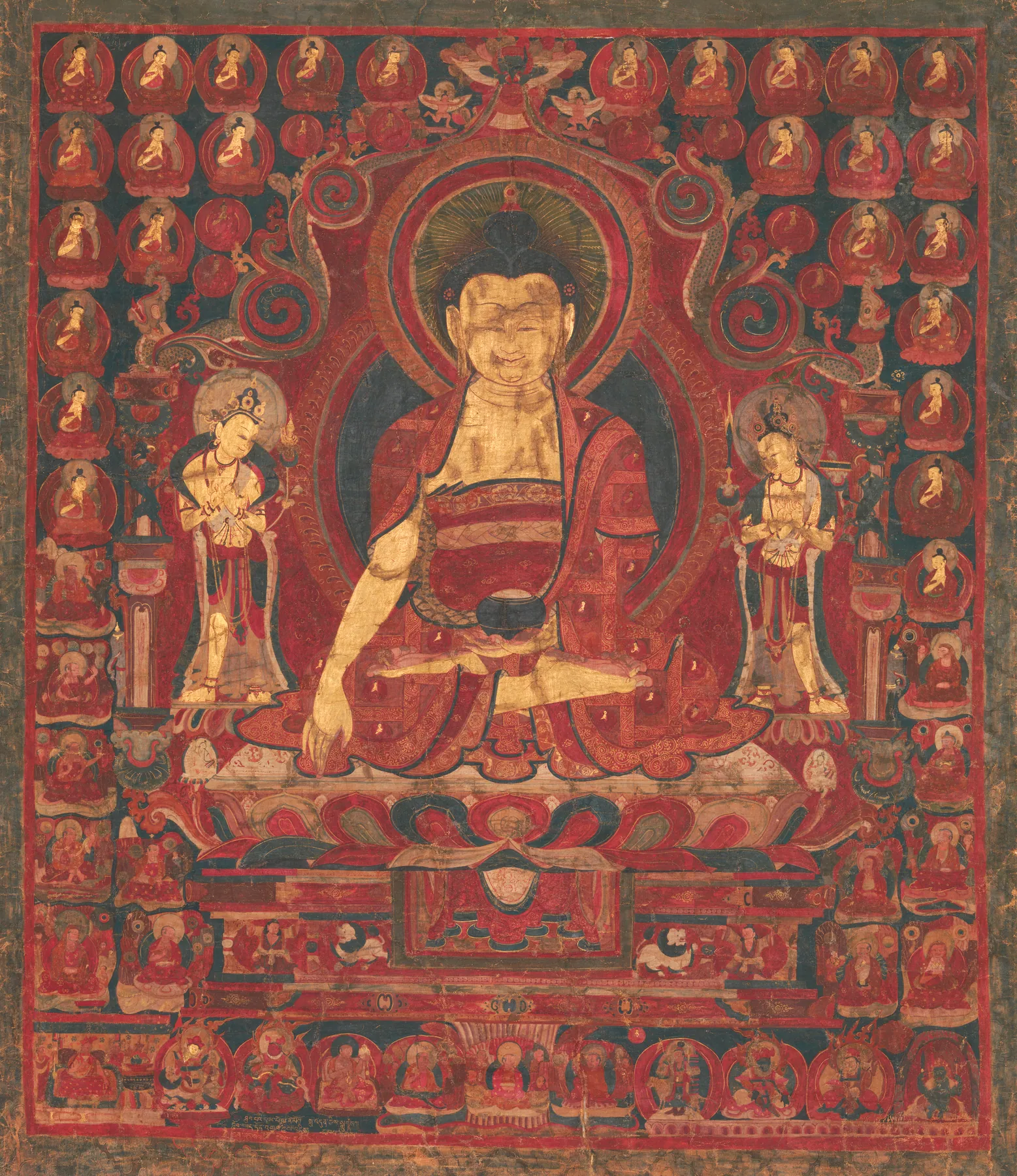
Shakyamuni, ‘sage of the Shakyas’, is the title of Siddhartha Gautama, the teacher who lived in the Ganges plain of northern India and is regarded as the founder of Buddhism. Most scholars now place his death within a few decades of 400 BCE, although traditional Tibetan chronologies give much earlier dates. Tibetan tradition counts him as the fourth of the thousand buddhas of the present age and reads his life as twelve exemplary deeds, from his descent from the Tushita heaven to his passing at Kushinagar.
He is shown as a monk with golden skin, seated in the cross-legged vajra posture on a lotus and moon disc, often on a throne supported by lions. The right hand reaches down to touch the earth, recalling the moment he called the ground to witness his awakening; the left rests in the lap holding an alms bowl. He wears patched monastic robes, and his body bears the marks of a buddha: the crown protuberance (ushnisha), a curl of hair between the brows, tight blue-black curls and lengthened earlobes. His chief disciples, Shariputra and Maudgalyayana, often stand at either side holding a staff and bowl.
Images of Shakyamuni occupy the main altar of most Tibetan temples. The most revered is the Jowo Rinpoche in the Jokhang in Lhasa, which tradition says was brought from China by the Tang princess Wencheng in the seventh century. He is the central figure of painting sets with the Sixteen Arhats, of assemblies of the Thirty-five Confession Buddhas, and of narrative thangkas illustrating his former lives. His birth, enlightenment and passing are commemorated each year in the fourth Tibetan month, Saga Dawa.
In the collection
10 works in the collection depict or name Shakyamuni Buddha.
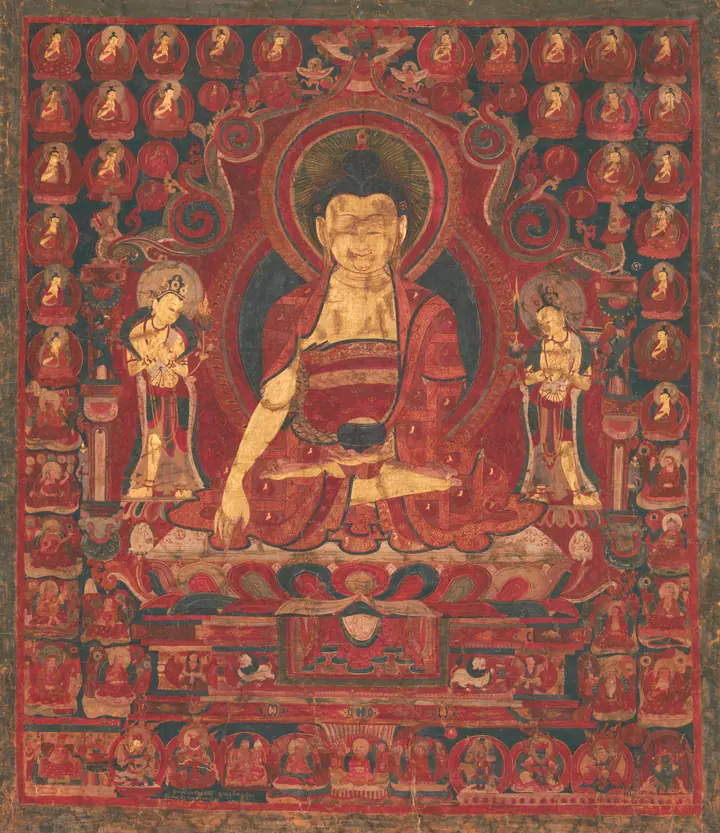
Buddha Shakyamuni as "Lord of the Munis"
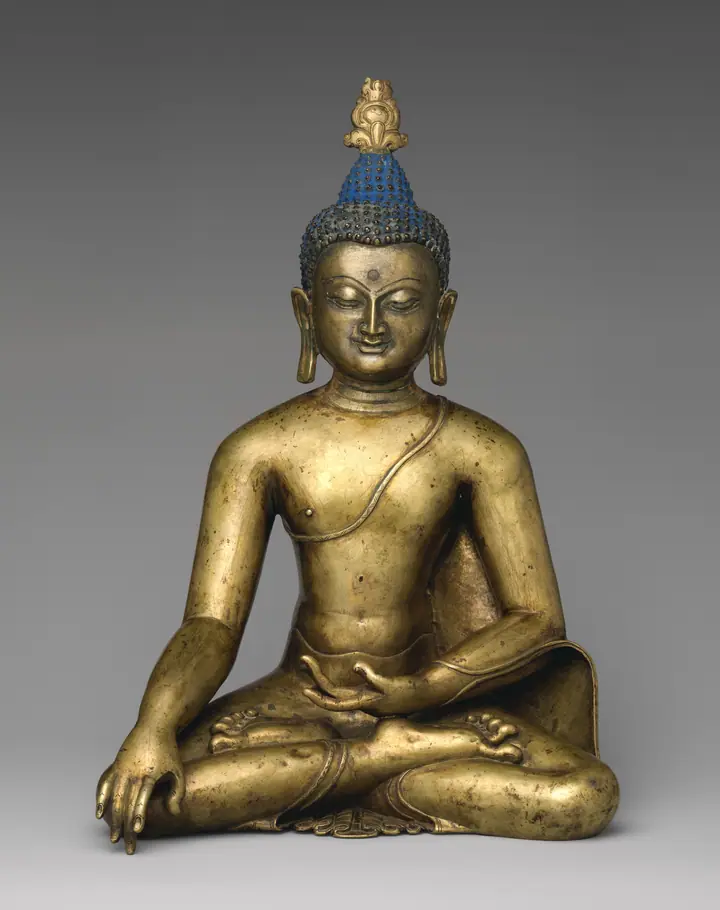
Buddha Shakyamuni
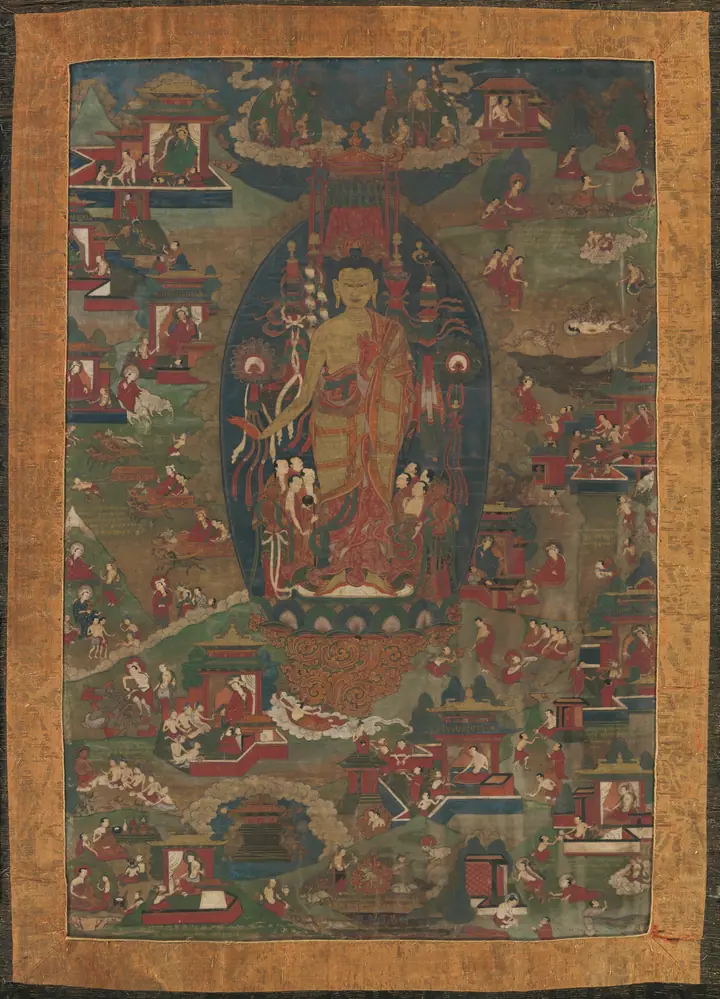
Buddha Shakyamuni and Scenes of His Previous Lives (Jataka Tales)
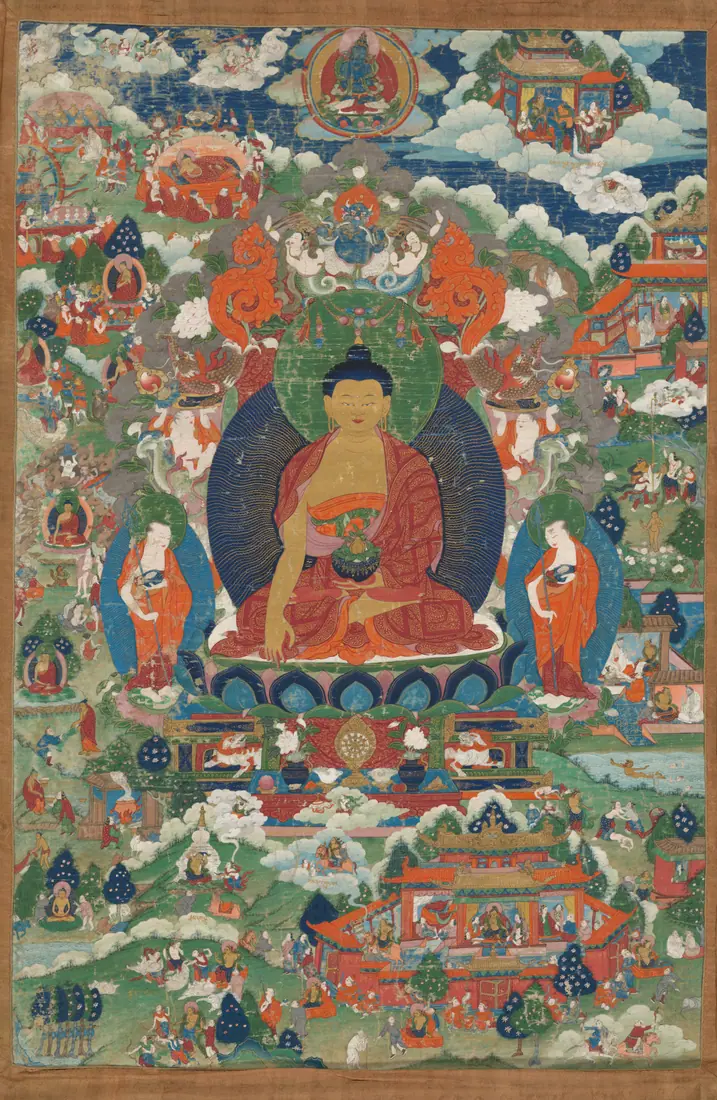
Shakyamuni Buddha with scenes from his life story
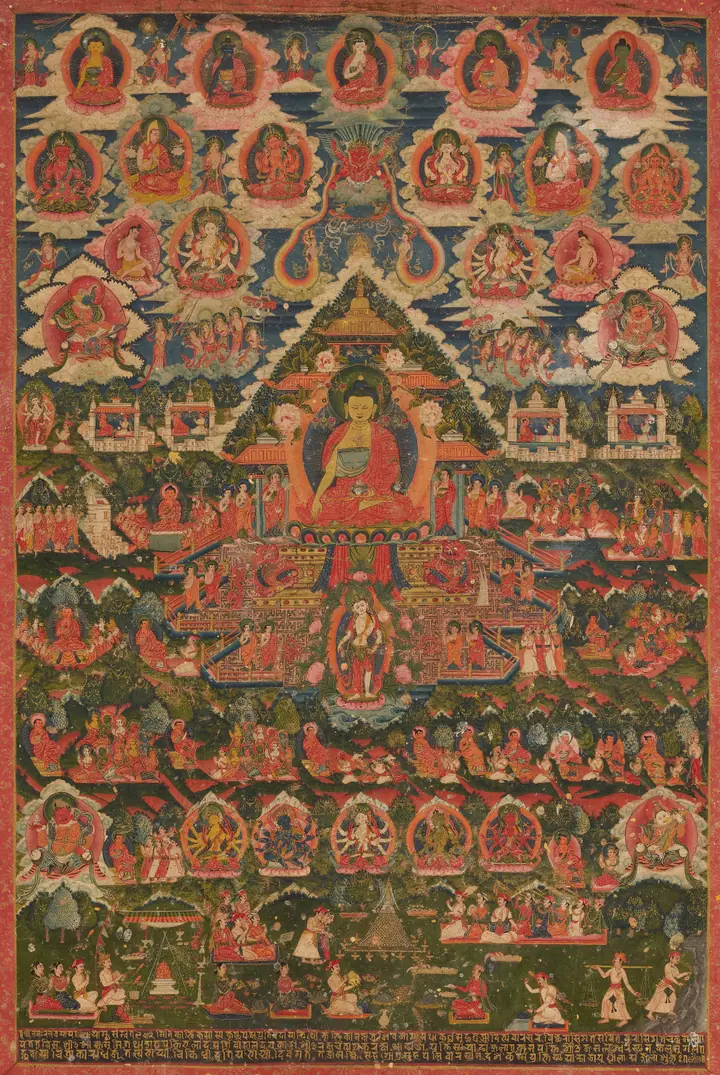
Shakyamuni Buddha, The Enlightened One
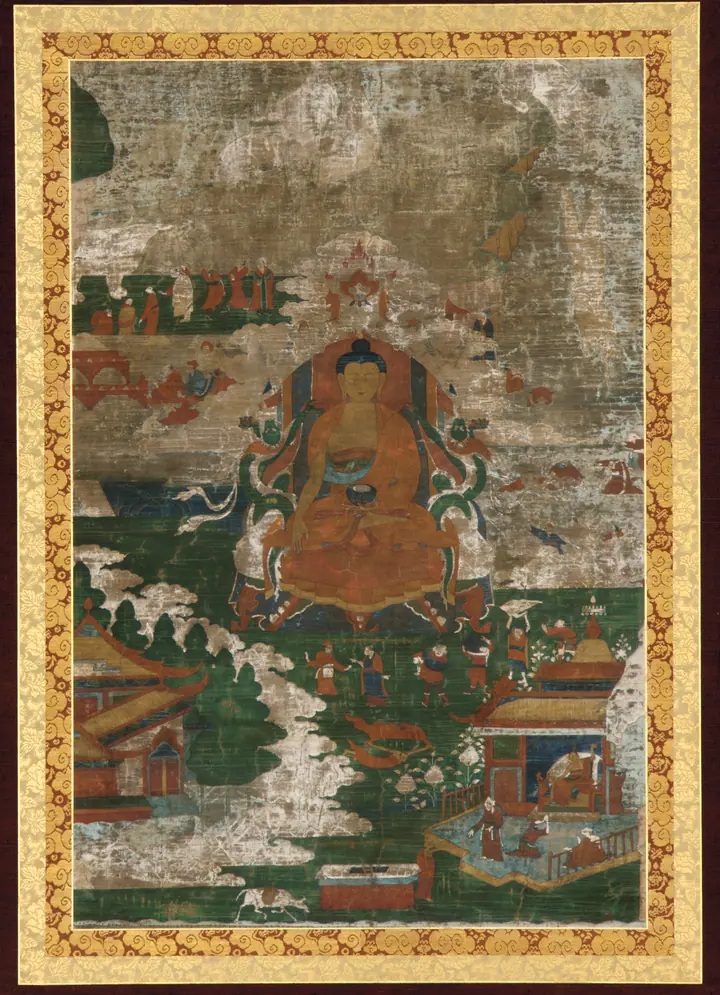
Sakyamuni enthroned; and biographical scenes
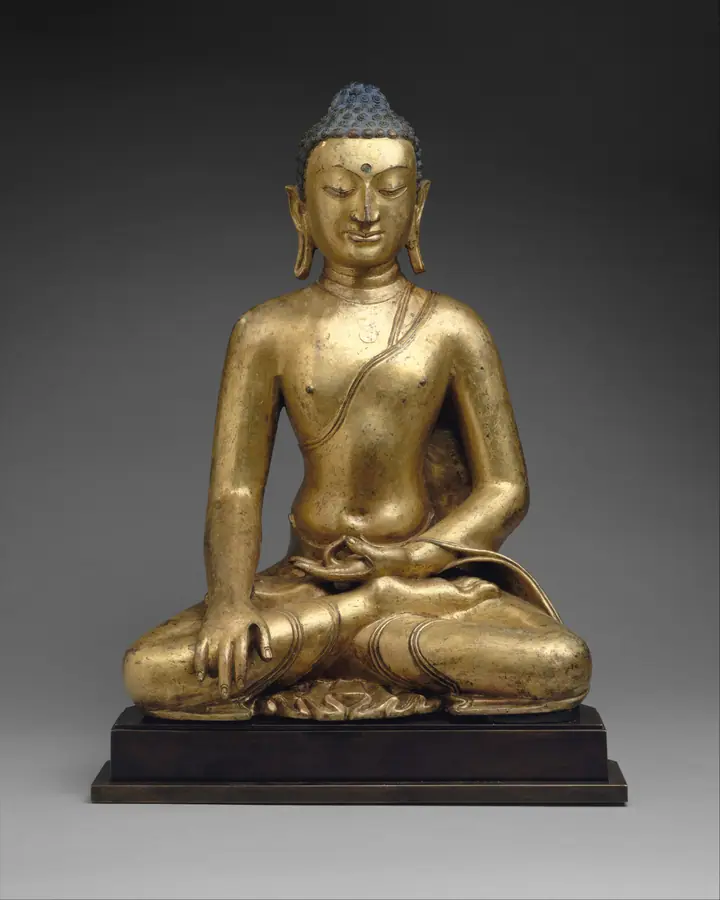
Buddha Shakyamuni or Akshobhya, the Buddha of the East
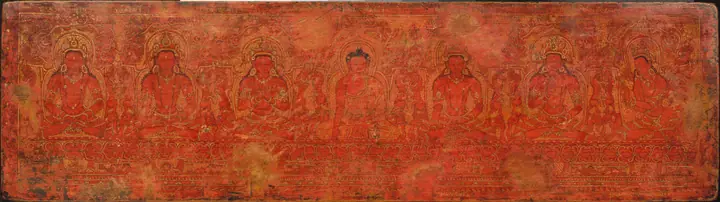
The Buddha Shakyamuni, Five Past Buddhas, and Maitreya
Connections
33 linked records across the archive.
Sources
References consulted for this record.