FT·PLA·057Stupa & Pilgrimage Site
Bodh Gaya
རྡོ་རྗེ་གདན
Wylierdo rje gdanSanskritVajrāsanaDate5th century BCE onward
Site of the Buddha’s enlightenment in Bihar, marked by the Mahabodhi Temple and Bodhi tree, and the foremost place of pilgrimage for all Buddhists.
Also known asBodhgaya · Mahabodhi Temple · Dorje Den · Vajrasana · Buddha Gaya
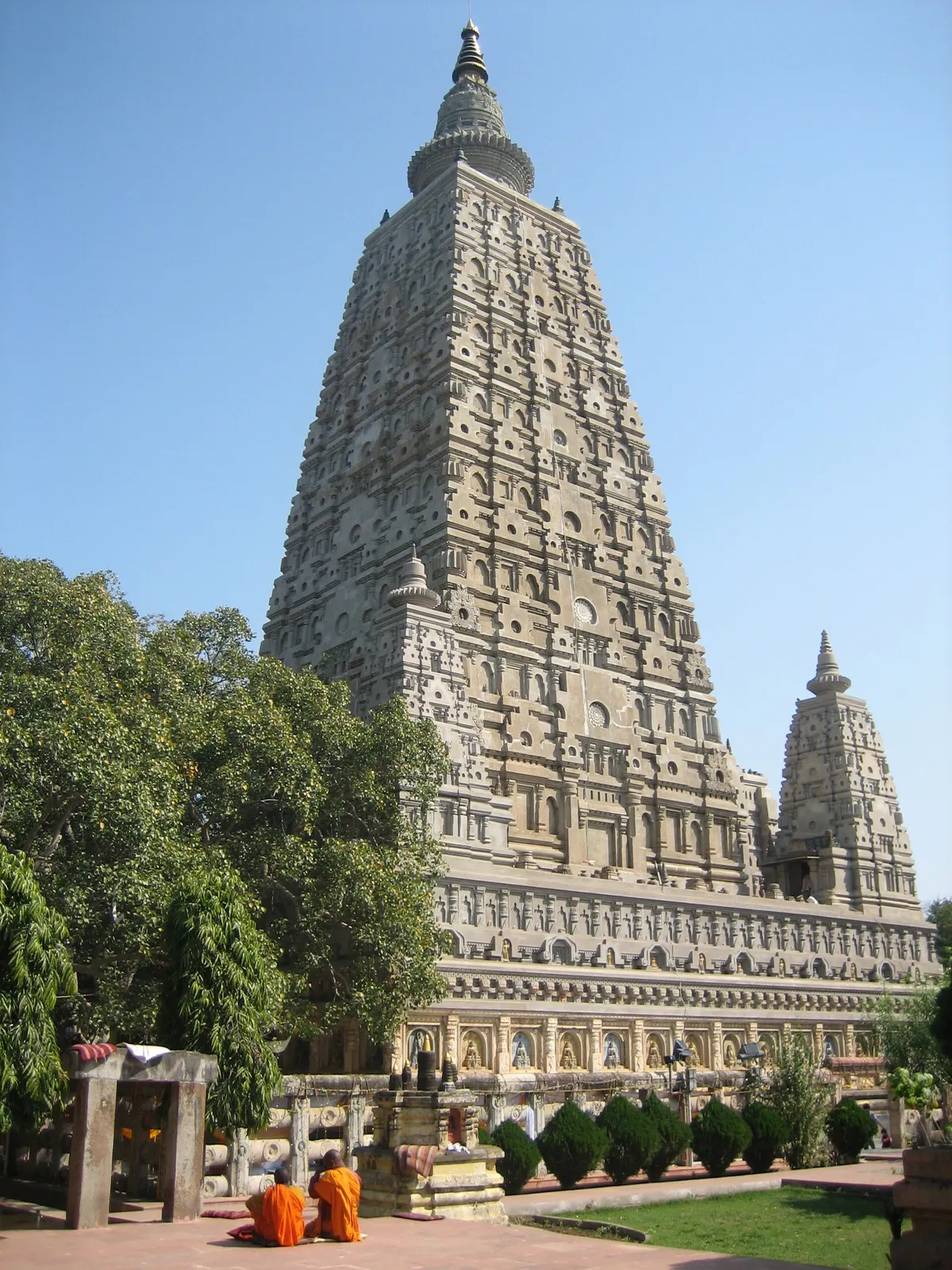
Bodh Gaya, in the Gaya district of Bihar, is the place where Siddhartha Gautama is held to have attained enlightenment while seated beneath a pipal tree, becoming the Buddha. It is the first of the four great pilgrimage places connected with his life, with Lumbini, Sarnath and Kushinagar. Tibetans call it Dorje Den, the ‘Vajra Seat’, after the Sanskrit Vajrasana, the unshakeable spot on which every Buddha of this age is said to awaken. Tibetan pilgrims and translators travelled here from the 11th century, and Tibetan guidebooks describe it as the centre of the world.
The Mahabodhi Temple is a brick tower about 55 metres high with four corner turrets, built in the 5th or 6th century CE on the site of a shrine attributed to the emperor Ashoka in the 3rd century BCE. Behind it grows the Bodhi tree, a descendant of the original, and between tree and temple lies the Vajrasana, a polished sandstone slab of Ashoka’s time. Carved stone railings, votive stupas, and shrines marking the seven weeks the Buddha spent here after his awakening fill the sunken compound. The sanctum holds a gilded image of the Buddha touching the earth.
After the decline of Buddhism in India the temple fell into disrepair and passed into Hindu hands; it was restored in the 1880s under Alexander Cunningham, following earlier Burmese repairs. Since 1949 it has been run by a committee under a Bihar state law, an arrangement Buddhist groups continue to contest. UNESCO inscribed the temple in 2002. Monasteries of many countries now surround it, including houses of all the Tibetan schools. Each winter Tibetans gather for the Nyingma and Kagyu prayer festivals and to make prostrations around the temple, and the Dalai Lama has given the Kalachakra initiation here several times, most recently in 2017.
Connections
15 linked records across the archive.
Sources
References consulted for this record.
- 01Mahabodhi Temple Complex at Bodh Gaya — UNESCO World Heritage Centre
- 02Mahabodhi Temple — Wikipedia
- 03Bodh Gaya — Wikipedia
- 04Toni Huber, The Holy Land Reborn: Pilgrimage and the Tibetan Reinvention of Buddhist India (University of Chicago Press, 2008)