FT·SCH·003Major School
Kagyu
བཀའ་བརྒྱུད
Wyliebka' brgyudDate11th–12th century
Family of lineages descending from Marpa, Milarepa and Gampopa, centred on Mahamudra meditation and the Six Dharmas of Naropa and known for its hermit yogins.
Also known asKagyupa · Kagyud · Dakpo Kagyu · Marpa Kagyu · Oral Lineage
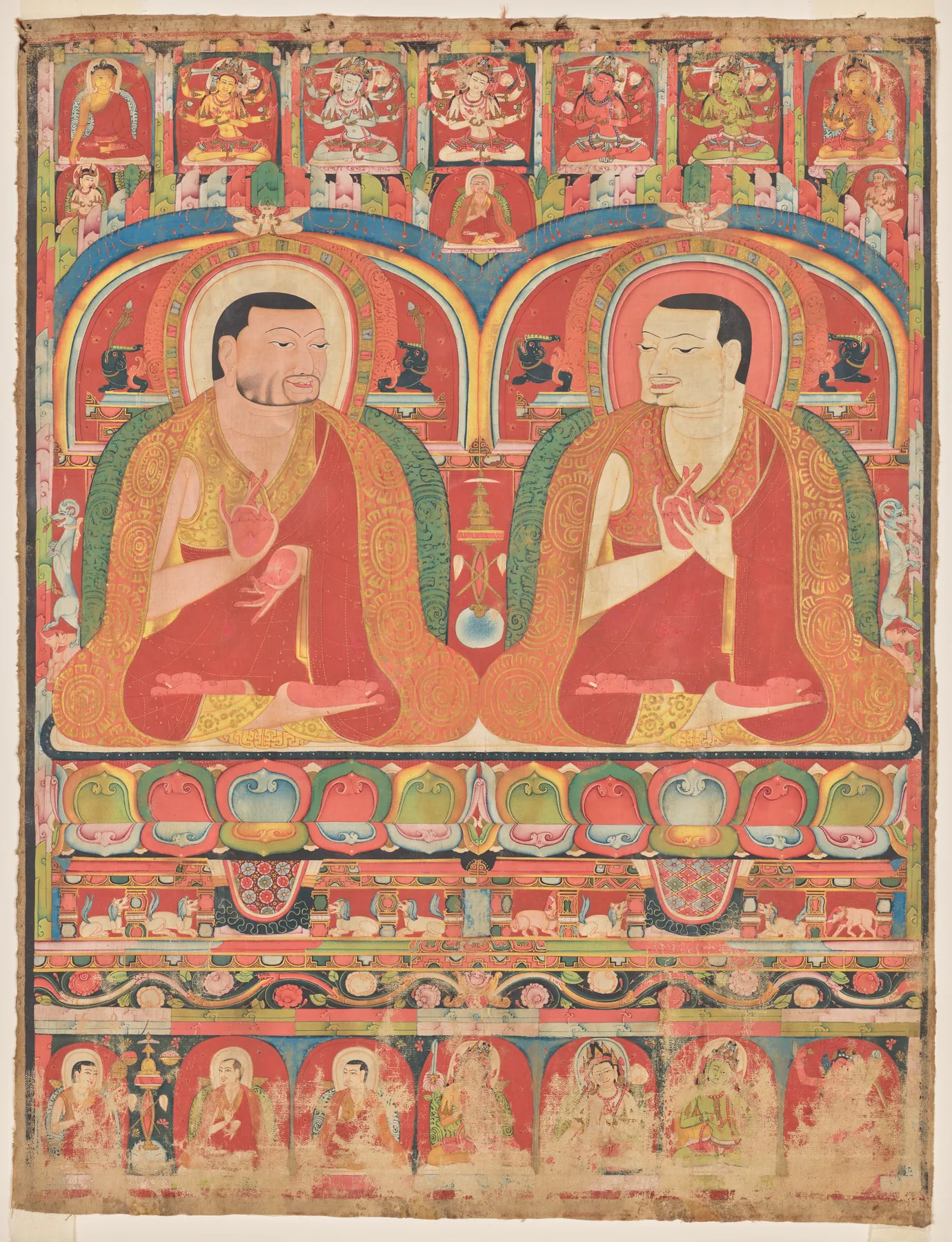
The Kagyu, ‘lineage of the oral instructions’, is one of the four main schools of Tibetan Buddhism. It traces its teachings from the buddha Vajradhara through the Indian adepts Tilopa and Naropa to the Tibetan translator Marpa in the eleventh century, then to the hermit-poet Milarepa and his student Gampopa. Gampopa, a monk trained in the Kadam school, combined monastic life with the yogic practices he had received and founded Daklha Gampo in 1121. The many branches that derive from him are known collectively as the Dakpo Kagyu.
Two bodies of practice define the school. Mahamudra, the ‘Great Seal’, is a set of instructions for recognising the nature of mind as empty, luminous and unimpeded. It is taught through calm abiding and insight meditation, through tantric practice, or by direct introduction from the teacher, and its progress is described in four stages, the four yogas. The Six Dharmas of Naropa are tantric yogas of the completion stage: inner heat, illusory body, dream, clear light, the intermediate state and transference of consciousness. Both rest on devotion to the teacher. The principal deities are Chakrasamvara and Vajravarahi, and the three-year retreat is the standard training of a Kagyu lama.
Tradition counts ‘four senior and eight junior’ branches. The senior lines, founded by Gampopa’s direct heirs, are the Karma, Barom, Tsalpa and Phagdru Kagyu; the junior, founded by students of Phagmo Drupa, include the Drikung, Taklung and Drukpa. The Karma, Drikung, Drukpa and Taklung survive as independent orders with their own heads, the Drukpa being the state tradition of Bhutan. The Shangpa Kagyu is a separate lineage with a similar name. Kagyu hierarchs held political power in Tibet between the fourteenth and seventeenth centuries, and the school is now established worldwide.
In the collection
1 work in the collection relate to Kagyu.
Connections
42 linked records across the archive.
Sources
References consulted for this record.
- 01Kagyu — Wikipedia
- 02Mahamudra — Wikipedia
- 03Peter Alan Roberts (trans.), Mahāmudrā and Related Instructions: Core Teachings of the Kagyü Schools (Wisdom Publications, 2011)