FT·SCH·002Major School
Kadam
བཀའ་གདམས
Wyliebka' gdamsDatefounded 1056–57
School founded by Atisha’s disciple Dromtonpa in the eleventh century, known for monastic discipline, the graded path and mind training; later absorbed into the Gelug.
Also known asKadampa · Kadam School · Old Kadam · Bka' gdams
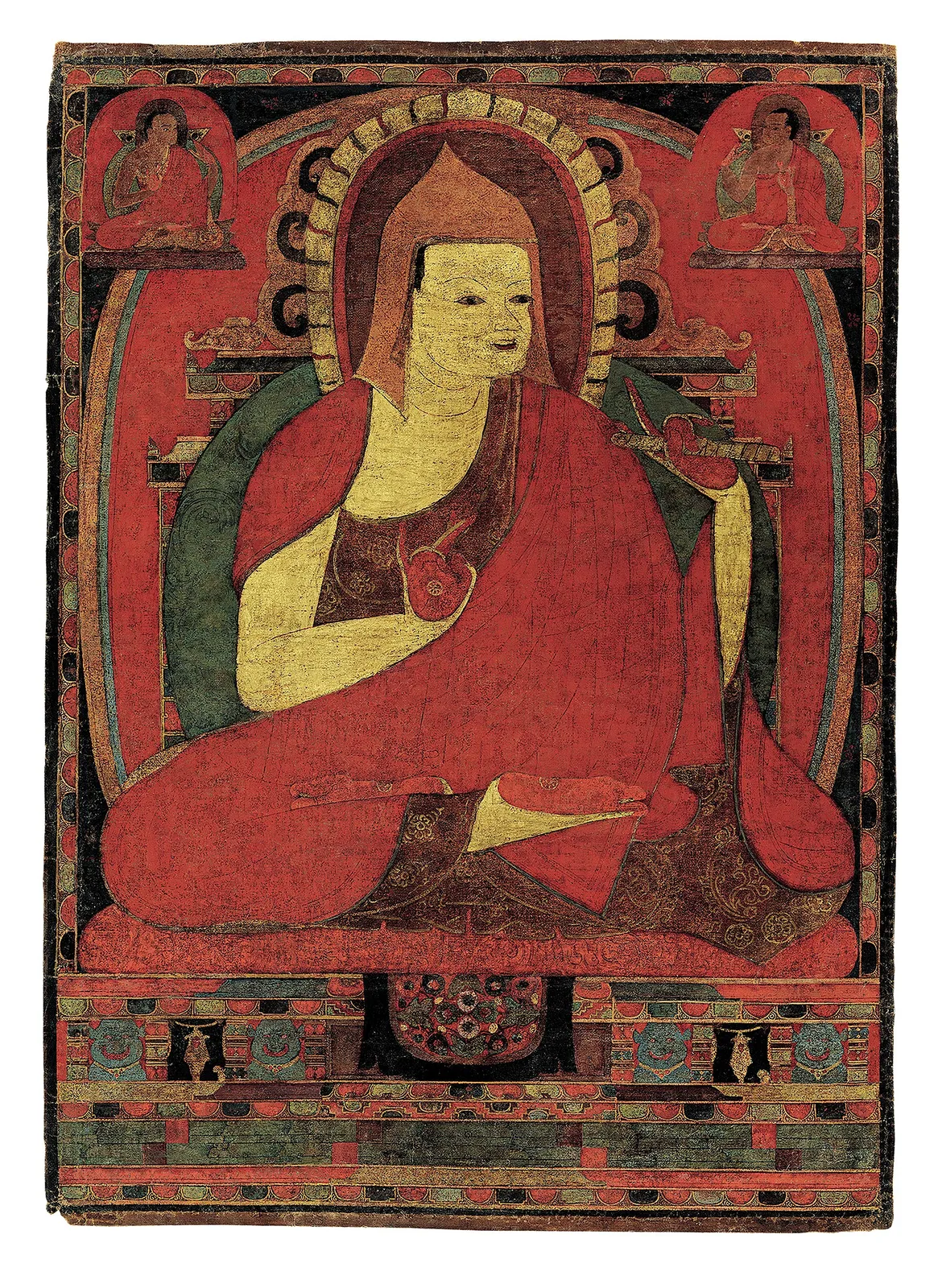
The Kadam was the first of the new schools of the ‘later spread’ of Buddhism in Tibet. It grew from the teaching of the Bengali master Atisha, who worked in Tibet from 1042 until his death in 1054, and was organised by his lay disciple Dromtonpa, who founded Reting monastery north of Lhasa in 1056 or 1057. The name is usually explained as ‘those who take all the Buddha’s words (ka) as personal instruction (dam)’. Kadam teachers were admired for plain living, strict ethics and reticence about tantra.
Kadam teaching rests on Atisha’s Lamp for the Path to Enlightenment, which arranges practice in stages suited to persons of lesser, middling and greater scope: those seeking a good rebirth, those seeking freedom from cyclic existence, and those seeking buddhahood for the sake of all. This became the lamrim, ‘stages of the path’. Its companion is lojong, ‘mind training’, methods for generating bodhichitta, especially the exchange of self and other, codified in Langri Thangpa’s Eight Verses and Chekawa’s Seven Points. Practitioners relied on four deities, Shakyamuni, Avalokiteshvara, Tara and Achala,. Three lineages descended from Dromtonpa’s chief students: the scriptural, the instructional and the oral-precept traditions.
Other centres followed, among them Sangphu Neuthok, founded in 1073, which became Tibet’s leading college of logic and philosophy, and Narthang, founded in 1153 and known for its early compilation of the canon. Kadam methods entered the Kagyu school through Gampopa and influenced the Sakya. In the fifteenth century Tsongkhapa built his reform on Kadam foundations, and his followers were called the ‘New Kadam’; the older monasteries were absorbed into the Gelug school. No independent Kadam order survives, but its lamrim and lojong are practised in every Tibetan tradition.
Connections
25 linked records across the archive.
Sources
References consulted for this record.
- 01Kadam (Tibetan Buddhism) — Wikipedia
- 02Kadampa — Rigpa Shedra Wiki
- 03Reting Monastery — Wikipedia
- 04Thupten Jinpa (trans.), The Book of Kadam: The Core Texts (Wisdom Publications, 2008)