FT·SCH·001Major School
Nyingma
རྙིང་མ
Wyliernying maDate8th-century origins
Oldest of the Tibetan Buddhist schools, tracing its teachings to Padmasambhava and the eighth-century translations, with Dzogchen as its highest view and practice.
Also known asNyingmapa · Ngagyur Nyingma · Old Translation School · Ancient School · Early Translation School
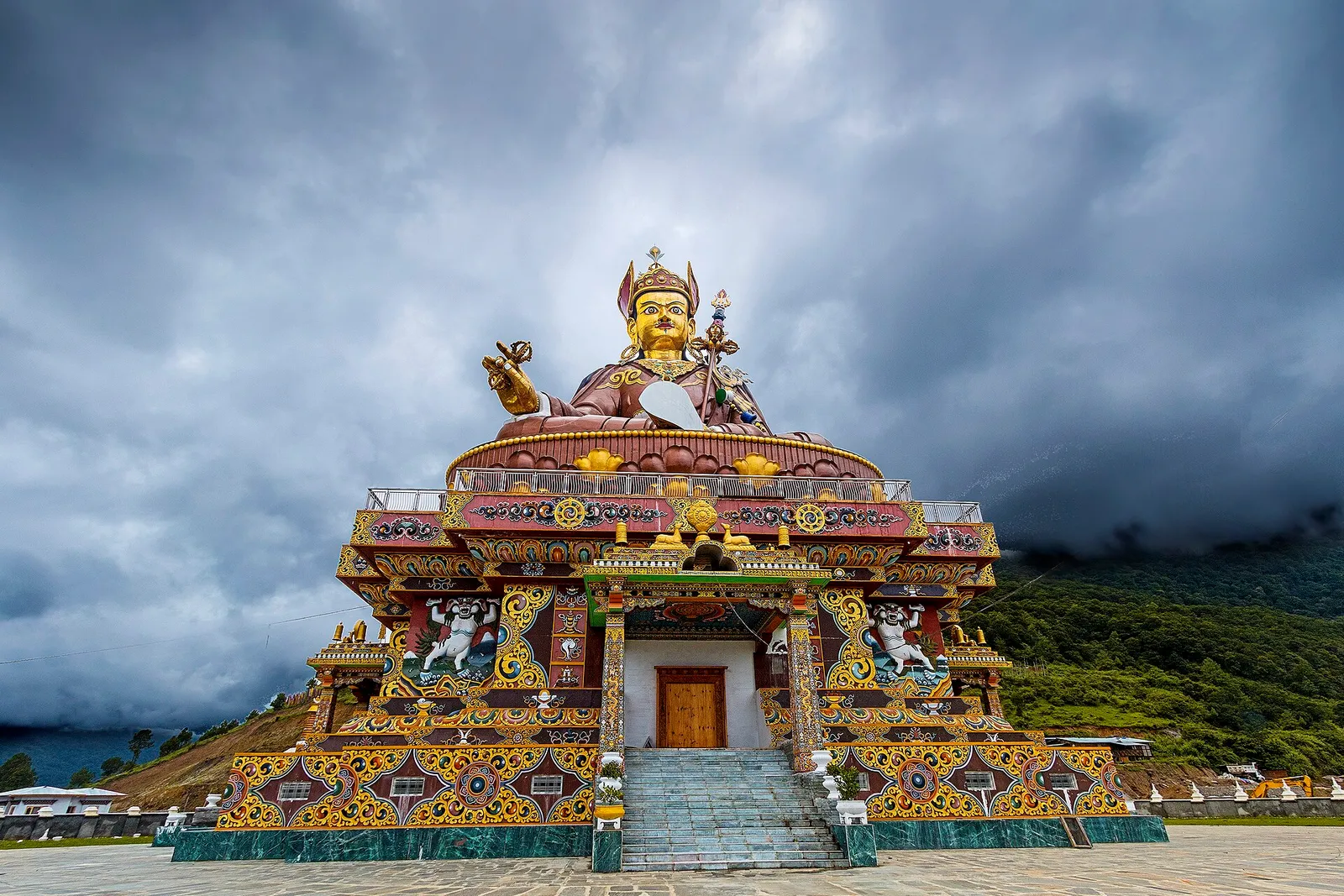
The Nyingma, ‘the Ancients’, is the school that follows the tantras translated into Tibetan during the imperial period, from the eighth century to the collapse of the empire in the ninth. It looks to the Indian master Padmasambhava, the abbot Shantarakshita and the emperor Trisong Detsen as its founders. The name arose only in the eleventh century, to distinguish these older lineages from the ‘new’ (sarma) schools formed around later translations. For centuries the tradition was carried chiefly by family lines of lay tantric priests, the ngakpas, and by small hermitages, with few large monasteries.
The Nyingma arrange Buddhist teaching in nine vehicles (yanas). Three belong to the sutras: those of the hearers, the solitary buddhas and the bodhisattvas. Three are outer tantras: kriya, charya and yoga. Three are inner tantras: Mahayoga, centred on the visualisation of deities, with the Guhyagarbha as root tantra; Anuyoga, working with the channels and energies of the subtle body; and Atiyoga or Dzogchen, the ‘Great Perfection’, which introduces the practitioner directly to the primordially pure and spontaneously present nature of mind. Teachings descend by two routes: the long oral transmission (kama) and revealed treasures (terma), held to have been hidden by Padmasambhava and recovered by later tertons.
Longchenpa in the fourteenth century and Jigme Lingpa in the eighteenth gave Dzogchen its classical formulations, and Mipham in the nineteenth supplied a scholastic curriculum. Six ‘mother’ monasteries developed from the twelfth century onward: Kathok, Dorje Drak, Mindrolling, Palyul, Dzogchen and Shechen, most of them re-established in India and Nepal after 1959. The school has no hereditary or elected head; a representative role created in exile was first held by Dudjom Rinpoche. Nyingma practice is widespread across Tibet, Bhutan, Sikkim and Nepal, and at large encampments such as Larung Gar.
Connections
58 linked records across the archive.
The Chronicle08
Sources
References consulted for this record.
- 01Nyingma — Wikipedia
- 02Nyingma — Rigpa Shedra Wiki
- 03Dudjom Rinpoche, The Nyingma School of Tibetan Buddhism: Its Fundamentals and History, trans. Gyurme Dorje and Matthew Kapstein (Wisdom Publications, 1991)