FT·PLA·062Stupa & Pilgrimage Site
Paro Taktsang
སྤ་གྲོ་སྟག་ཚང
Wyliespa gro stag tshangDatecave site 8th century; temples built 1692
Cliffside temple complex above the Paro valley in Bhutan, built in 1692 around a cave where Padmasambhava is said to have meditated in the 8th century.
Also known asTiger's Nest · Taktsang · Taktsang Palphug · Paro Taktshang
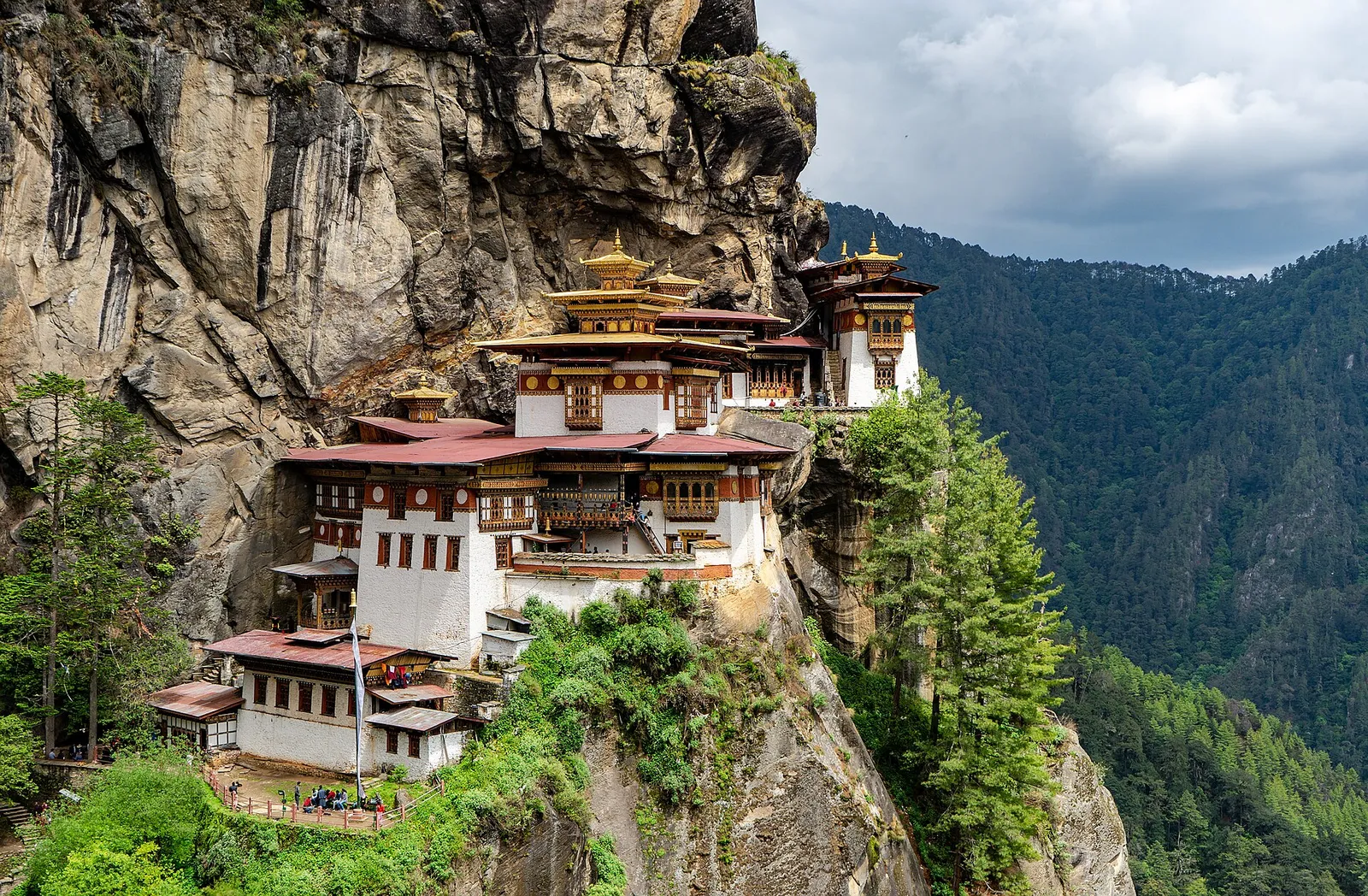
Taktsang, the ‘Tiger’s Lair’, is the most venerated pilgrimage site in Bhutan. Tradition relates that Padmasambhava, the Indian master who helped establish Buddhism in Tibet in the 8th century, flew here on the back of a tigress, a transformation of his consort, and in the wrathful form of Dorje Drolo subdued the local spirits while meditating in a cave on the cliff. It is the best known of several places in the Himalaya called Taktsang. Later visitors are said to have included Milarepa, the Tibetan adept Thangtong Gyalpo, and Zhabdrung Ngawang Namgyal, the founder of the Bhutanese state.
The temples cling to a ledge of a granite cliff at about 3,120 metres, some 900 metres above the floor of the Paro valley and ten kilometres north of the town. The complex was built in 1692 by Tenzin Rabgye, the fourth civil ruler of Bhutan, fulfilling an intention of the Zhabdrung. Four main temples and several dwellings, white-walled with gilded roofs, are linked by stairways cut into the rock; the principal shrine encloses the cave of Padmasambhava. The approach is a climb of two to three hours through pine forest hung with prayer flags, past a waterfall and a viewpoint opposite the cliff.
A fire on 19 April 1998 destroyed the main buildings together with their paintings and images. The royal government rebuilt the complex using traditional methods, and it was reconsecrated in 2005. Taktsang belongs to the Drukpa Kagyu state church, with a strong Nyingma association through Padmasambhava, and a small number of monks live there. It is also Bhutan’s most visited monument, and entry is regulated, with photography forbidden inside. Bhutanese make the climb as an act of merit, especially around the Paro Tsechu festival in spring, which honours Padmasambhava.
Connections
8 linked records across the archive.
Sources
References consulted for this record.
- 01Paro Taktsang — Wikipedia
- 02Michael Aris, Bhutan: The Early History of a Himalayan Kingdom (Aris & Phillips, 1979)
- 03Karma Phuntsho, The History of Bhutan (Random House India, 2013)