FT·SCH·004Major School
Sakya
ས་སྐྱ
Wyliesa skyaDatefounded 1073
School founded at Sakya monastery in 1073 by the Khon family, noted for its scholarship and for the Lamdre, the ‘Path with its Result’, centred on the Hevajra Tantra.
Also known asSakyapa · Sakya School · Sa skya · Pale Earth School
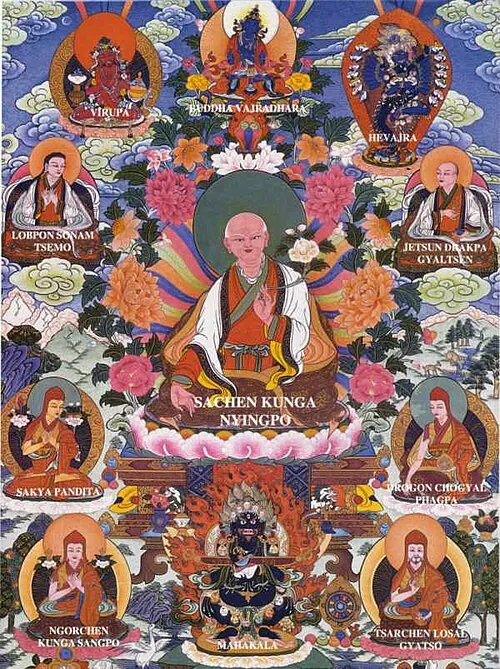
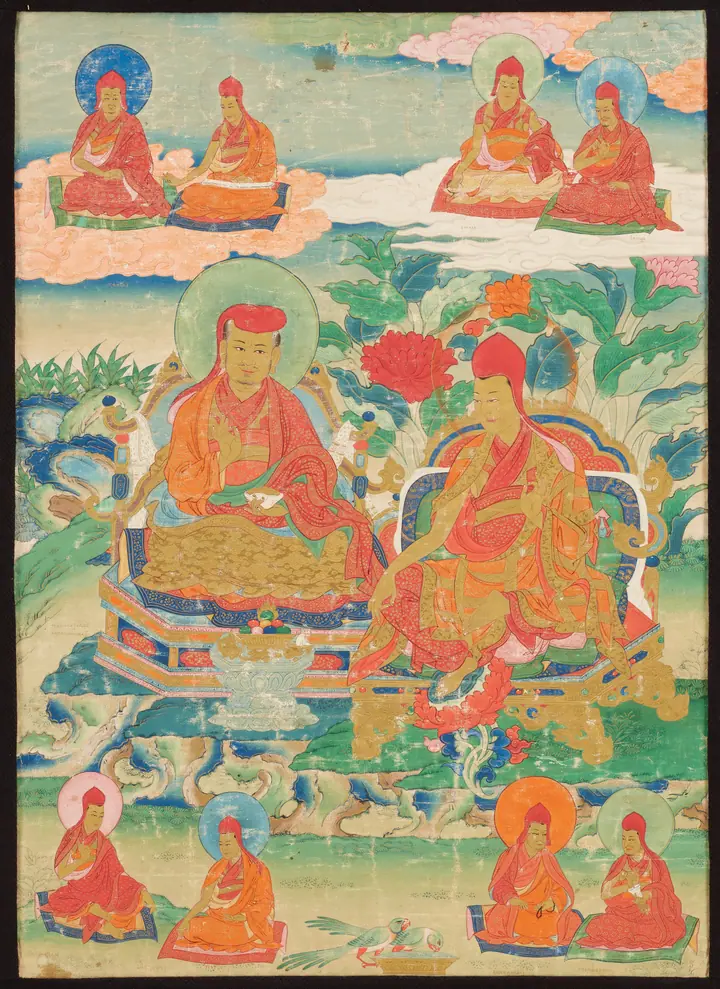
The Sakya school takes its name from the monastery founded in 1073 by Khon Konchok Gyalpo at a site of ‘pale earth’ (sa kya) in Tsang. Leadership has remained in the Khon family ever since. Five early masters, called the five founding patriarchs, shaped the tradition: Sachen Kunga Nyingpo, his sons Sonam Tsemo and Drakpa Gyaltsen, Sakya Pandita and Chogyal Phagpa. Through the last two the school became the agent of Mongol authority, and Sakya administrators governed Tibet from the 1260s until 1354.
The central teaching is the Lamdre, ‘the Path with its Result’, which originates with the Indian adept Virupa and is based on the Hevajra Tantra. It presents the whole path, from the sutra teachings on renunciation and compassion, set out as the ‘three visions’, to the tantric practice of the ‘three continua’. Its characteristic view is the inseparability of samsara and nirvana: the mind’s nature is the union of clarity and emptiness, so the result is already present in the path. Other hallmarks are Parting from the Four Attachments, the Vajrayogini practice of Naropa’s tradition, the protector Mahakala Panjaranatha, and a rigorous curriculum in logic founded by Sakya Pandita.
Two main sub-schools arose: the Ngor, founded by Ngorchen Kunga Zangpo in 1429, and the Tsar, deriving from Tsarchen Losal Gyatso in the sixteenth century. Scholars such as Gorampa and Shakya Chokden defined Sakya philosophy. The head of the school is the Sakya Trizin, ‘holder of the Sakya throne’. The forty-first, born in 1945, led the school in exile from Rajpur in India for more than fifty years; since 2017 the office has passed in fixed terms among qualified members of the family’s two palaces. Sakya buildings are recognisable by their grey walls with red and white stripes.
In the collection
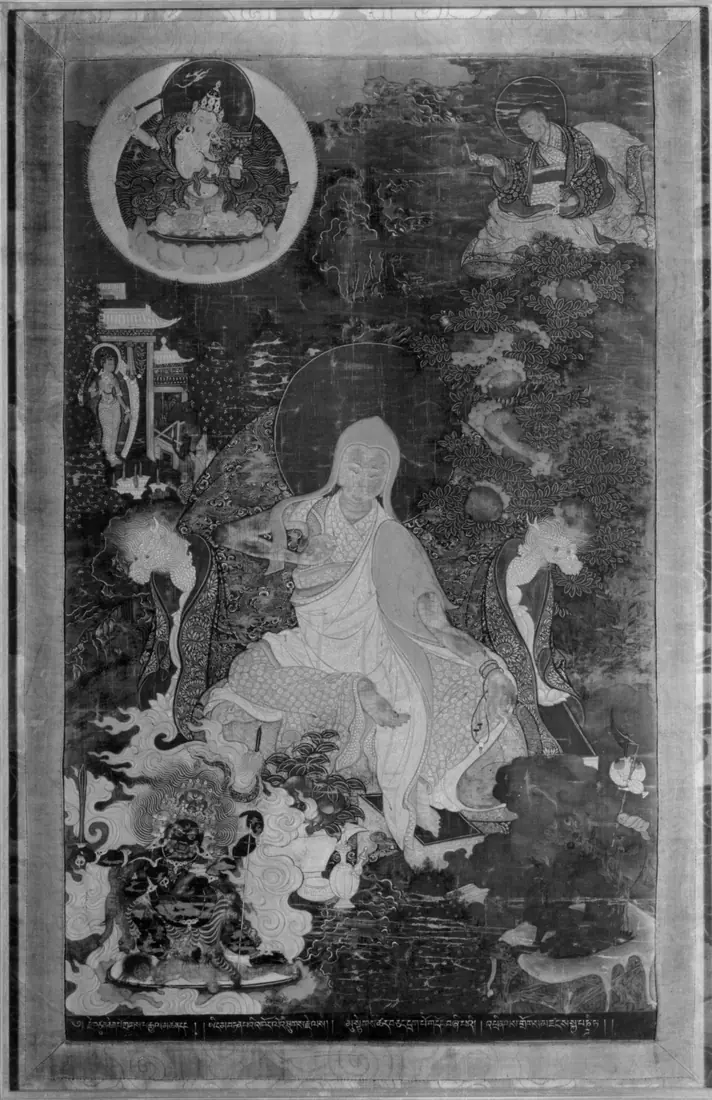
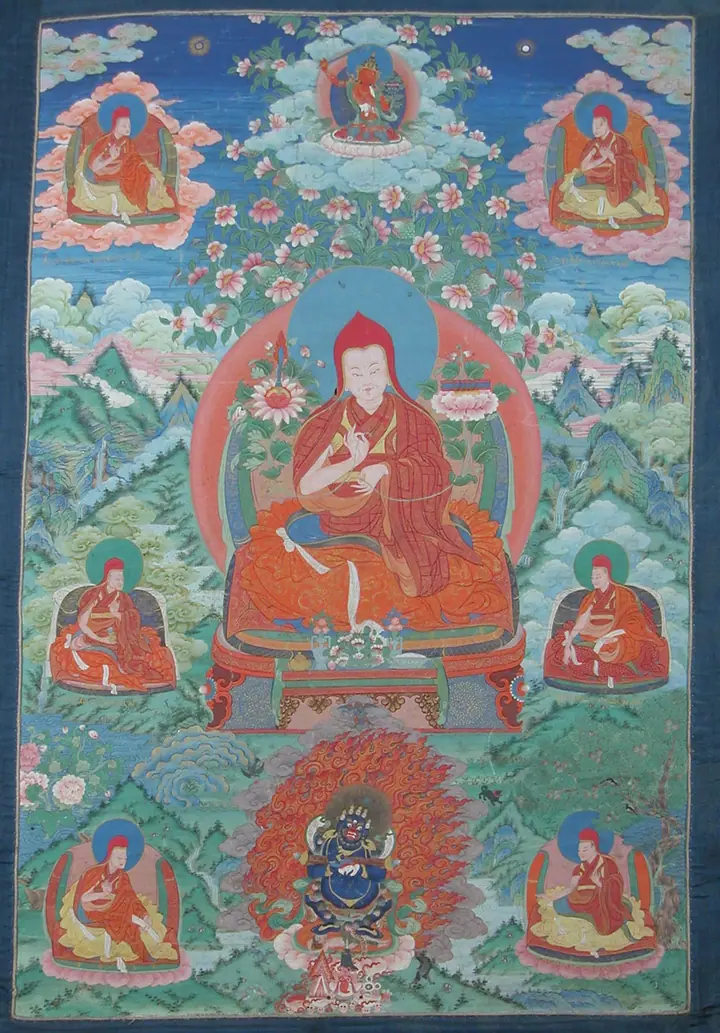
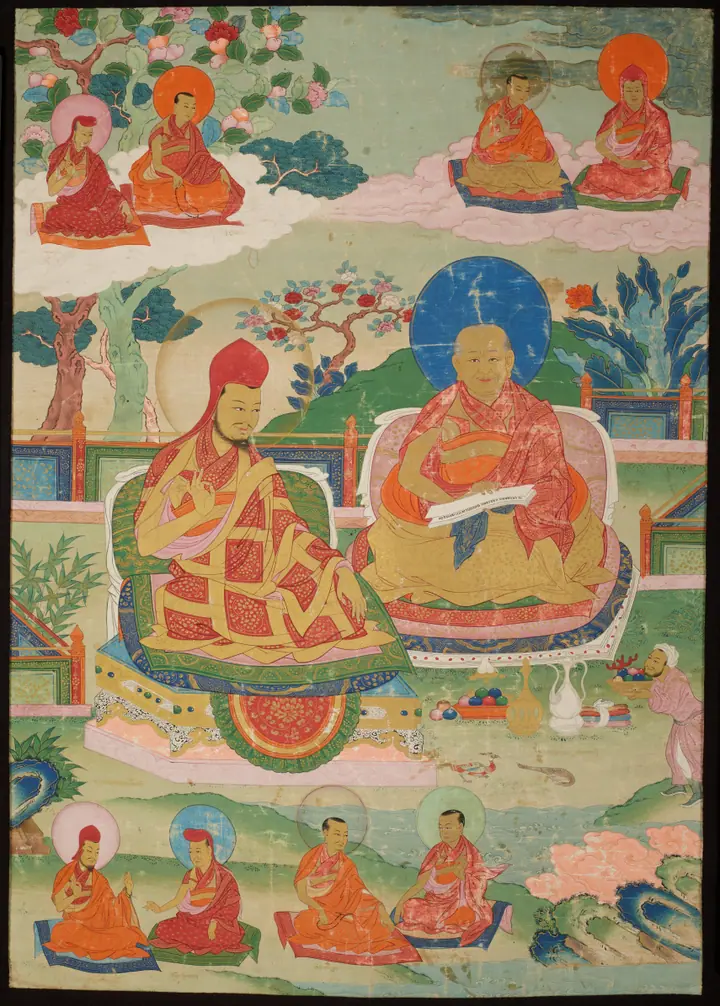
4 works in the collection relate to Sakya.
Connections
31 linked records across the archive.
Sources
References consulted for this record.