FT·DEI·036Meditational Deity (Yidam)
Yamantaka
གཤིན་རྗེ་གཤེད
Wyliegshin rje gshedSanskritYamāntaka
The ‘Destroyer of Death’, wrathful form of Manjushri, best known as buffalo-headed Vajrabhairava with nine faces, thirty-four arms and sixteen legs; a principal Gelug deity.
Also known asVajrabhairava · Yamāntaka · Dorje Jigje · Shinje She · Ekavira Vajrabhairava · Yamari
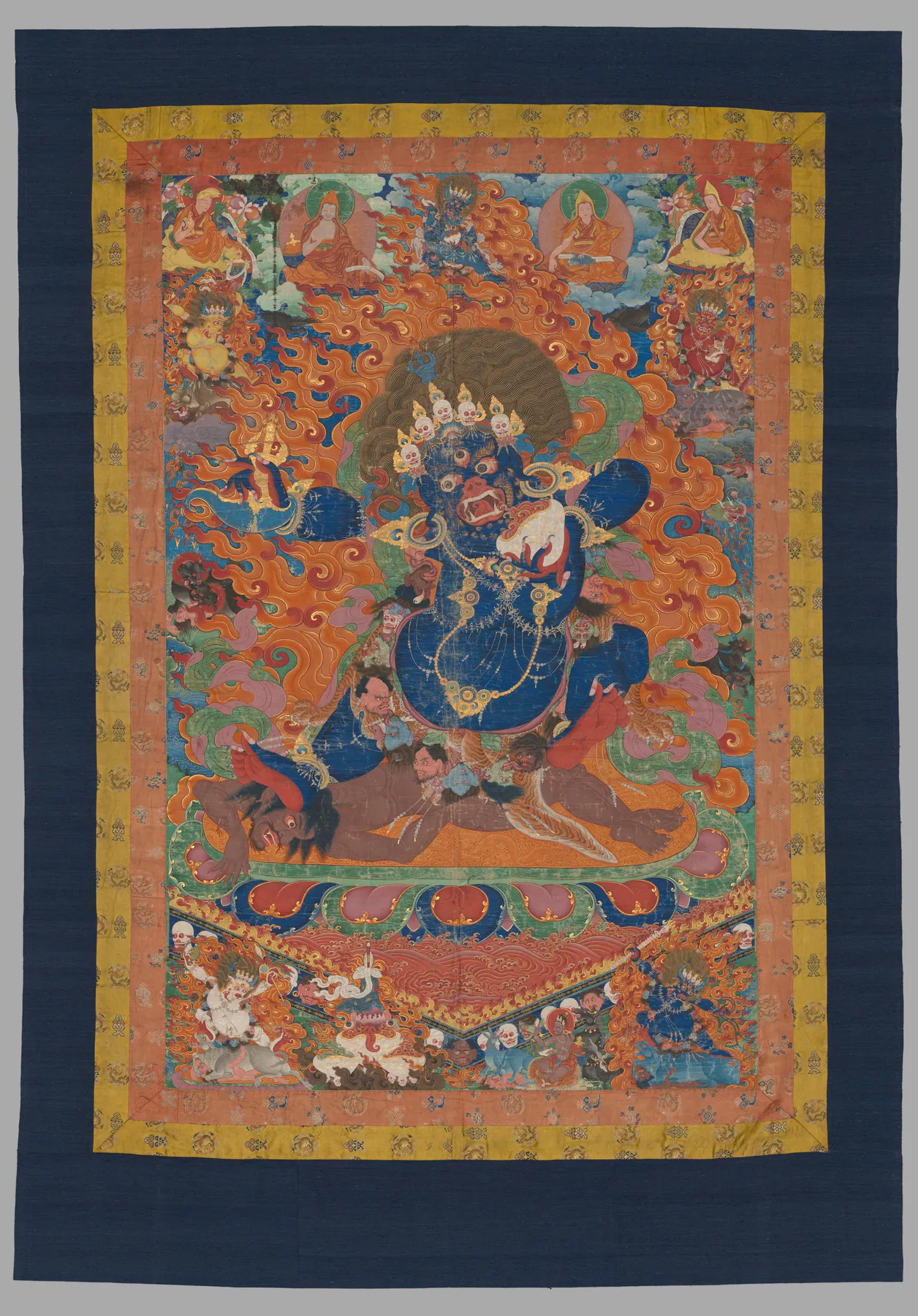
Yamantaka, ‘the one who ends Yama’, is the wrathful manifestation of Manjushri, bodhisattva of wisdom, and takes his name from the conquest of Yama, lord of death. The name covers three related tantric cycles: Vajrabhairava, ‘Vajra Terror’, and the Black and Red forms of Yamari, ‘Enemy of Yama’. All are Father tantras of the Highest Yoga class. In a well-known origin story Manjushri assumed a form more terrible than Yama’s own, with the head of a buffalo, in order to subdue him and bind him as a protector.
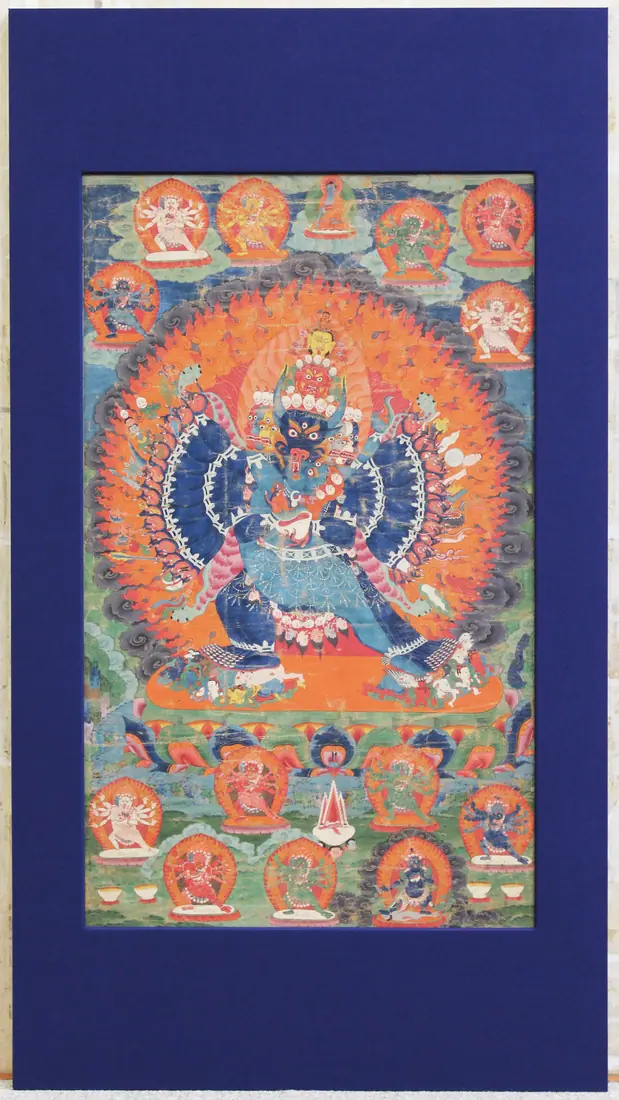
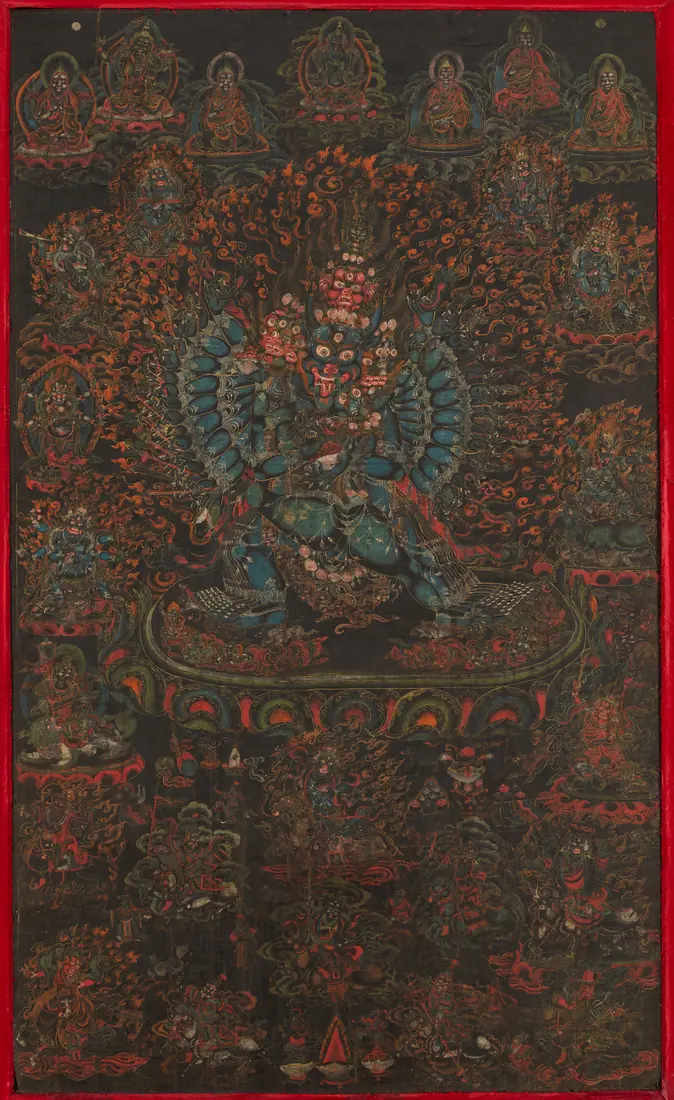
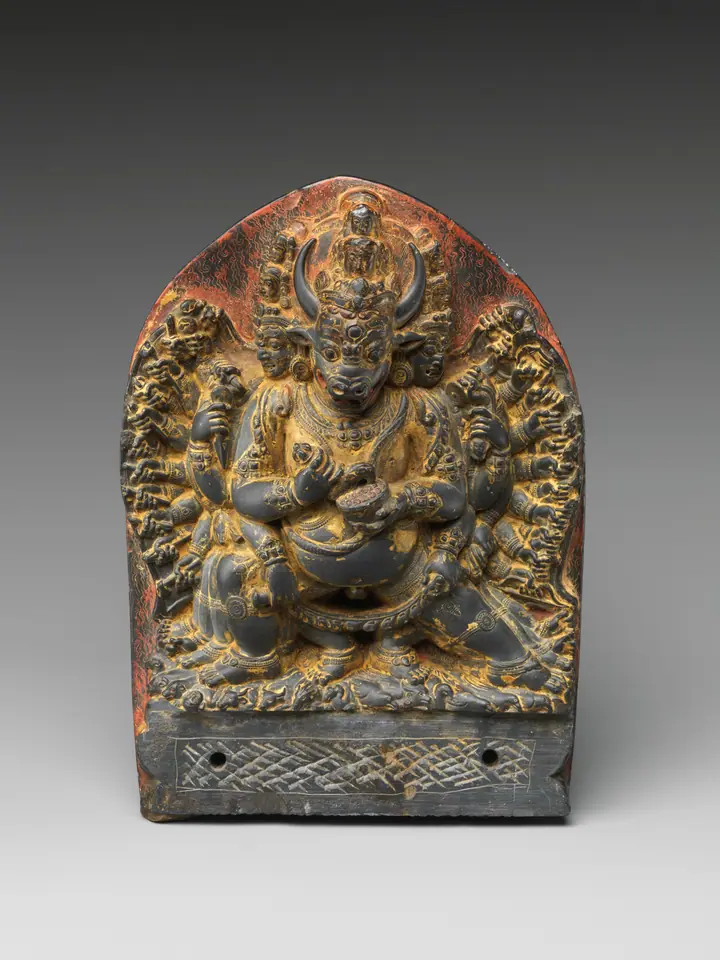
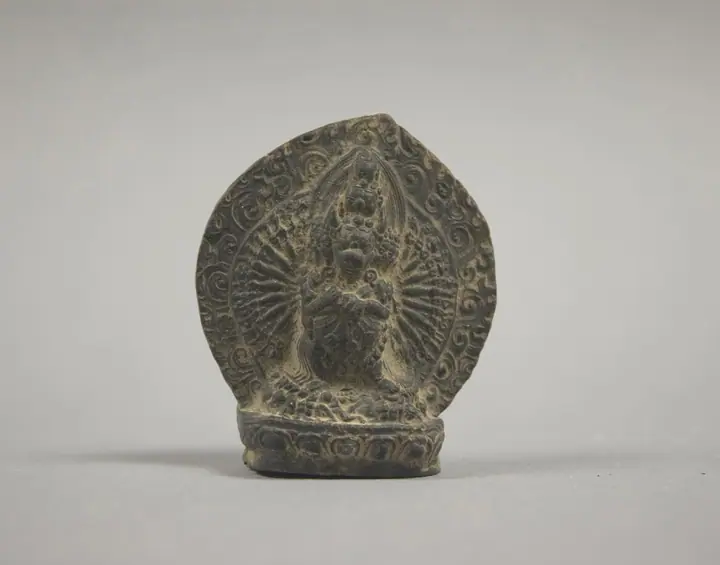
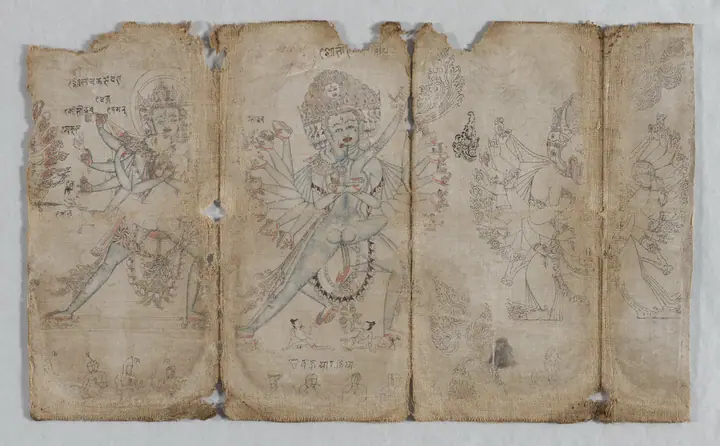
Vajrabhairava is dark blue-black, with nine faces, thirty-four arms and sixteen legs. The central face is that of a buffalo with flaming horns; three faces are ranged on each side, a red face rises between the horns, and above it is the slightly wrathful yellow face of Manjushri. The first pair of hands holds a curved knife over a skull cup at the heart, the next stretches an elephant hide behind him, and the rest fan out with weapons and emblems. He is naked, wearing bone ornaments and a garland of heads, and his legs trample animals, birds and worldly gods.
The practice was established in Tibet in the eleventh century, most famously by Ra Lotsawa Dorje Drak, whose biography is full of contests of ritual power. It is maintained in the Sakya and Kagyu schools and became central for the Gelug, whose founder Tsongkhapa practised it daily. Gelug training often begins with the Solitary Hero form, shown without a consort, or with the thirteen-deity mandala; in other versions he embraces the consort Vajravetali. His special protector is the buffalo-headed Yama Dharmaraja, who should not be mistaken for him.
In the collection
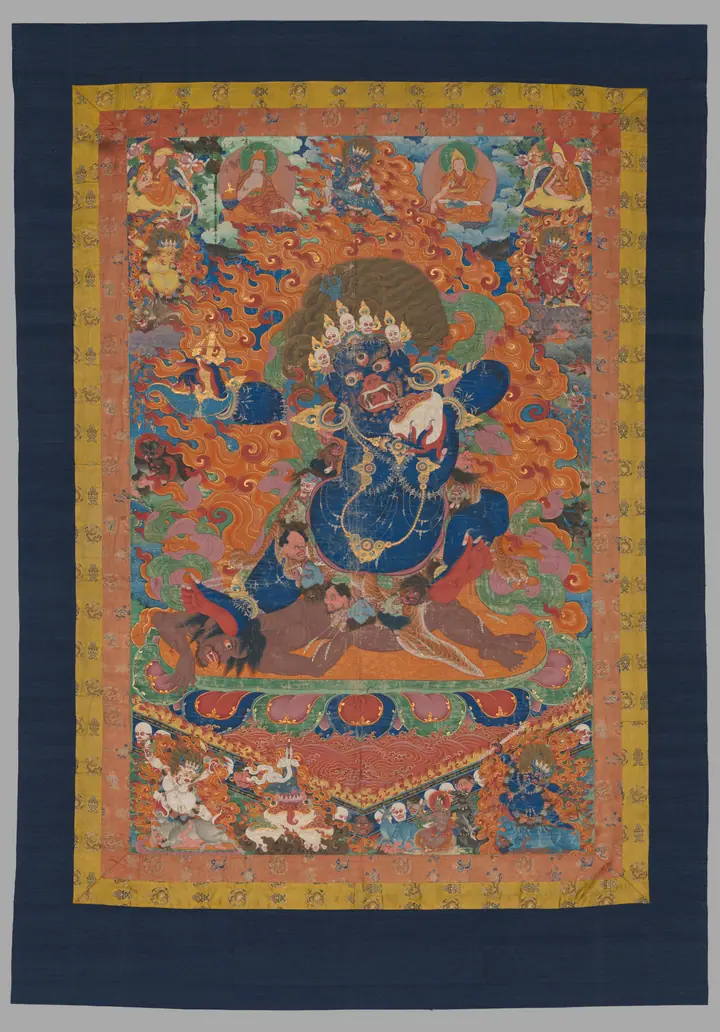
6 works in the collection depict or name Yamantaka.
Connections
10 linked records across the archive.
Sources
References consulted for this record.