FT·PLA·066Ancient Site
Tsaparang
རྩ་བྲང
Wyliertsa brangDatec. 10th century–1630
Ruined citadel-capital of the Guge kingdom on a clay pinnacle above the Sutlej, with 15th- and 16th-century temples preserving murals of the western Tibetan school.
Also known asTsaparang Citadel · Tsabrang · Guge Ruins · Zhabulang
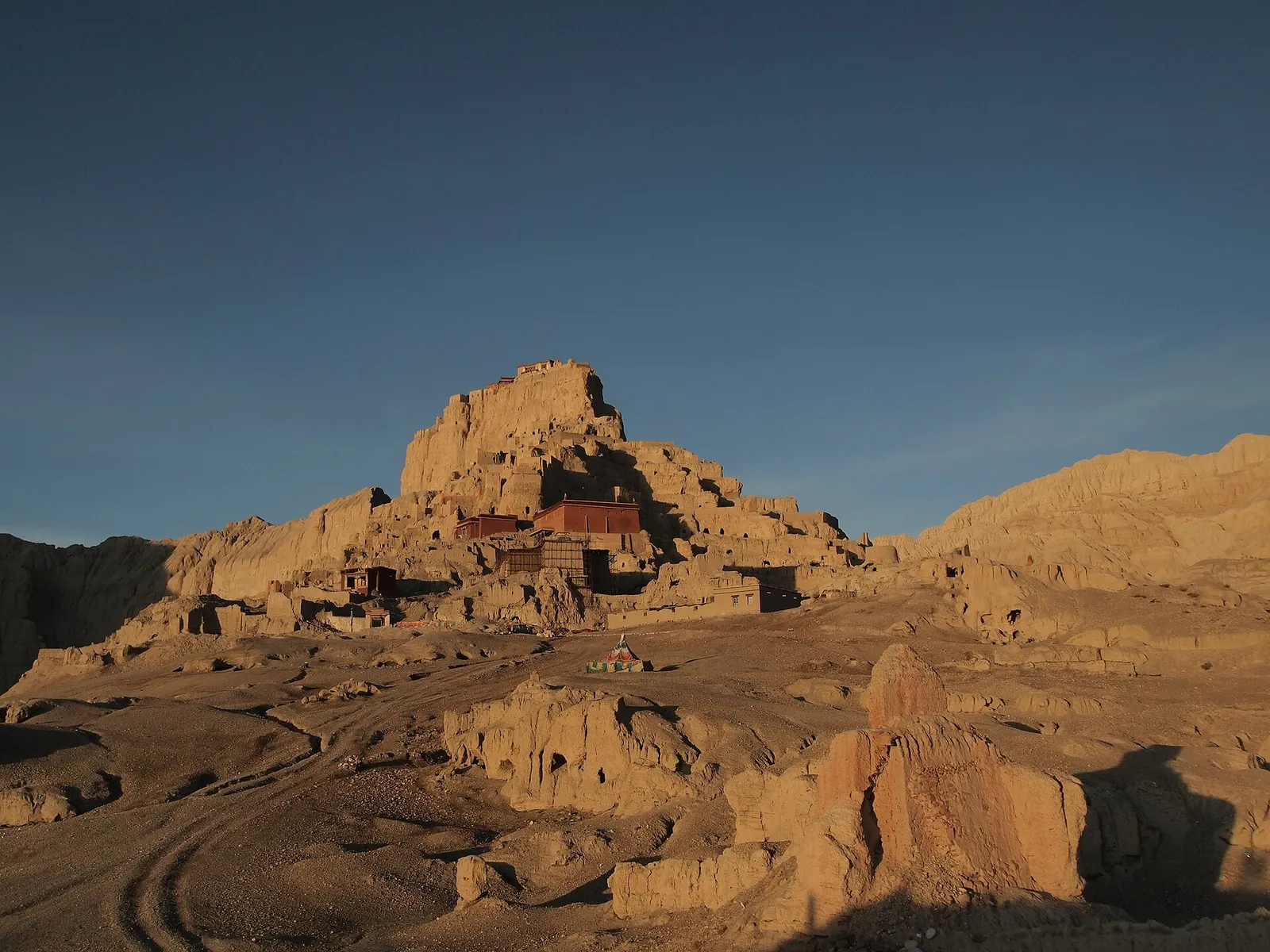
Tsaparang was the later capital and royal fortress of the kingdom of Guge in western Tibet. The settlement may date from the kingdom’s foundation in the 10th century, but its surviving temples belong mainly to the second flowering of Guge in the 15th and 16th centuries, when its kings were patrons of the newly founded Gelug school. In 1624 the Jesuit António de Andrade arrived from India, the first European known to have crossed the Himalaya into Tibet, and founded a short-lived mission. The city was besieged and taken by Ladakh in 1630 and never recovered.
The ruins cover a steep pinnacle of clay and conglomerate some 170 metres high, rising from the south bank of the Sutlej at about 3,800 metres. Houses and several hundred cave dwellings occupy the lower slopes. Above them stand four intact chapels: the White Temple and the Red Temple, with painted wooden ceilings and walls covered in images of Buddhas, protectors and scenes of court life, and the smaller chapels of Yamantaka and Tara. A tunnelled stairway climbs through the rock to the citadel on the summit, where the remains of the kings’ palace and a mandala chapel of Chakrasamvara survive.
Tsaparang lay empty for three centuries, its dry climate preserving the paintings. During the Cultural Revolution the clay statues in the temples were smashed, but most of the murals were left. The site was listed as a nationally protected monument in 1961, and Chinese archaeologists surveyed it in the 1980s, recording the remains of several hundred rooms, caves and stupas as well as armour and weapons from the final siege. Consolidation of the earthen structures has been carried out since. Visitors reach the site by road from Zanda, some twenty kilometres to the east, and photography inside the chapels is restricted.
Connections
8 linked records across the archive.
Sources
References consulted for this record.
- 01Tsaparang — Wikipedia
- 02Lama Anagarika Govinda, The Way of the White Clouds (Hutchinson, 1966)
- 03Roberto Vitali, The Kingdoms of Gu.ge Pu.hrang (Tho.ling gtsug.lag.khang lo.gcig.stong 'khor.ba'i rjes.dran.mdzad sgo'i go.sgrig tshogs.chung, 1996)