FT·PLA·014Temple
Alchi Monastery
ཨ་ལྕི་ཆོས་འཁོར
Wyliea lci chos 'khorDatec. 12th–13th century
Group of small temples in a village on the Indus in Ladakh whose wall paintings of about 1200 are the finest surviving examples of Kashmiri Buddhist art.
Also known asAlchi · Alchi Choskhor · Alchi Gompa · Alchi Chos-'khor
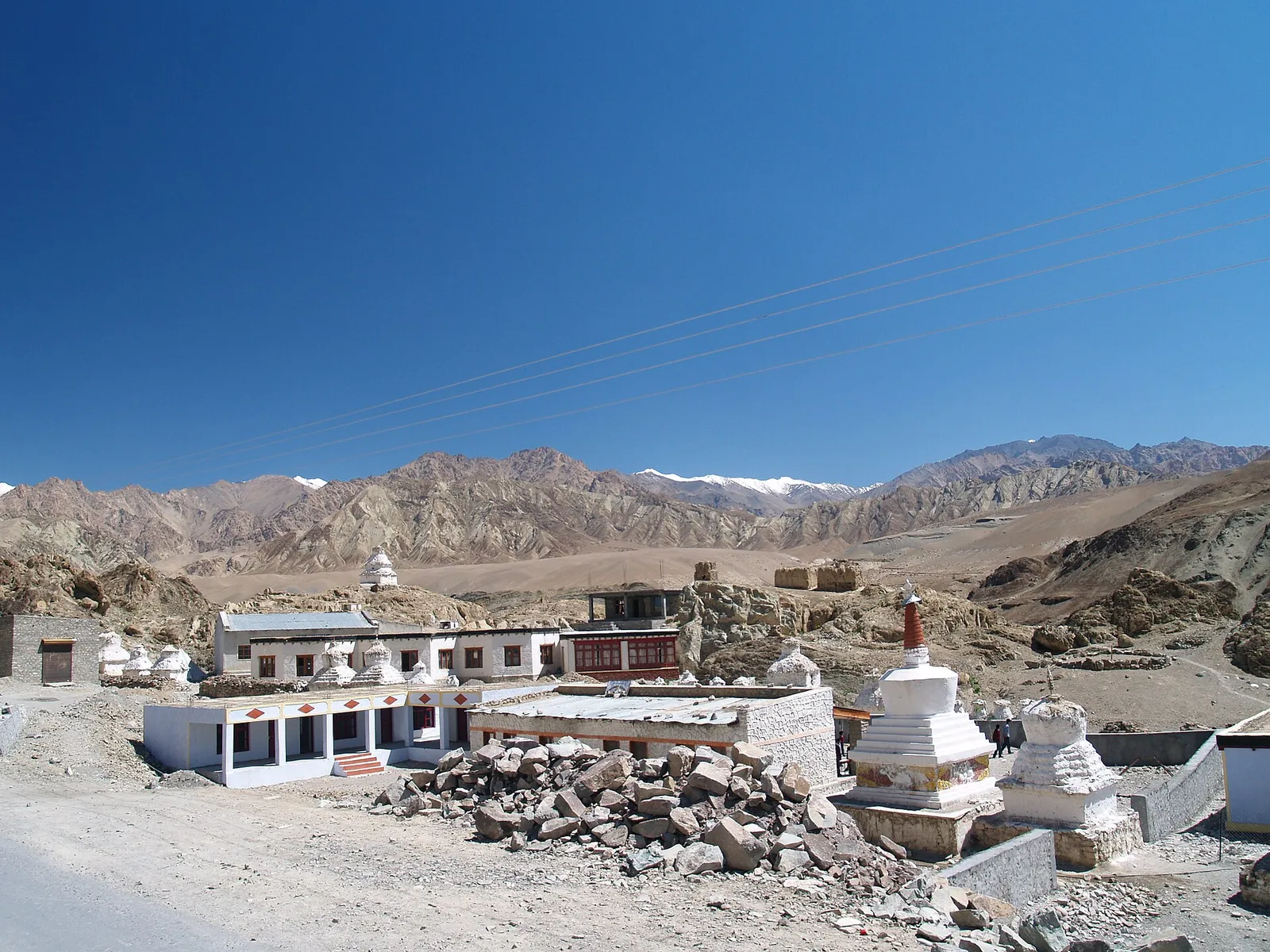
Alchi is a religious enclave, or choskhor, of five temples and several painted stupas in a village on the south bank of the Indus, about sixty-five kilometres west of Leh. Local tradition attributes it to the translator Rinchen Zangpo (958–1055), who brought Kashmiri artists to the western Himalaya. Inscriptions in the buildings name later founders, the monks Kalden Sherab and Tsultrim Ö of the Dro clan, and art historians date the main temples between the mid-12th and early 13th century. They preserve, almost alone, the painting style of Buddhist Kashmir, of which very little survives in Kashmir itself.
Unlike most Ladakhi monasteries Alchi stands on level ground among apricot orchards at about 3,100 metres. The assembly hall, or Dukhang, has a carved wooden doorway and walls painted with mandalas of Vairochana. Beside it the Sumtsek, a three-tiered temple of mud brick and timber, houses three clay bodhisattvas about four metres tall, Avalokiteshvara, Maitreya and Manjushri, whose robes are painted with miniature scenes of palaces, pilgrimage sites and the life of the Buddha. Walls and ceilings are covered with thousands of small Buddhas, goddesses and textile patterns in deep blue, red and gold.
Regular worship at Alchi lapsed centuries ago, which protected the paintings from renewal, and the site is now cared for by monks from the Gelug monastery of Likir and protected by the Archaeological Survey of India. Photography inside is not permitted. Water seepage, structural cracks, earlier retouching and visitor pressure threaten the murals, and conservation proposals have been debated between the monastery, the state and outside specialists. The temples were documented by Snellgrove and Skorupski in the 1970s and in detail by Roger Goepper and Jaroslav Poncar, whose study of the Sumtsek appeared in 1996.
Connections
9 linked records across the archive.
Sources
References consulted for this record.
- 01Alchi Monastery — Wikipedia
- 02Roger Goepper and Jaroslav Poncar, Alchi: Ladakh's Hidden Buddhist Sanctuary: The Sumtsek (Serindia, 1996)
- 03David L. Snellgrove and Tadeusz Skorupski, The Cultural Heritage of Ladakh, vol. 1 (Aris & Phillips, 1977)