FT·DEI·004Buddha
Vairochana
རྣམ་པར་སྣང་མཛད
Wyliernam par snang mdzadSanskritVairocana
The white Buddha ‘Illuminator’, head of the Buddha family, shown turning the wheel of teaching or, as four-faced Sarvavid, at the centre of Yoga Tantra mandalas.
Also known asVairocana · Nampar Nangdze · Namnang · Mahavairocana · Sarvavid Vairochana · Kunrig
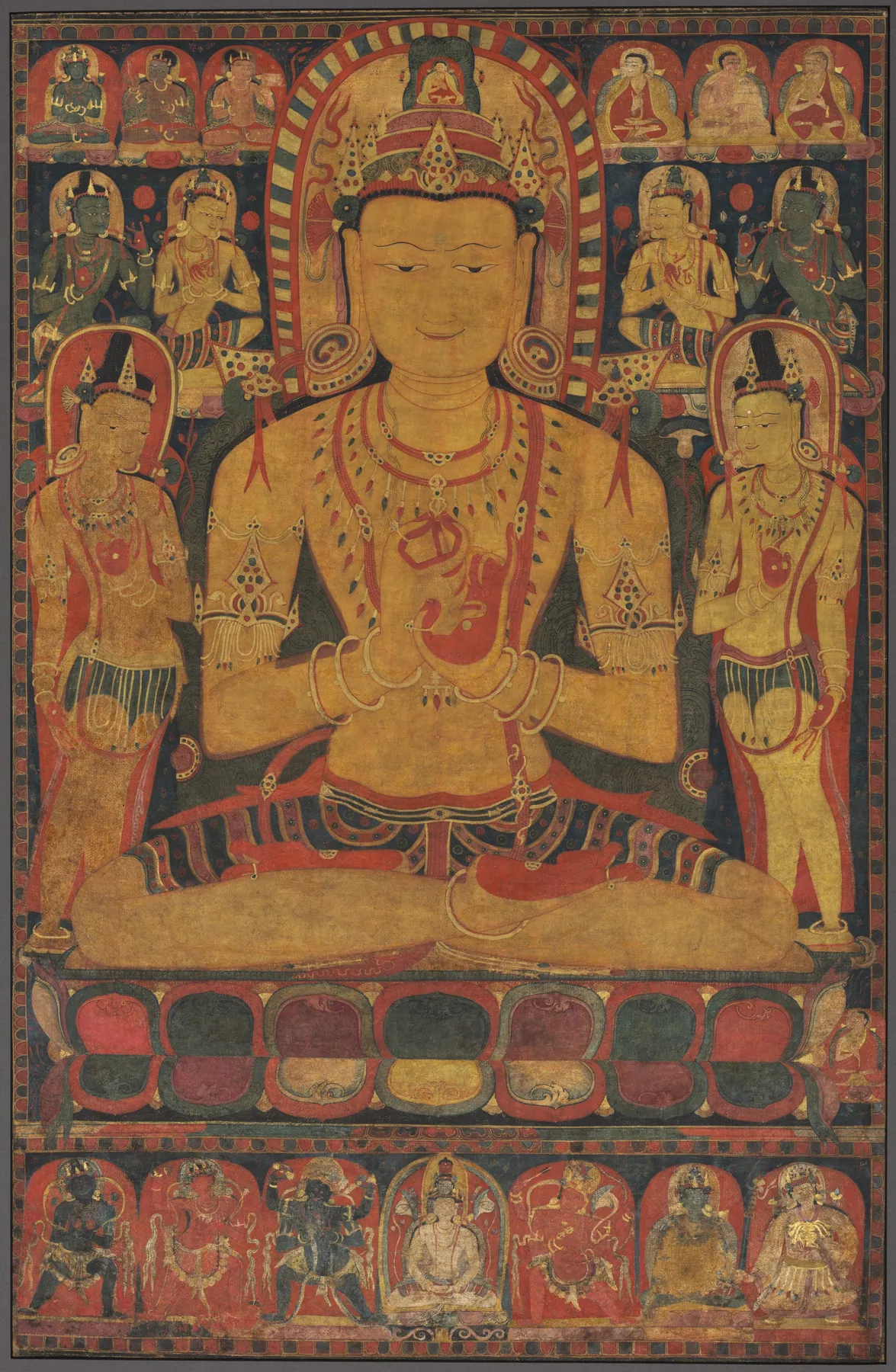
Vairochana, ‘the Illuminator’, represents the buddha as the all-pervading body of reality. He emerges in the Avatamsaka Sutra and becomes the central figure of the Charya and Yoga tantras, the texts that dominated Buddhist ritual in the eighth and ninth centuries, when Buddhism was first established in Tibet. In the five-family scheme he heads the Buddha, or Tathagata, family, linked with the element of space and with the transformation of ignorance into the wisdom of the expanse of reality.
In his simplest form he is white, with one face and two arms held at the heart in the gesture of turning the wheel of Dharma, seated in vajra posture on a throne supported by lions; his emblem is the eight-spoked wheel. Sarvavid Vairochana (Tibetan Kunrig, ‘All-Knowing’) is white with four faces looking in the four directions and two hands in the meditation gesture, sometimes holding a wheel. Abhisambodhi Vairochana of the Charya tantras is golden yellow with one face and hands in meditation. In tantric settings all wear the crown and jewels of the enjoyment body.
Vairochana dominates the art of the imperial period and of the later diffusion in western Tibet. Rock reliefs of the early ninth century in eastern Tibet, such as that at Bida near Jyekundo, and the eleventh-century clay assembly at Tabo show him surrounded by bodhisattvas. The Sarvavid mandala from the Sarvadurgatiparishodhana Tantra, ‘Purification of All Bad Rebirths’, remains a principal funerary rite of the Sakya and Gelug schools. The eighth-century Tibetan translator Vairotsana bears his name.
In the collection
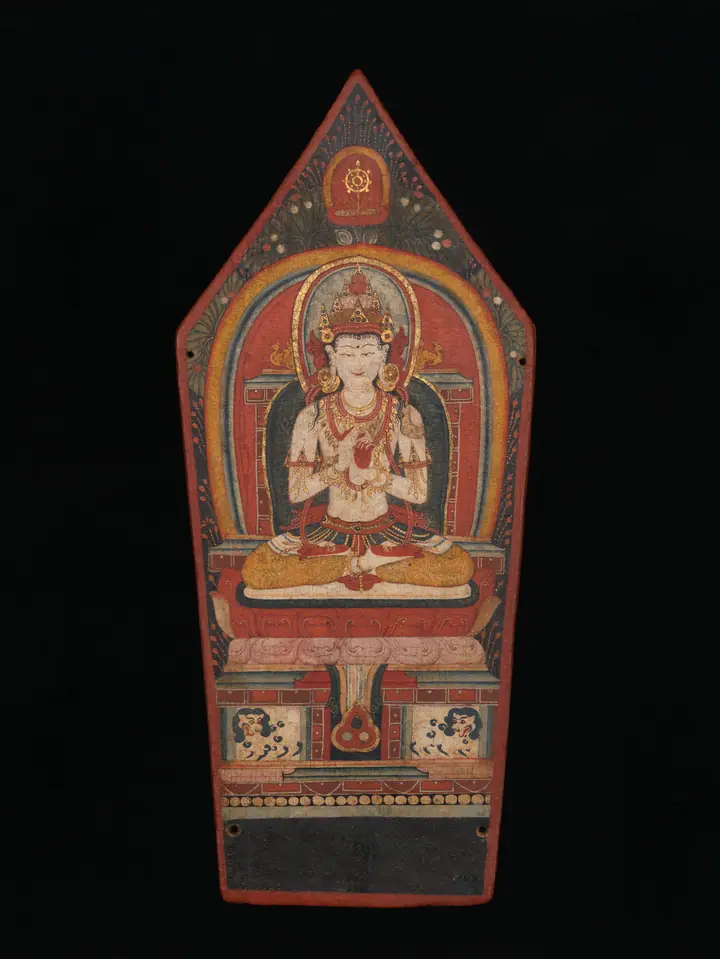
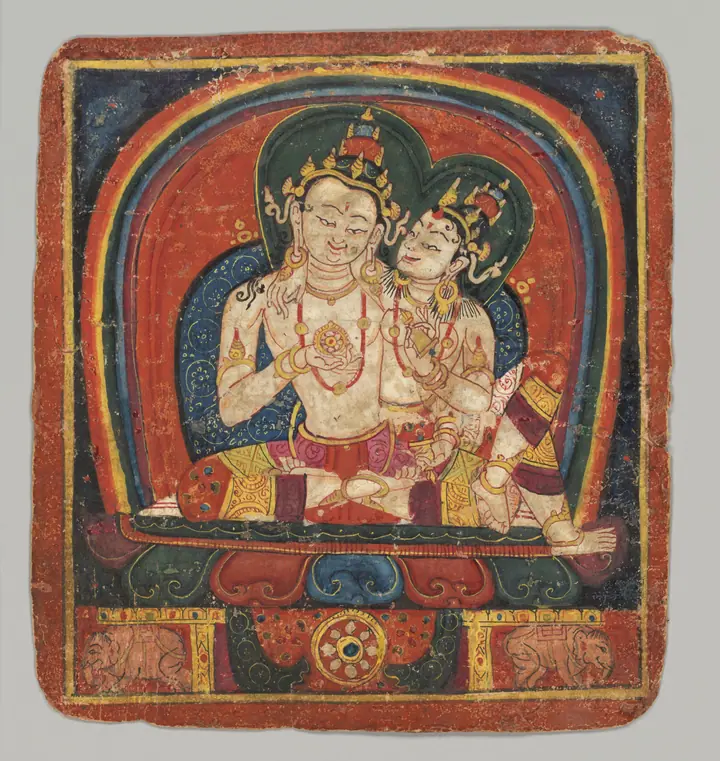
3 works in the collection depict or name Vairochana.
Connections
12 linked records across the archive.
Sources
References consulted for this record.