FT·DEI·006Buddha
Amoghasiddhi
དོན་ཡོད་གྲུབ་པ
Wyliedon yod grub paSanskritAmoghasiddhi
The green Buddha ‘Unfailing Accomplishment’, head of the Karma family in the north of the mandala, whose raised right hand grants freedom from fear.
Also known asDonyo Drubpa · Dönyö Drupa · Dongrub · Amoghasiddhi Buddha · Unfailing Accomplishment
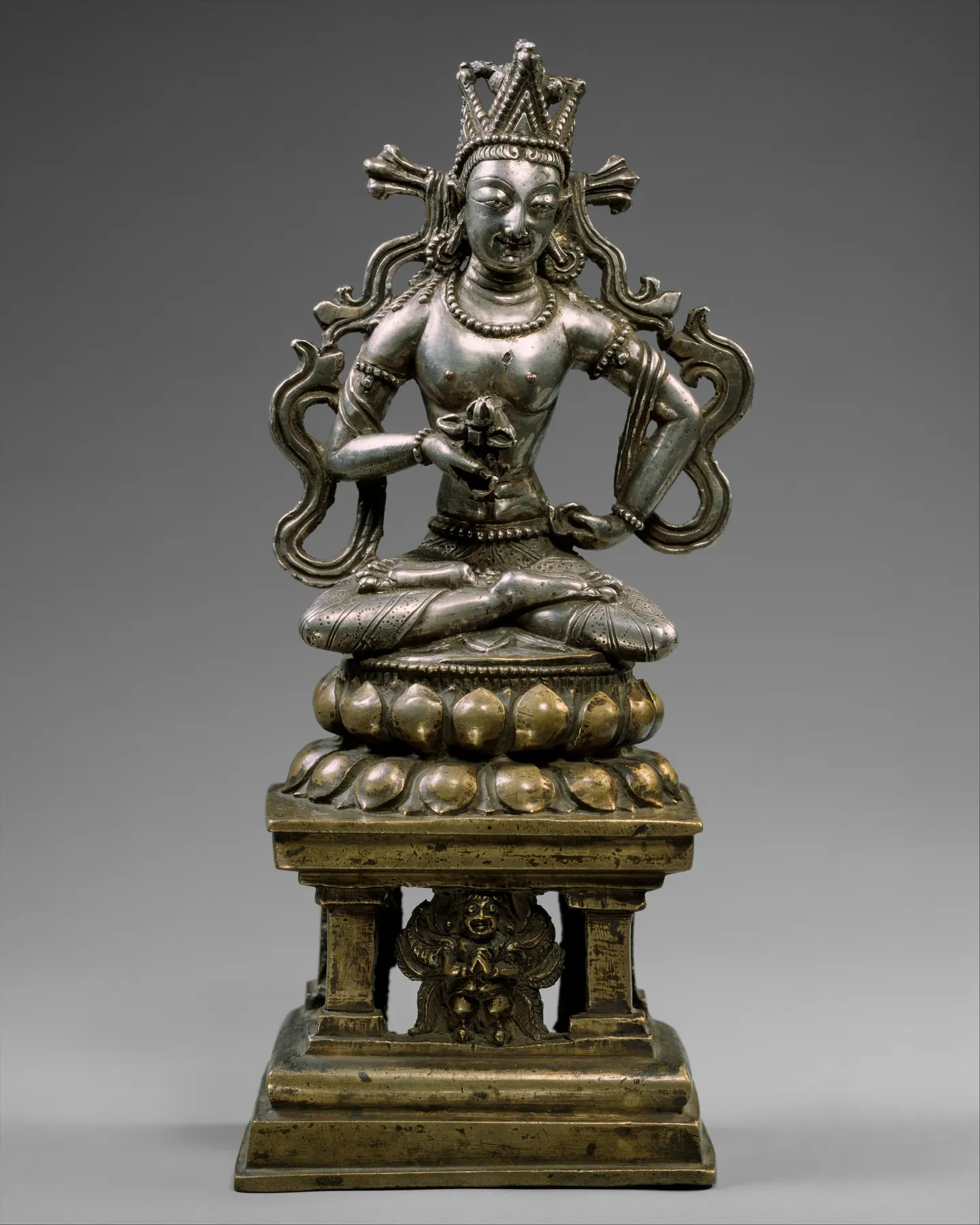
Amoghasiddhi, ‘Unfailing Accomplishment’, completes the set of five buddhas found in the tantras. Like Ratnasambhava he is a figure of mandala ritual rather than of narrative sutras. He presides over the Karma, or Action, family in the northern quarter, which is associated with the element of wind, with the enlightened activity that accomplishes the welfare of beings, and with the transformation of envy into all-accomplishing wisdom. Green Tara is the best-known deity of his family.
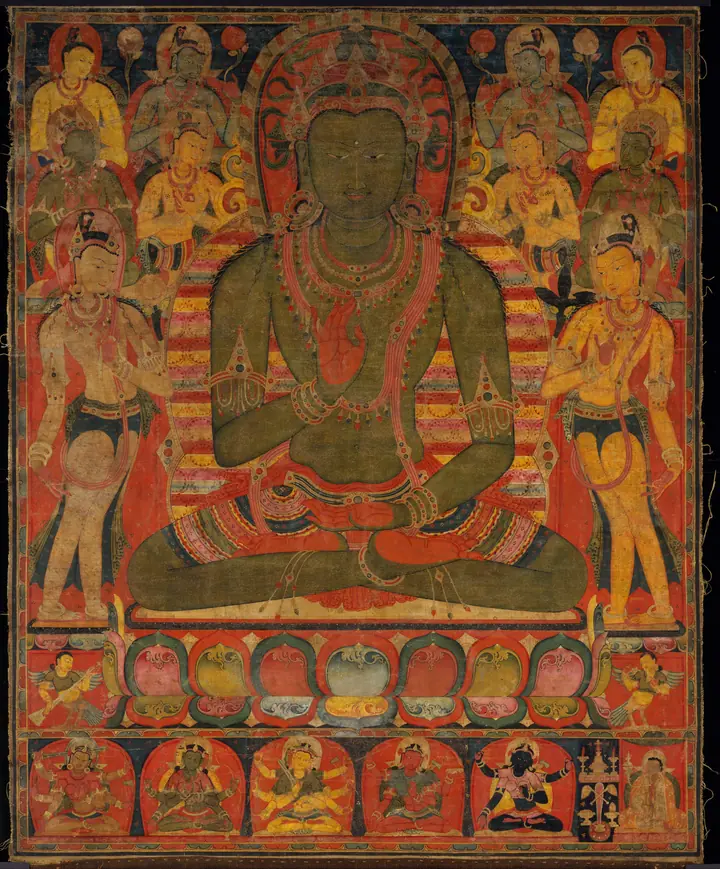
He is green, with one face and two arms. The right hand is raised to the level of the chest with the palm outward in the gesture of fearlessness or protection (abhaya mudra); the left rests in the lap in meditation. He sits in vajra posture, and his throne is supported by shang-shang, creatures part human and part bird that are sometimes rendered as garudas. The family emblem is the crossed double vajra (vishvavajra), or in some texts a sword. In tantric sets he wears the crown and ornaments of the enjoyment body.
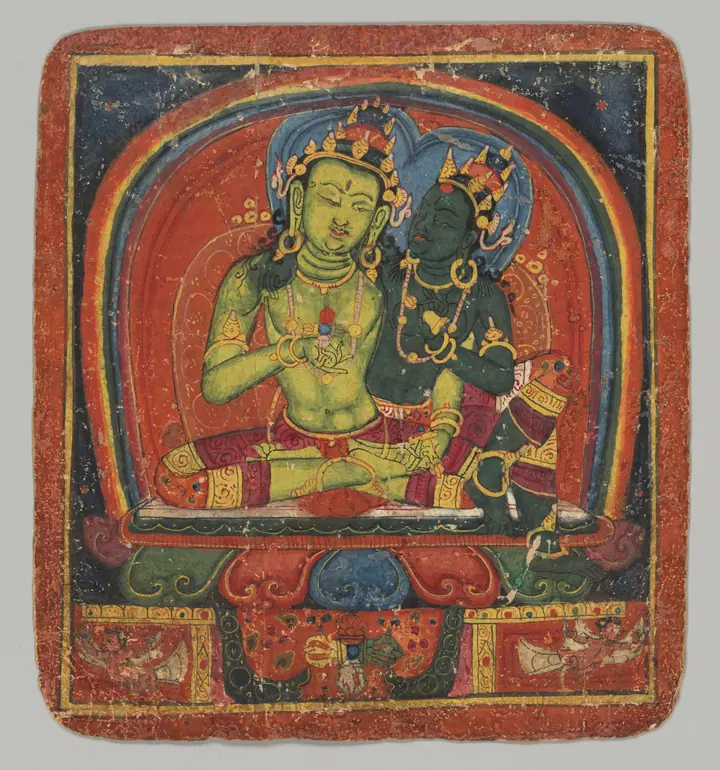
He is seen most often in groups of the five buddhas: on painted initiation cards, on the panels of ritual crowns, in the upper corners of thangkas and in the niches of stupas, where he faces north. Early central Tibetan paintings of the eleventh to thirteenth centuries, made under strong eastern Indian influence, show him enthroned among bodhisattvas. A small green Amoghasiddhi above the head of Green Tara signals her membership of the Karma family.
In the collection
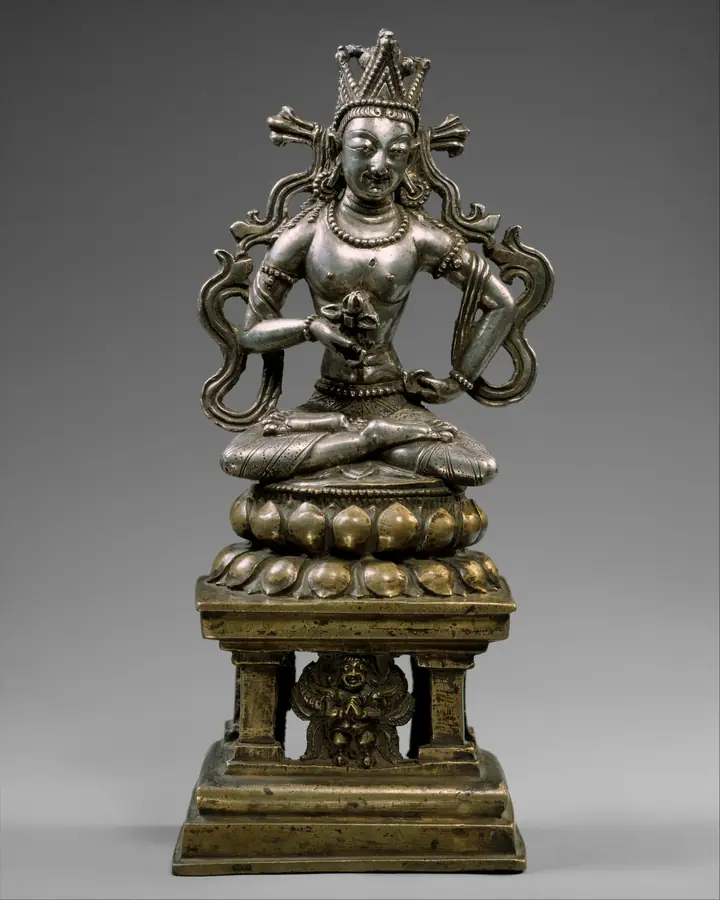
3 works in the collection depict or name Amoghasiddhi.
Connections
9 linked records across the archive.
Sources
References consulted for this record.