FT·DEI·047Dharma Protector
Panjaranatha Mahakala
གུར་གྱི་མགོན་པོ
Wyliegur gyi mgon poSanskritPañjaranātha
The two-armed ‘Lord of the Pavilion’, a squat black Mahakala who holds curved knife and skull cup with a wooden gong across his forearms; chief protector of the Sakya school.
Also known asPanjarnata Mahakala · Pañjaranātha · Gur Gyi Gonpo · Gurgon · Lord of the Pavilion · Lord of the Tent
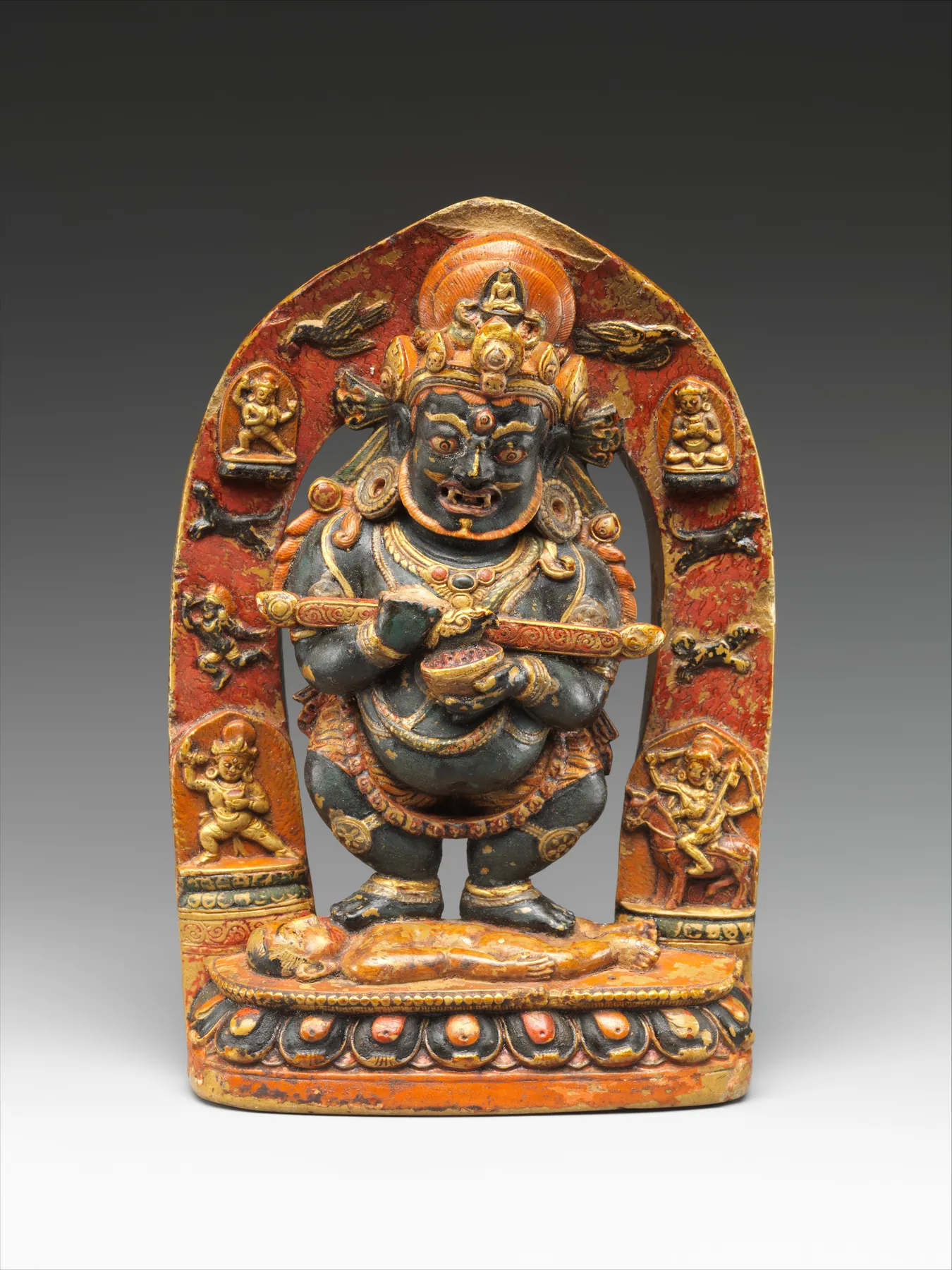
Panjaranatha, ‘Lord of the Pavilion’, is the form of Mahakala taught in the eighteenth chapter of the Vajrapanjara Tantra, an explanatory tantra of the Hevajra cycle, and he serves as the protector of Hevajra practice. The ‘pavilion’ or ‘canopy’ (Sanskrit panjara, Tibetan gur) is the protective enclosure of vajras that surrounds a tantric mandala; the older English rendering ‘Lord of the Tent’ translates the same word less exactly. He is the foremost protector of the Sakya school.
He is black, short and massive, with one face, three eyes, bared fangs and flaming hair, and stands in a squat posture with both knees bent upon a corpse. The two hands hold a curved knife above a skull cup at the heart, and across the forearms rests a gandi, the long wooden gong used to summon monks to assembly, which is his distinguishing attribute. He wears a crown of five skulls, a garland of fifty heads, bone and snake ornaments and a tiger-skin loincloth. Black dogs, wolves, crows and garudas emerge from the surrounding flames as his messengers.
The Eight-deity Mahakala, in which Panjaranatha is joined by Ekajati, Palden Lhamo and five rakshasa attendants, was transmitted by the translator Mal Lotsawa to Sachen Kunga Nyingpo (1092–1158), first of the five founding masters of Sakya. During Sakya rule under the Mongols his cult reached the Yuan court: a stone image dated 1292, now in the Musée Guimet in Paris, is among the earliest dated Tibetan sculptures. Sakya protector chapels centre on his image, and thirteenth- and fourteenth-century paintings of him are well represented in museum collections.
In the collection
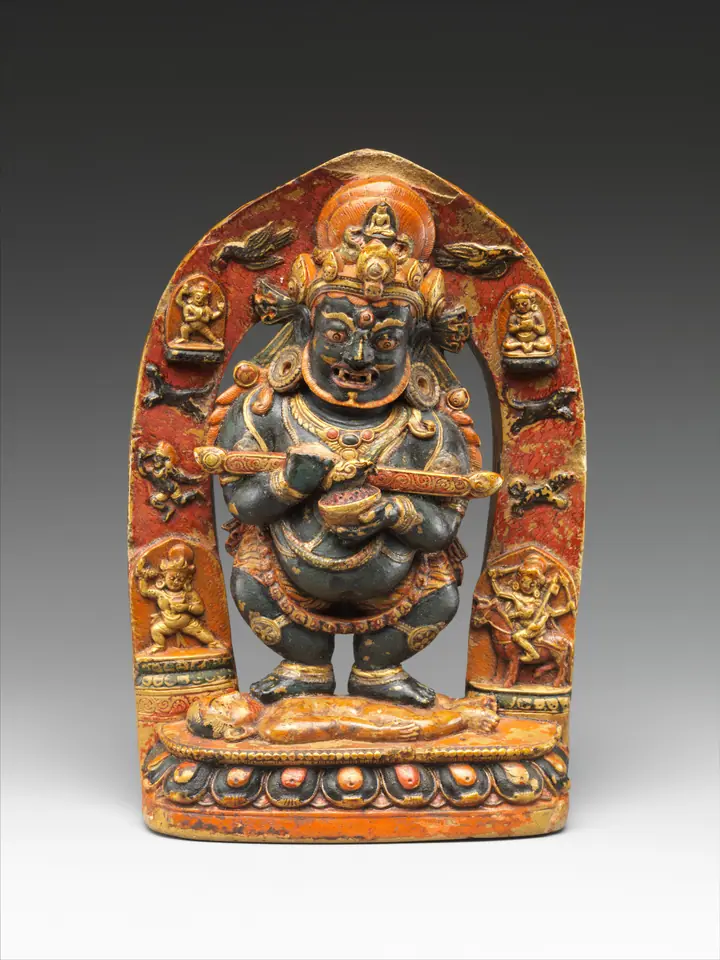
1 work in the collection depict or name Panjaranatha Mahakala.
Connections
8 linked records across the archive.
Sources
References consulted for this record.
- 01Panjarnata Mahakala Main Page — Himalayan Art Resources
- 02Mahakala — Wikipedia
- 03Rob Linrothe and Jeff Watt, Demonic Divine: Himalayan Art and Beyond (Rubin Museum of Art and Serindia, 2004)