FT·PLA·056Stupa & Pilgrimage Site
Gyantse Kumbum
རྒྱལ་རྩེ་སྐུ་འབུམ
Wyliergyal rtse sku 'bumDatebuilt 1427–c. 1437
Monumental multi-chapel stupa of the Pelkor Chode monastery at Gyantse, built from 1427 and filled with 15th-century murals and sculpture.
Also known asKumbum of Gyantse · Pelkor Chode · Palcho Monastery · Tashi Gomang · Baiju Si
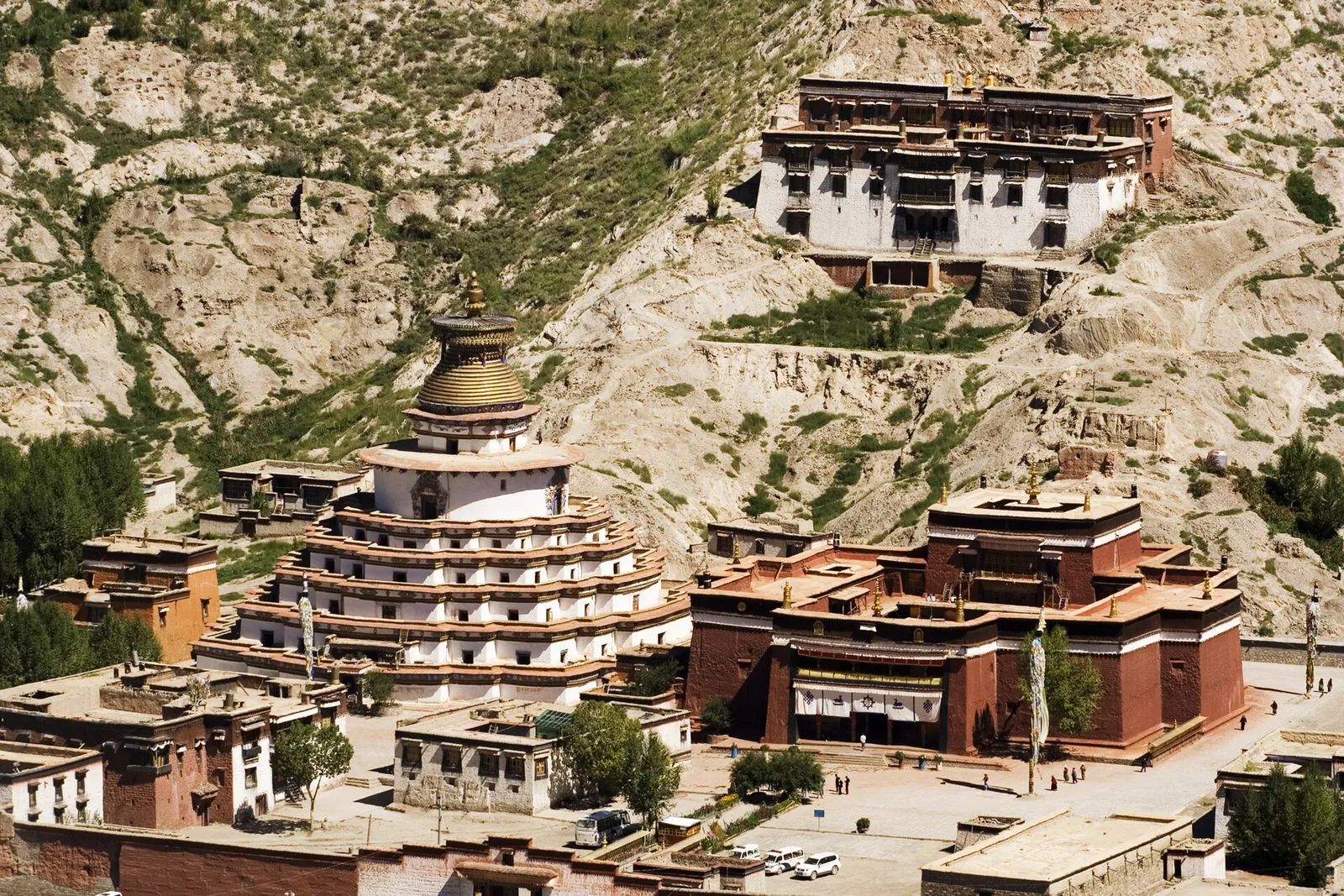
The Kumbum of Gyantse is the largest and best preserved example of a Tibetan building type: a stupa that can be entered and climbed, with chapels on every level. The word kumbum means ‘hundred thousand images’. It was begun in 1427 by Rabten Kunzang Phak, prince of Gyantse, then a wealthy town on the trade route between Lhasa, Shigatse and India, and stands beside the assembly hall of Pelkor Chode, the monastery he had founded in 1418. Its paintings and statues, completed over about a decade, are a landmark of Tibetan art.
The stupa rises about thirty-five metres in nine levels. Four terraced storeys with a many-cornered plan carry a cylindrical dome, a square section painted with pairs of eyes, and a spire of gilded rings under a parasol. Pilgrims climb clockwise through more than seventy chapels, each dedicated to a deity or group of deities, arranged so that the ascent follows the classes of tantra from the lower to the highest. The murals unite Newar and Chinese elements in a mature Tibetan style often named after Gyantse. The monastery was shared by Sakya, Shalu and Gelug colleges.
Gyantse’s fortress was stormed by the British expedition of 1904, and the monastery suffered in the fighting. During the Cultural Revolution most of the college buildings within the long red enclosure wall were destroyed and statues in the Kumbum were smashed, but the structure and the greater part of its murals survived, and damaged images have been remade. The site is nationally protected, and a small monastic community maintains the assembly hall. The Kumbum was studied by Giuseppe Tucci and, in fuller detail, by Franco Ricca and Erberto Lo Bue in The Great Stupa of Gyantse (1993).
Connections
14 linked records across the archive.
Sources
References consulted for this record.
- 01Palcho Monastery — Wikipedia
- 02Kumbum — Wikipedia
- 03Franco Ricca and Erberto Lo Bue, The Great Stupa of Gyantse: A Complete Tibetan Pantheon of the Fifteenth Century (Serindia, 1993)