FT·SYM·053Performance & Craft
Cham Dance
འཆམ
Wylie'cham
A masked ritual dance performed by monks in monastery courtyards, in which deities are embodied and harmful forces are subdued for the good of the community.
Also known asCham · Tsam · Masked Dance · Lama Dance · Garcham
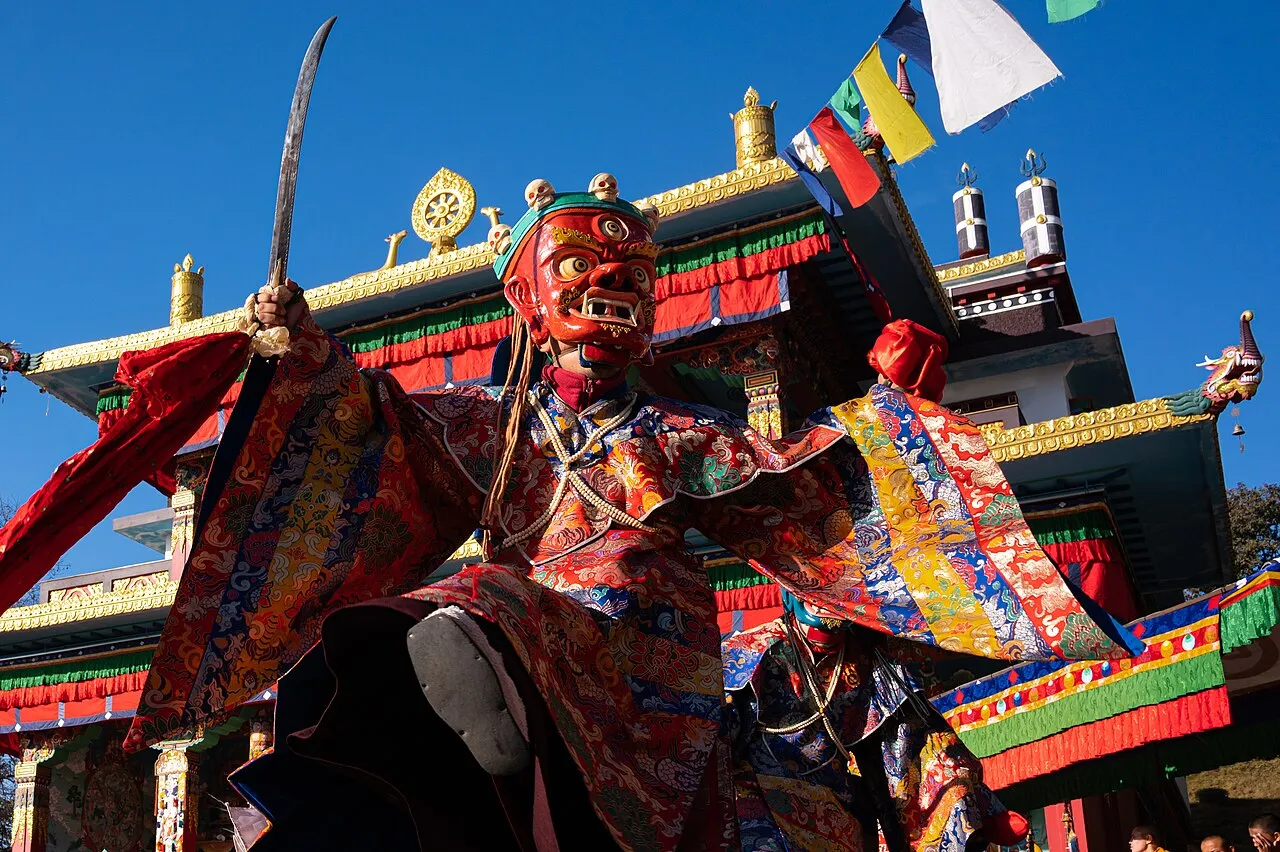
Cham is the sacred dance of Tibetan Buddhist and Bön monasteries. It is a public part of a longer ritual performed inside the temple, usually connected with a protector or meditational deity. The dancers, who are monks, visualise themselves as the deities whose masks and costumes they wear, so the performance is understood as meditation in movement and not as theatre. Watching it is believed to bring blessing and to prepare spectators to recognise the same figures in the state after death. Tradition traces cham to Padmasambhava, who is said to have danced to subdue local spirits at the founding of Samye.
Performances take place in the monastery courtyard around a central pole or altar. An orchestra of long horns, oboes, drums and cymbals sets the tempo, and a dance master leads. Dancers enter in groups: the black-hat dancers, unmasked, in wide-brimmed hats and brocade robes; wrathful protectors in large masks; stag-headed and yak-headed attendants; skeleton figures, the lords of the charnel ground; and comic characters who amuse the crowd between sections. Steps are slow, with turns, hops and measured arm movements, each prescribed in dance manuals. The climax is the destruction of a dough effigy that stands for all obstacles.
Each school and monastery has its own repertoire. Nyingma, Kagyu and Bhutanese festivals held on the tenth day of a month present the eight forms of Padmasambhava. Gelug monasteries perform cham of protectors such as Yama and Palden Lhamo before the New Year, on the twenty-ninth day of the twelfth month. The Fifth Dalai Lama wrote an influential manual of Vajrakilaya dance. Cham is performed today at monasteries across Tibet, in Bhutan, Ladakh, Sikkim, Nepal, Mongolia and Buryatia, and in the Tibetan settlements in India.
Connections
23 linked records across the archive.
Sources
References consulted for this record.
- 01Cham dance — Wikipedia
- 02Cham (glossary) — Project Himalayan Art, Rubin Museum
- 03René de Nebesky-Wojkowitz, Tibetan Religious Dances: Tibetan Text and Annotated Translation of the 'Chams Yig (Mouton, 1976)