FT·PLA·038Monastery
Tawang Monastery
རྟ་དབང་དགོན་པ
Wylierta dbang dgon paDatefounded 1680–81
Largest Buddhist monastery in India, founded in 1680–81 in the Monpa country of Arunachal Pradesh at the wish of the Fifth Dalai Lama.
Also known asTawang · Tawang Gompa · Ganden Namgyal Lhatse · Galden Namgey Lhatse
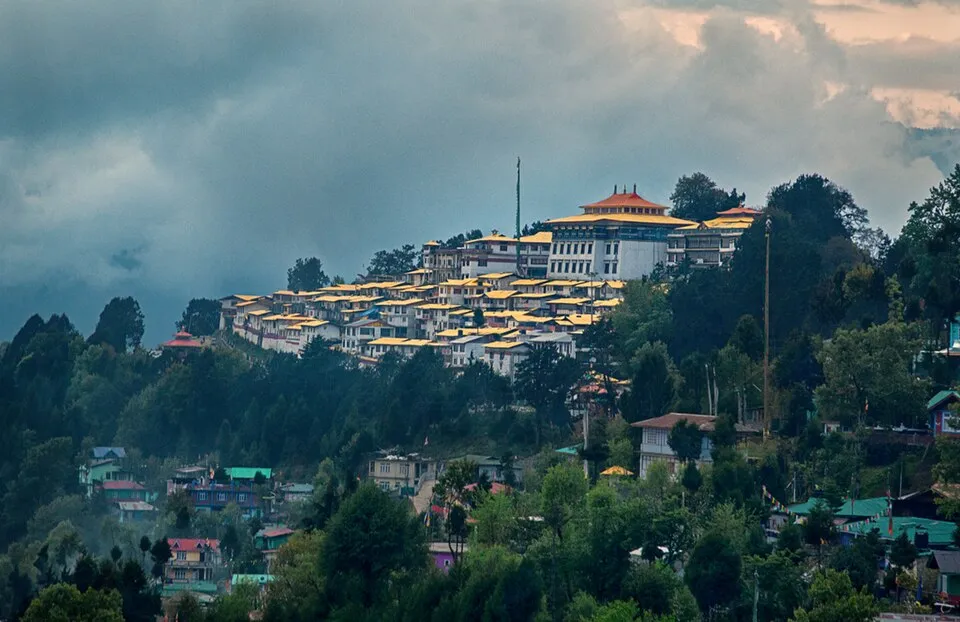
Tawang Monastery, formally Ganden Namgyal Lhatse, ‘celestial paradise of complete victory’, is the principal Gelug monastery of the eastern Himalaya. It was founded in 1680–81 by Merak Lama Lodro Gyatso, a local cleric acting on the wishes of the Fifth Dalai Lama, at a time when the Lhasa government was extending its authority over the Monpa people and contending with Bhutan. The name Tawang, ‘chosen by the horse’, comes from the legend that the lama’s horse led him to the site. Nearby Urgelling was the birthplace in 1683 of Tsangyang Gyatso, the Sixth Dalai Lama.
The monastery crowns a spur at about 3,000 metres above the valley of the Tawang Chu, close to the borders of Tibet and Bhutan, and resembles a fortified town. A wall some 280 metres long encloses sixty-five residential buildings, a library holding printed and handwritten sets of the Kangyur, and a three-storey assembly hall. The hall contains a tall gilded image of the Buddha and a painted scroll of the protector Palden Lhamo said to have been given by the Fifth Dalai Lama. The monastery traditionally answered to Drepung and administered the surrounding district on Lhasa’s behalf.
Tawang came under Indian administration in 1951. The Fourteenth Dalai Lama rested here in April 1959 on his way into exile and has returned several times, including in 2009 and 2017. Chinese forces occupied the town during the border war of 1962, and China continues to claim the district as part of southern Tibet. The monastery now houses several hundred monks, with a school and a museum, and oversees smaller monasteries and nunneries in the region. Its Torgya festival, held each January, features three days of masked dances.
Connections
9 linked records across the archive.
Sources
References consulted for this record.
- 01Tawang Monastery — Wikipedia
- 02Michael Aris, Hidden Treasures and Secret Lives: A Study of Pemalingpa (1450–1521) and the Sixth Dalai Lama (1683–1706) (Kegan Paul, 1989)
- 03Niranjan Sarkar, Tawang Monastery (Government of Arunachal Pradesh, 1981)