FT·SCH·006Major School
Jonang
ཇོ་ནང
Wyliejo nangDatefounded 1294
School centred on the Kalachakra Tantra and the zhentong view of buddha-nature, suppressed in central Tibet in the seventeenth century and still active in Amdo.
Also known asJonangpa · Jonang School · Jo nang
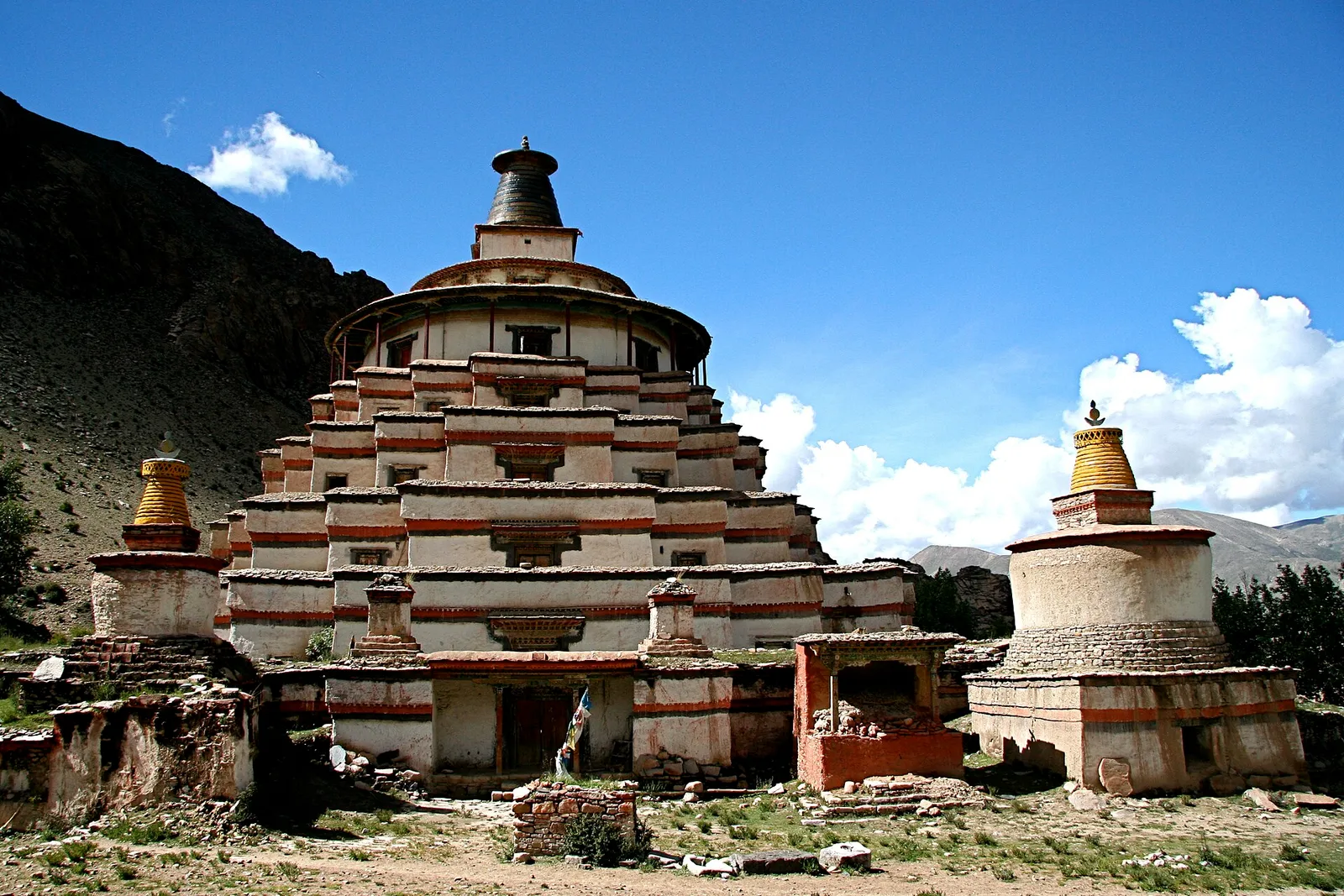
The Jonang takes its name from a valley in Tsang where the master Kunpang Thukje Tsondru founded a hermitage in 1294. Its distinctive teachings are traced further back, to the eleventh-century Kalachakra adept Yumo Mikyo Dorje. The school came to prominence under Dolpopa Sherab Gyaltsen (1292–1361), who systematised its philosophy and built the great stupa of Jonang, and flourished again under Taranatha (1575–1634), who founded the monastery of Takten Damcho Ling with the support of the rulers of Tsang.
Jonang doctrine is known as zhentong, ‘emptiness of other’, or the Great Madhyamaka. It holds that all conditioned things are empty of any nature of their own, but that the ultimate reality, buddha-nature, is empty only of what is other than itself, namely adventitious defilements. That ultimate is described positively as permanent, luminous awareness endowed with the qualities of awakening. The teaching draws on the buddha-nature sutras, the treatises of Maitreya and above all the Kalachakra Tantra. Jonang practice centres on the Kalachakra’s six-branch vajra yoga, a completion-stage system that includes retreat in darkness to cultivate visionary ‘empty forms’, and the school preserves the most complete transmission of it.
After the Fifth Dalai Lama’s government took power, the Jonang monasteries of central Tibet were converted to the Gelug school around 1650 and the printing of Jonang texts was restricted; political ties with the defeated rulers of Tsang as well as doctrinal objections were factors. The tradition continued in Amdo, around Dzamthang, Ngawa and Golok, where several dozen monasteries are active today. Its texts were republished from the late twentieth century, a monastery was established in Shimla, India, and Jonang representatives have sought recognition alongside the other schools in the exile administration.
Connections
16 linked records across the archive.
Sources
References consulted for this record.
- 01Jonang — Wikipedia
- 02Jonang — Rigpa Shedra Wiki
- 03Cyrus Stearns, The Buddha from Dolpo: A Study of the Life and Thought of the Tibetan Master Dolpopa Sherab Gyaltsen (Snow Lion, 2010)
- 04Michael R. Sheehy and Klaus-Dieter Mathes (eds), The Other Emptiness: Rethinking the Zhentong Buddhist Discourse in Tibet (SUNY Press, 2019)