FT·MAS·071Scholar, Artist & Physician
Situ Panchen
སི་ཏུ་པཎ་ཆེན་ཆོས་ཀྱི་འབྱུང་གནས
Wyliesi tu paN chen chos kyi 'byung gnasDate1700–1774
Eighth Tai Situ, founder of Palpung monastery, editor of the Derge Kangyur, grammarian, physician and painter who revived the Karma Gadri style.
Also known asSitu Panchen Chokyi Jungne · Eighth Tai Situ · Chokyi Jungne · Tsuklak Chokyi Nangwa
Situ Panchen Chokyi Jungne was the leading scholar of eighteenth-century eastern Tibet and one of the most versatile figures in Tibetan intellectual history. Born in 1700 in the kingdom of Derge, he was recognised as the eighth Tai Situ, a senior incarnation of the Karma Kagyu school, and trained at Tsurphu in central Tibet. The title Panchen, ‘great scholar’, reflects his mastery of Sanskrit and of the traditional sciences of language, medicine, astrology and the arts.
In 1727, with the support of the Derge king Tenpa Tsering, he founded Palpung, which became the principal Kagyu monastery of Kham. At the king’s request he edited the Derge edition of the Kangyur, printed between 1729 and 1733 and valued for its accuracy. His long commentary on the two grammatical treatises attributed to Thonmi Sambhota became the standard reference for literary Tibetan. He made two journeys to Nepal, consulted Sanskrit manuscripts and pandits, and retranslated works on grammar and poetics. As a physician he taught widely and trained many doctors.
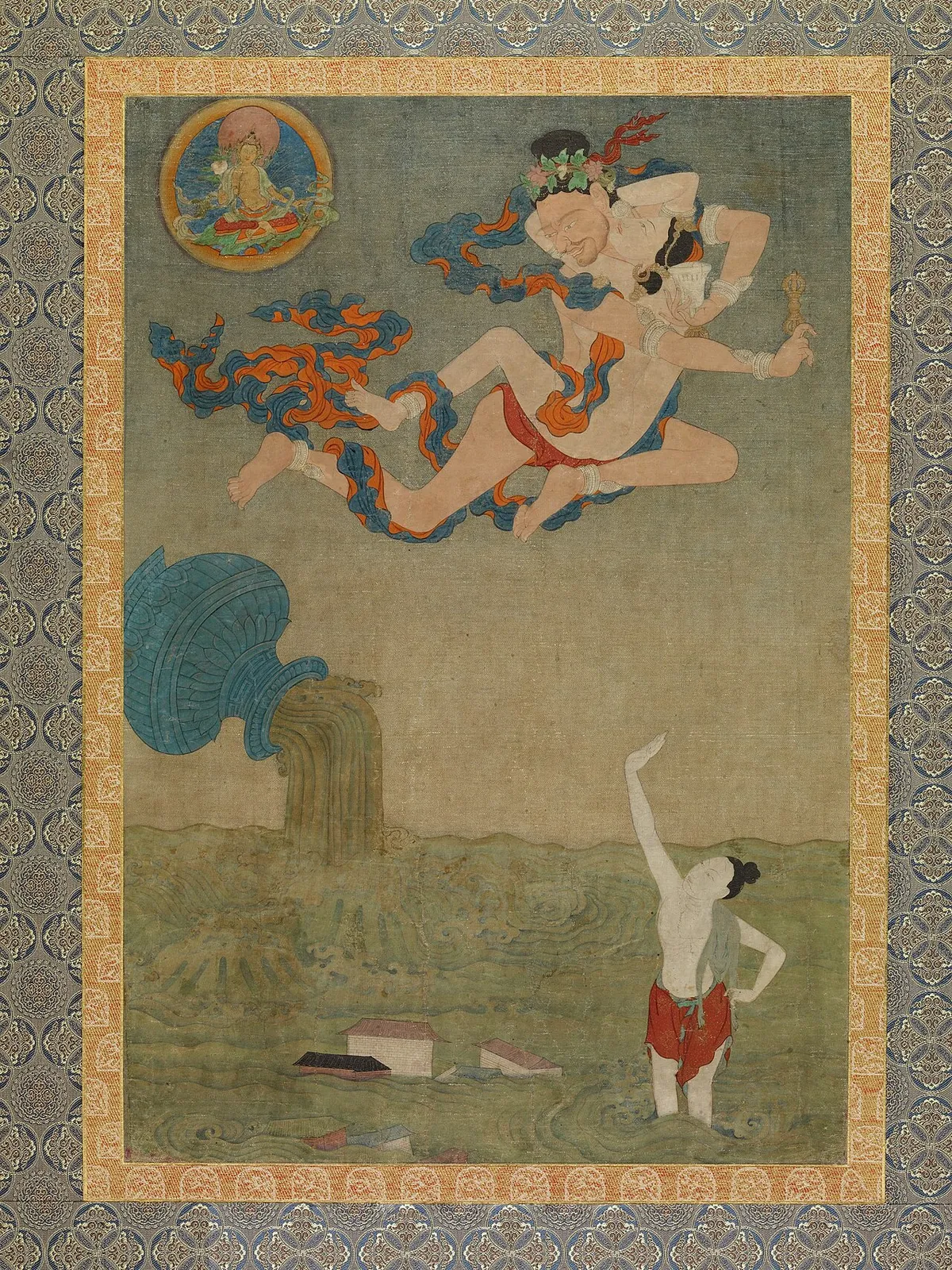
Situ was also a painter and a patron of painters. He designed sets of thangkas, including the hundred and eight stories of the Wish-Fulfilling Vine and a series of the eight great adepts, in the open, Chinese-influenced landscape manner of the Karma Gadri or ‘encampment’ style, which his workshops at Palpung re-established. His diaries record his travels to Lhasa, Nepal and Lijiang. He died in 1774, and his students included the thirteenth Karmapa and the tenth Shamarpa.
Connections
8 linked records across the archive.
Sources
References consulted for this record.
- 01Situ Panchen — Wikipedia
- 02David P. Jackson, Patron and Painter: Situ Panchen and the Revival of the Encampment Style (Rubin Museum of Art, 2009)
- 03Journal of the International Association of Tibetan Studies, no. 7 (2013), special issue on Situ Panchen