FT·SYM·063Sacred Music
Kangling
རྐང་གླིང
Wylierkang gling
A short trumpet made from a human thighbone or from metal, sounded in the chö practice and in wrathful rituals to summon spirits to a feast of offering.
Also known asThighbone Trumpet · Kang Ling · Bone Trumpet · Rkang Gling
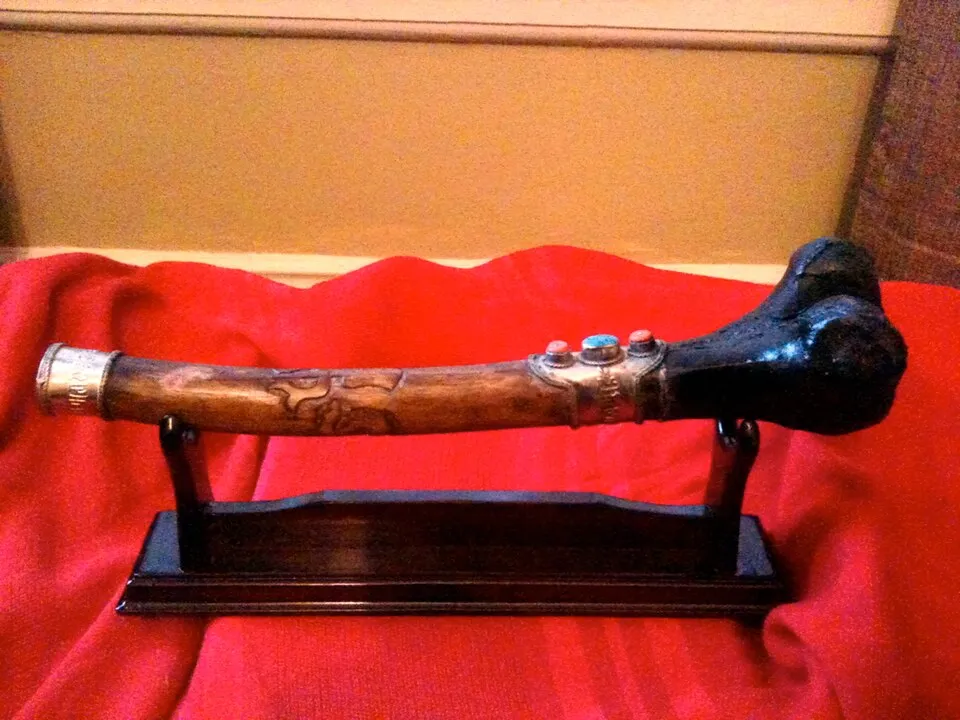
The kangling, literally leg flute, is a trumpet made from a human femur. Like the skull cup and skull drum it belongs to the cremation-ground imagery that tantric Buddhism took from Indian ascetics, in which human bone is a constant reminder of death and a sign of freedom from fear and revulsion. It is above all the instrument of chö, the practice in which the meditator, in a frightening place, visualises offering his or her own body to demons and spirits. The call of the trumpet invites these guests and expresses compassion for them.
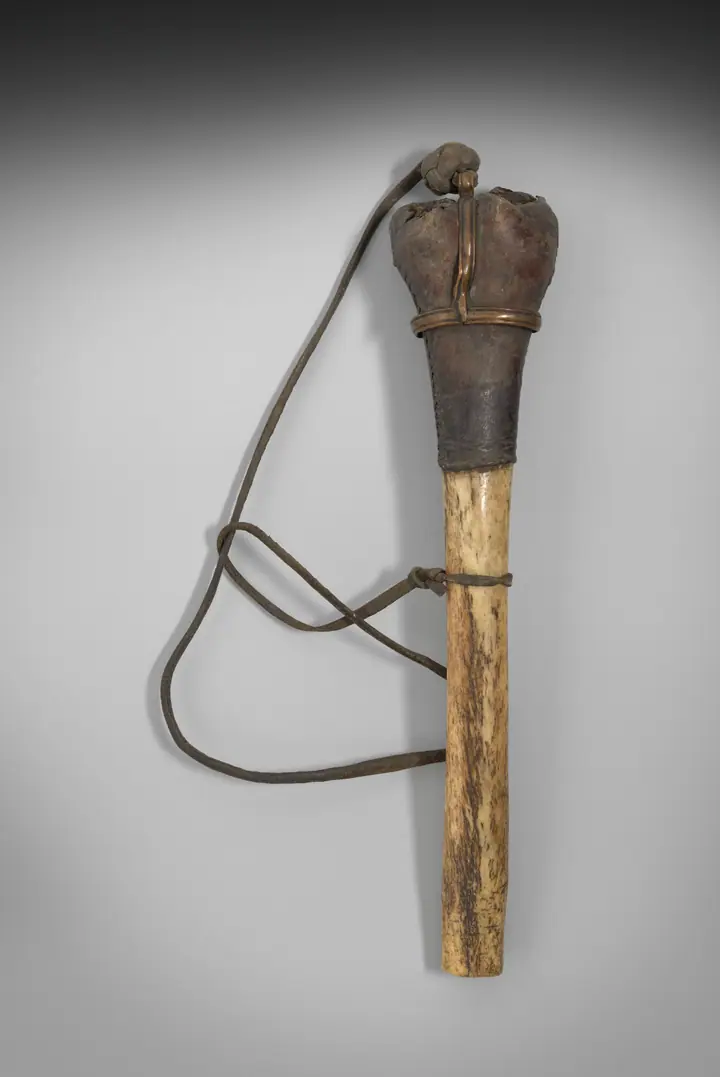
The bone is cut below the hip joint and opened at the knee end, where the two rounded knobs are pierced to form twin openings, sometimes compared to the nostrils of a horse. The narrow end is shaped into a mouthpiece, which may be bound with wire or capped with silver. The body may be wrapped in leather or metal bands set with coral and turquoise. Monastic orchestras use a metal version of copper or brass, often ending in the open jaws of a sea monster and played in pairs. The tone is thin and wailing, limited to one or two pitches.
A chö practitioner blows the kangling in short calls at set points in the liturgy while keeping the beat with the large hand drum and bell. The tradition descends from the eleventh-century teacher Machig Labdrön and is followed in all schools. Texts specify which bones are suitable, and instruments were traditionally obtained from sky-burial sites. Wooden and resin substitutes are now common, and many countries restrict trade in human remains. The metal form is heard in temple rituals for wrathful deities, where its piercing call contrasts with the low drone of the long horns.
In the collection
1 work in the collection relate to Kangling.
Connections
8 linked records across the archive.
Sources
References consulted for this record.
- 01Kangling — Wikipedia
- 02Ritual Object: Musical Instruments — Himalayan Art Resources
- 03Mireille Helffer, Mchod-rol: Les instruments de la musique tibétaine (CNRS Éditions, 1994)