FT·DEI·024Female Buddha & Goddess
Prajnaparamita
ཤེས་རབ་ཀྱི་ཕ་རོལ་ཏུ་ཕྱིན་མ
Wylieshes rab kyi pha rol tu phyin maSanskritPrajñāpāramitā
The Perfection of Wisdom personified as a golden four-armed goddess holding a book, called the Great Mother because all buddhas arise from the wisdom she embodies.
Also known asPrajñāpāramitā · Yum Chenmo · Sherchinma · Great Mother · Mother of the Buddhas · Prajnaparamita Devi
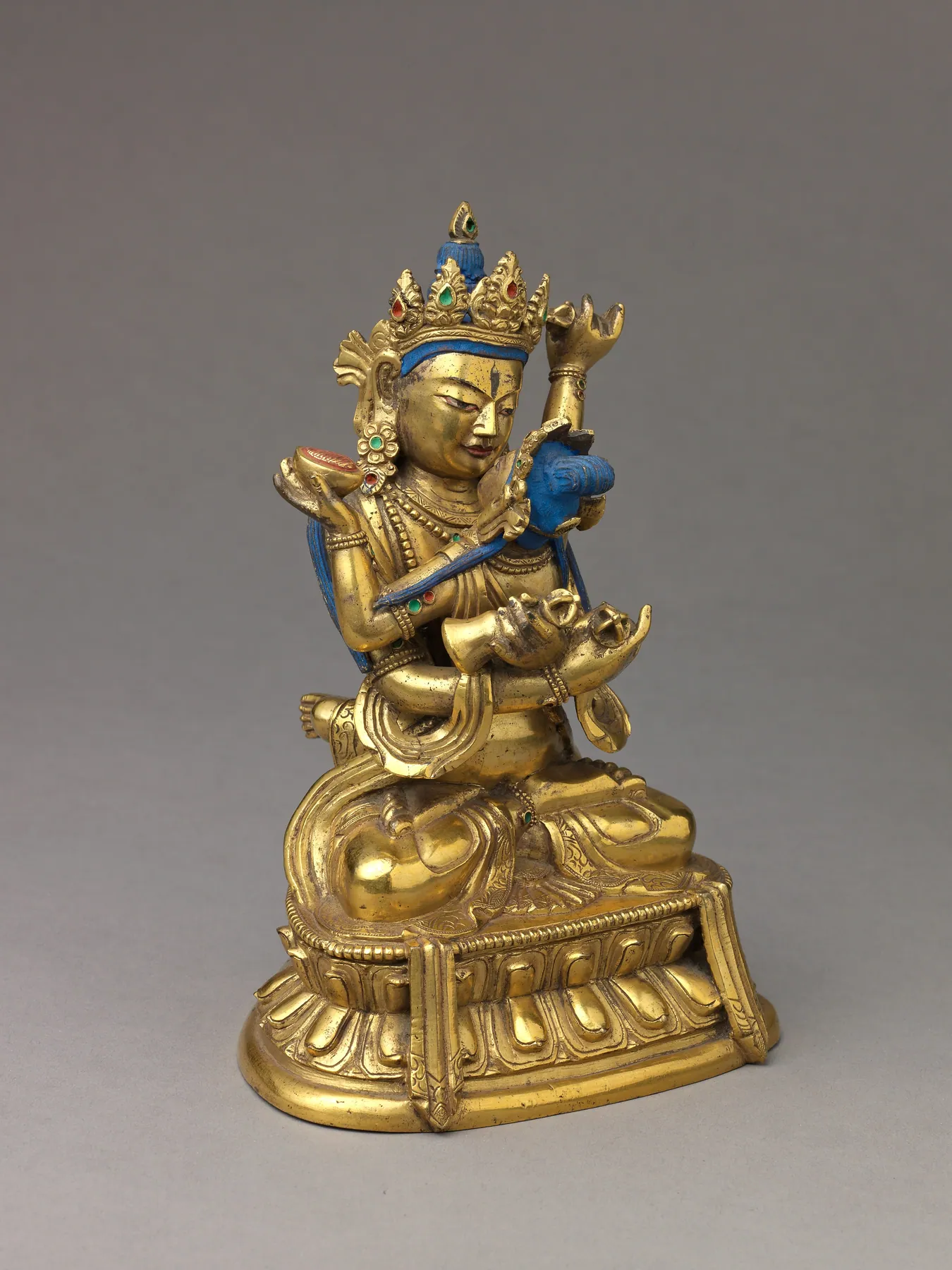
Prajnaparamita, the ‘Perfection of Wisdom’, is both a body of Mahayana scriptures, composed in India from about the first century BCE, and the goddess who personifies their teaching on emptiness. Because every buddha attains awakening through this wisdom, she is called the Mother of the Buddhas, in Tibetan Yum Chenmo, ‘Great Mother’. The scriptures themselves, in versions of eight thousand, twenty-five thousand and one hundred thousand lines, are venerated as her body, and manuscripts are enshrined on altars and carried in procession round the fields.
Her most common Tibetan form is golden yellow, with one face and four arms, seated in vajra posture. In one widespread version the upper right hand holds a vajra and the upper left a volume of scripture, while the lower pair rests in the lap in meditation. In another the principal hands make the teaching gesture at the heart and the others hold a rosary and a book. Two-armed forms, yellow or white, also occur. She wears a crown and jewels, and is a favourite subject for the illuminated opening pages of manuscripts and for carved wooden book covers.
In Tibet she is closely tied to the Chod tradition founded by Machig Labdron (1055–1149), who was regarded as her emanation and whose practice of ‘cutting’ attachment to self rests on the Perfection of Wisdom sutras. Paintings of Machig’s lineage place the golden four-armed goddess at the top. The Heart Sutra, the shortest of her scriptures, is recited in every school. Palm-leaf manuscripts of the eleventh and twelfth centuries from eastern India and Nepal contain some of her earliest painted images.
In the collection
8 works in the collection depict or name Prajnaparamita.
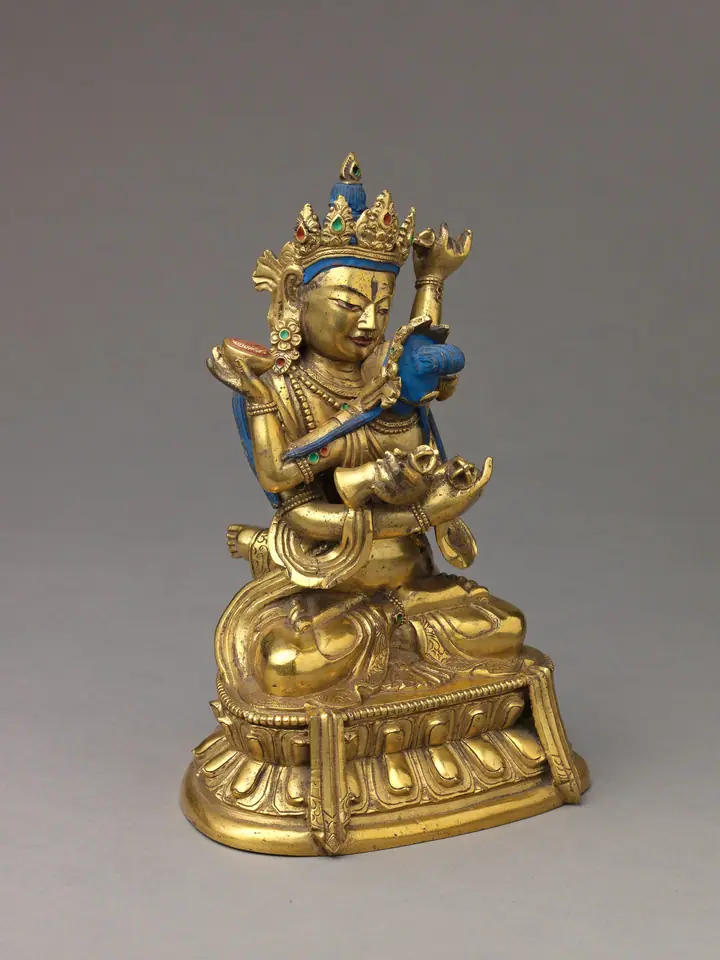
Buddhist deity Vajradhara in union with his consort Prajnaparamita
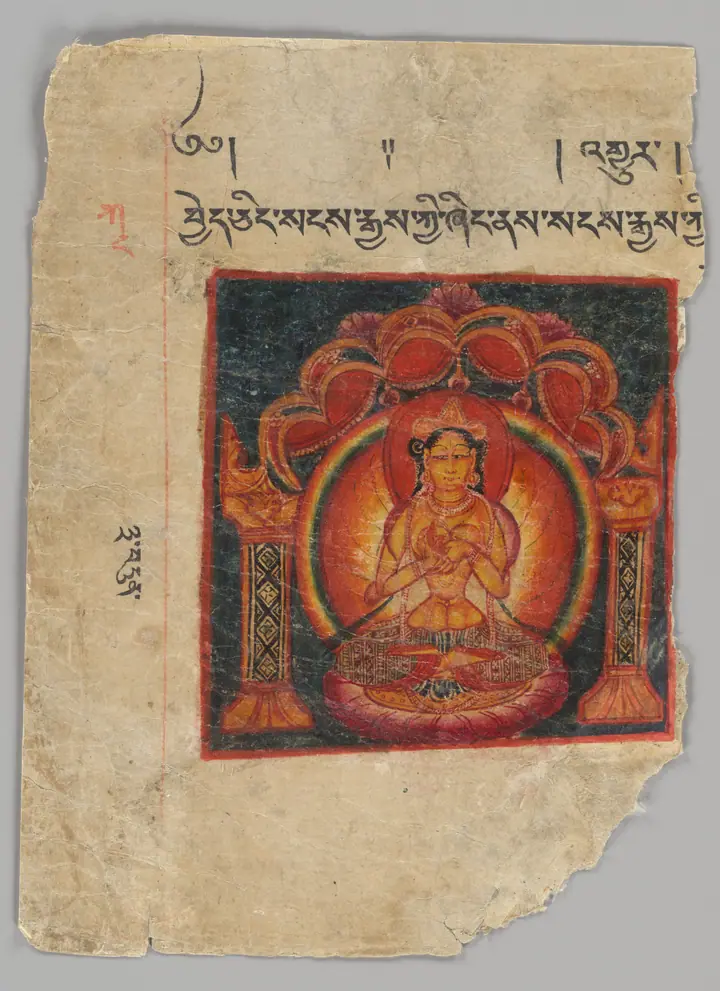
Prajnaparamita, Painting from a Prajnaparamita Sutra Manuscript
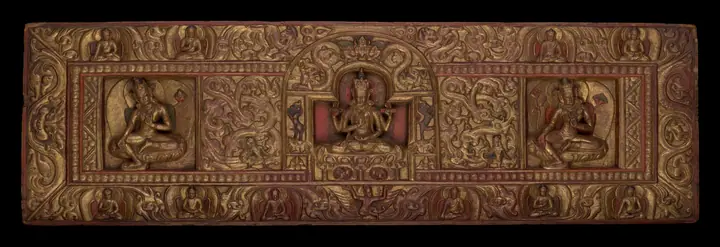
Prajnaparamita book cover
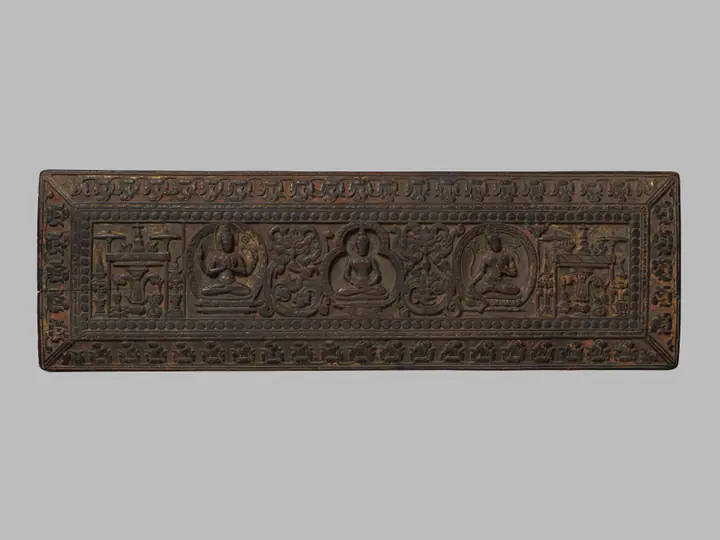
Manuscript Cover with Prajnaparamita Attended by Sadakshari Lokeshvara and a Tara
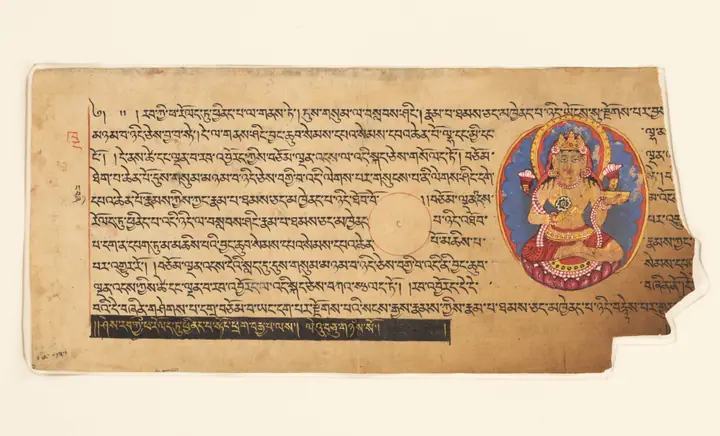
Manjushri, Painting from a Prajnaparamita Sutra Manuscript
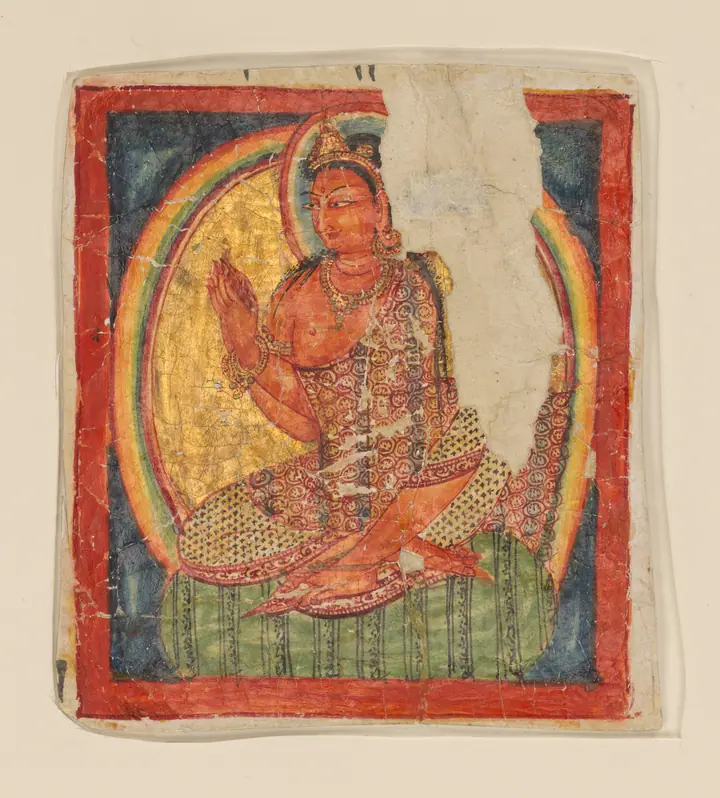
Fragmentary Leaf from an Ashtasahasrika Prajnaparamita Sutra
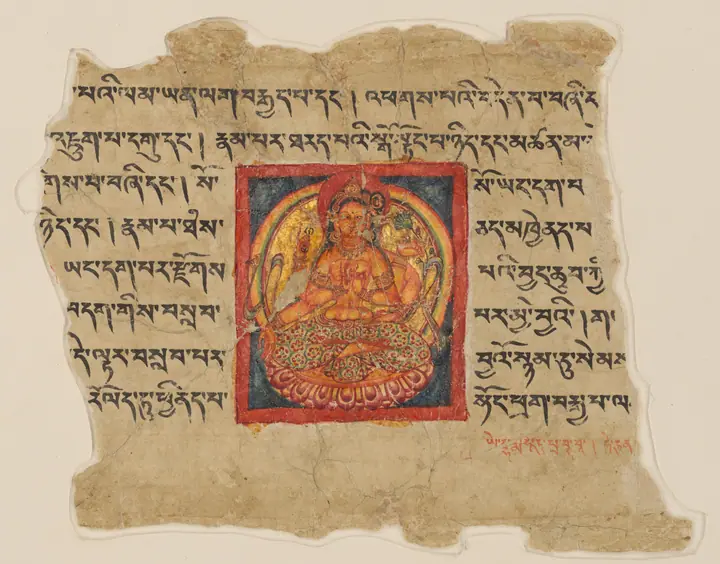
Fragmentary Leaf from an Ashtasahasrika Prajnaparamita Sutra
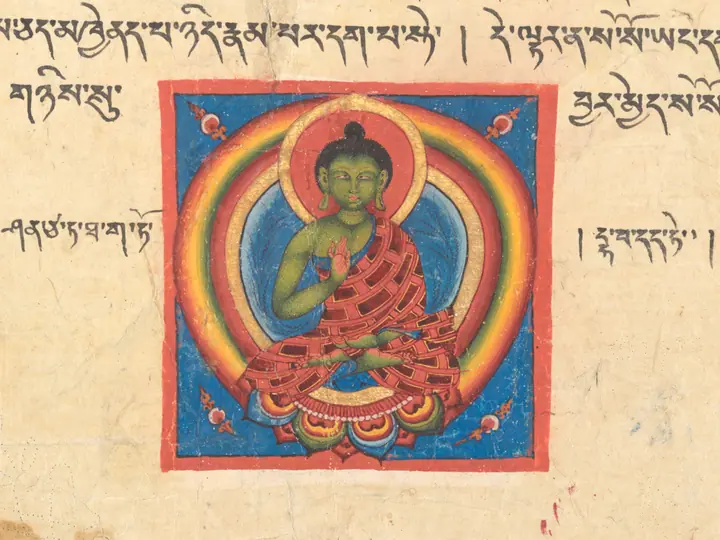
Fragmentary Leaf from an Ashtasahasrika Prajnaparamita Sutra
Connections
13 linked records across the archive.
Sources
References consulted for this record.