FT·DEI·053Dharma Protector
Pehar
པེ་ཧར
Wyliepe har
The white, three-faced, six-armed king of the gyalpo spirits who rides a snow lion; guardian of Samye bound by Padmasambhava and the power behind the Nechung state oracle.
Also known asPehar Gyalpo · Gyalpo Pehar · Pekar · Gyalpo Ku Nga · Five Kings · Trinle Gyalpo
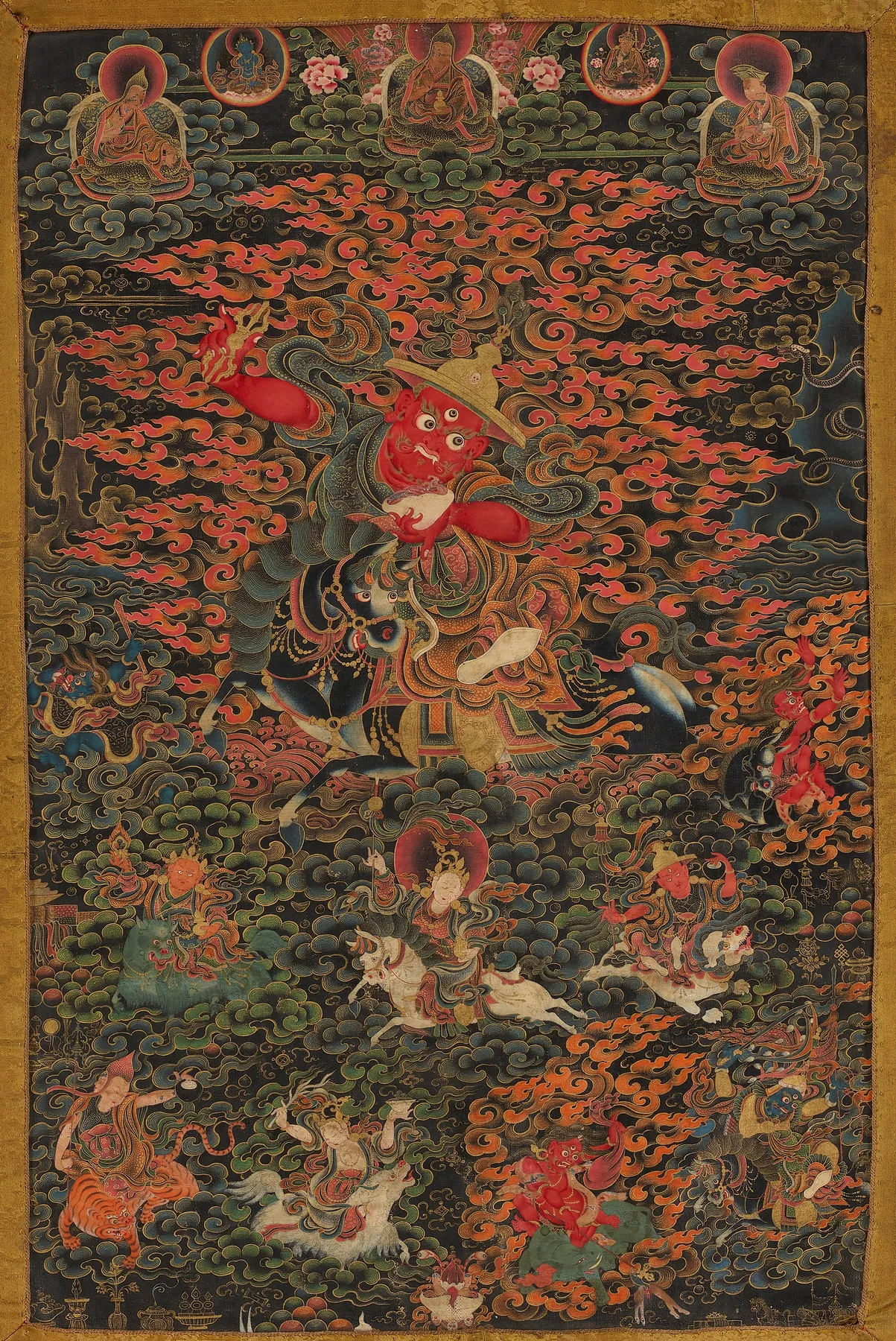
Pehar is the leader of the gyalpo, or ‘king’, spirits and one of the most important worldly protectors of Tibetan Buddhism. Tradition holds that he was a deity of the Bhata Hor people, north of Tibet, who was brought to Samye in the eighth century, subdued by Padmasambhava and appointed guardian of the monastery and its treasury. He manifests as Five Kings (Gyalpo Ku Nga), embodying body, speech, mind, qualities and activity, and it is the King of Activity that is usually meant by the name Pehar.
The King of Activity is white, with three faces and six arms, and rides a white snow lion with a green mane. The right hands hold a hook, an arrow and a sword; the left hold a knife, a bow and a staff. He wears a round, broad-brimmed hat, coloured silks, a necklace of severed heads and boots, and is surrounded by dark flames. The other four kings differ in colour and mount; in the usual account the King of Mind rides an elephant, the King of Body a lioness, the King of Qualities a horse and the King of Speech a mule.
In the seventeenth century, under the Fifth Dalai Lama, Pehar’s principal seat was fixed at Nechung, below Drepung Monastery near Lhasa, and his minister Dorje Drakden became the oracle of the Ganden Phodrang government; Tsiu Marpo succeeded him as guardian of Samye. Originally protectors of the Nyingma treasure tradition, the Five Kings were absorbed into the Gelug pantheon and appear in the lower register of many Gelug thangkas. Some traditions hold that Pehar has attained an advanced bodhisattva level.
In the collection
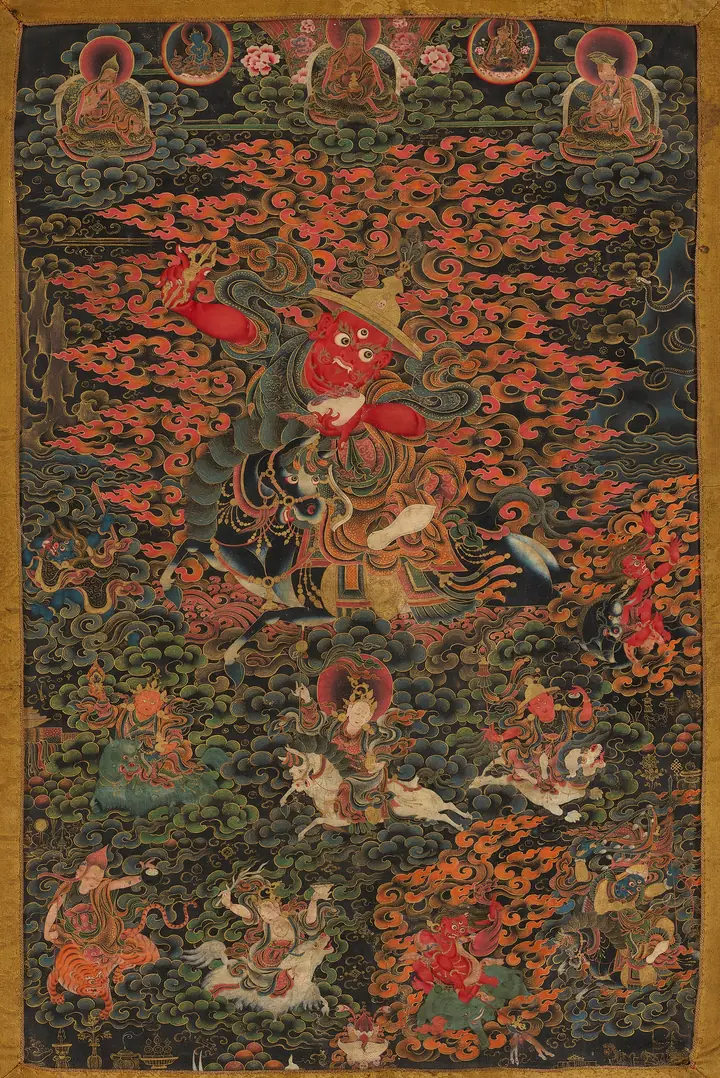
1 work in the collection depict or name Pehar.
Connections
10 linked records across the archive.
Sources
References consulted for this record.
- 01Pehar Main Page — Himalayan Art Resources
- 02Pehar Gyalpo — Wikipedia
- 03Gyalpo spirits — Wikipedia
- 04René de Nebesky-Wojkowitz, Oracles and Demons of Tibet (Mouton, 1956)