FT·TXT·006Sutra
Diamond Sutra
རྡོ་རྗེ་གཅོད་པ
Wylierdo rje gcod paSanskritVajracchedikā PrajñāpāramitāDatetranslated c. 800
The Diamond Sutra, the Perfection of Wisdom in three hundred lines, is a dialogue on emptiness that Tibetans copy and recite more often than almost any other scripture.
Also known asDiamond Cutter Sutra · Vajracchedika · Dorje Chopa · Perfection of Wisdom in 300 Lines
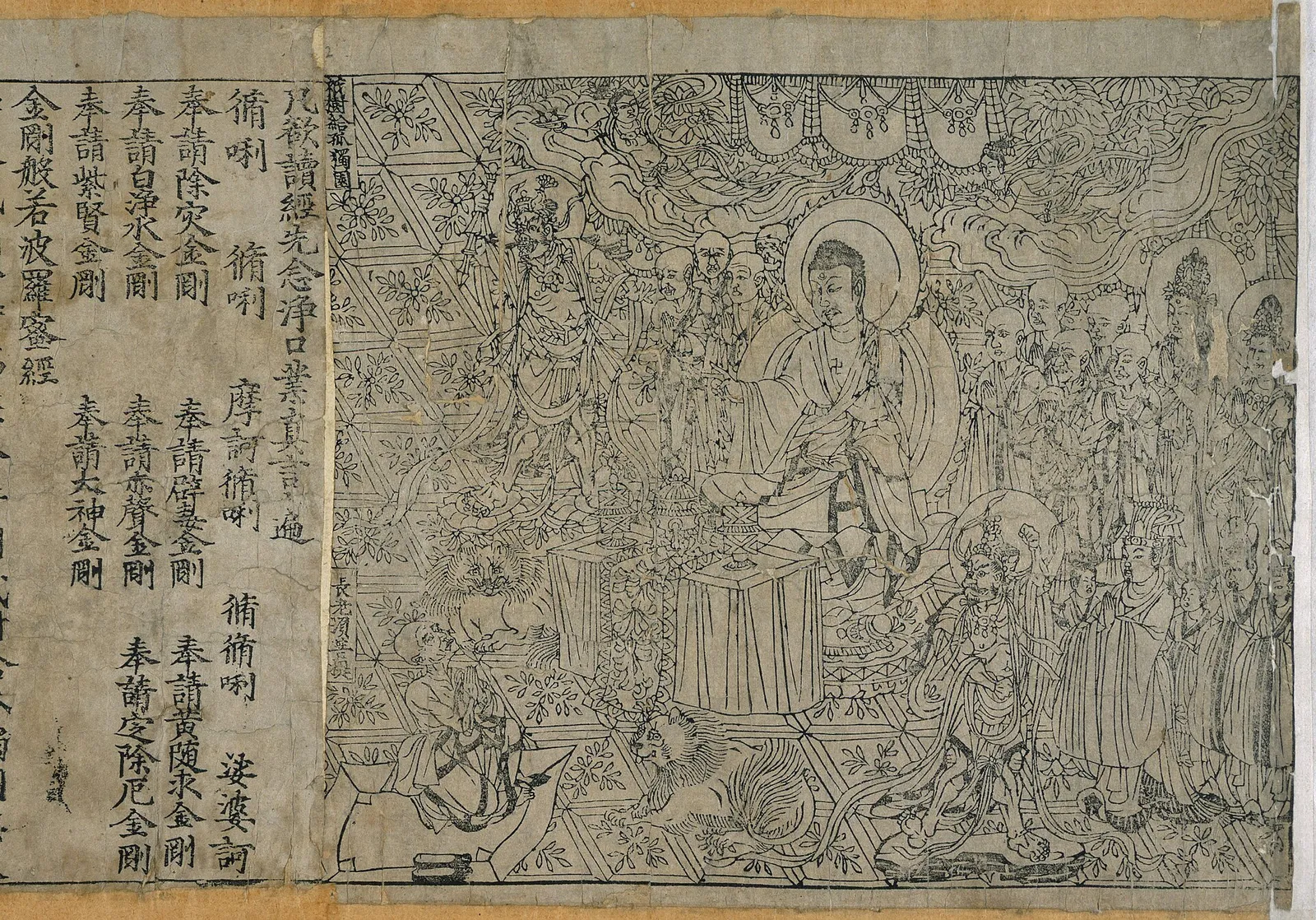
The Diamond Sutra is a short Perfection of Wisdom text whose Sanskrit title means the Diamond Cutter: wisdom that cuts through fixed ideas as a vajra or diamond cuts other stones. In it the Buddha teaches the monk Subhuti at Jetavana grove in Shravasti. A bodhisattva, he says, should vow to free all beings while holding no notion of a self, a being or a liberator. The closing verse compares all conditioned things to stars, a lamp, dew, a bubble, a dream, lightning and cloud.
The text is traditionally counted as three hundred lines, which gives it its alternative title. The canonical Tibetan translation was made around 800 by the Indian scholar Shilendrabodhi and the translator Yeshe De, and is catalogued as Tohoku number 16 in the Perfection of Wisdom section of the Kangyur. Sanskrit manuscripts survive from Gilgit and from the Bamiyan region. Among the Dunhuang finds is a Chinese copy printed in 868, now in the British Library, which is the oldest complete printed book bearing a date.
In Tibet the sutra is known as Dorje Chopa, and copying or sponsoring it is one of the most common ways of making merit. It is read for the sick and for the dead, and many households keep a copy on the altar. Gold-on-blue manuscript copies and inexpensive blockprints both exist in great numbers. The text repeatedly praises its own recitation and copying, which helps explain how widely it circulated across Buddhist Asia.
Connections
8 linked records across the archive.
Sources
References consulted for this record.
- 01Diamond Sutra — Wikipedia
- 02Paul Harrison, 'Vajracchedika Prajnaparamita: A New English Translation', in Buddhist Manuscripts in the Schoyen Collection III (Hermes, 2006)
- 03Dunhuang manuscripts — Wikipedia