FT·SYM·035Sacred Diagram & Mantra
Sand Mandala
རྡུལ་ཚོན་གྱི་དཀྱིལ་འཁོར
Wylierdul tshon gyi dkyil 'khorSanskritRajomaṇḍala
A mandala laid out grain by grain in coloured sand for an empowerment or blessing, then swept up and dispersed in water at the ceremony’s end.
Also known asDultsön Kyilkhor · Coloured Sand Mandala · Powder Mandala · Dul-tson-kyil-khor
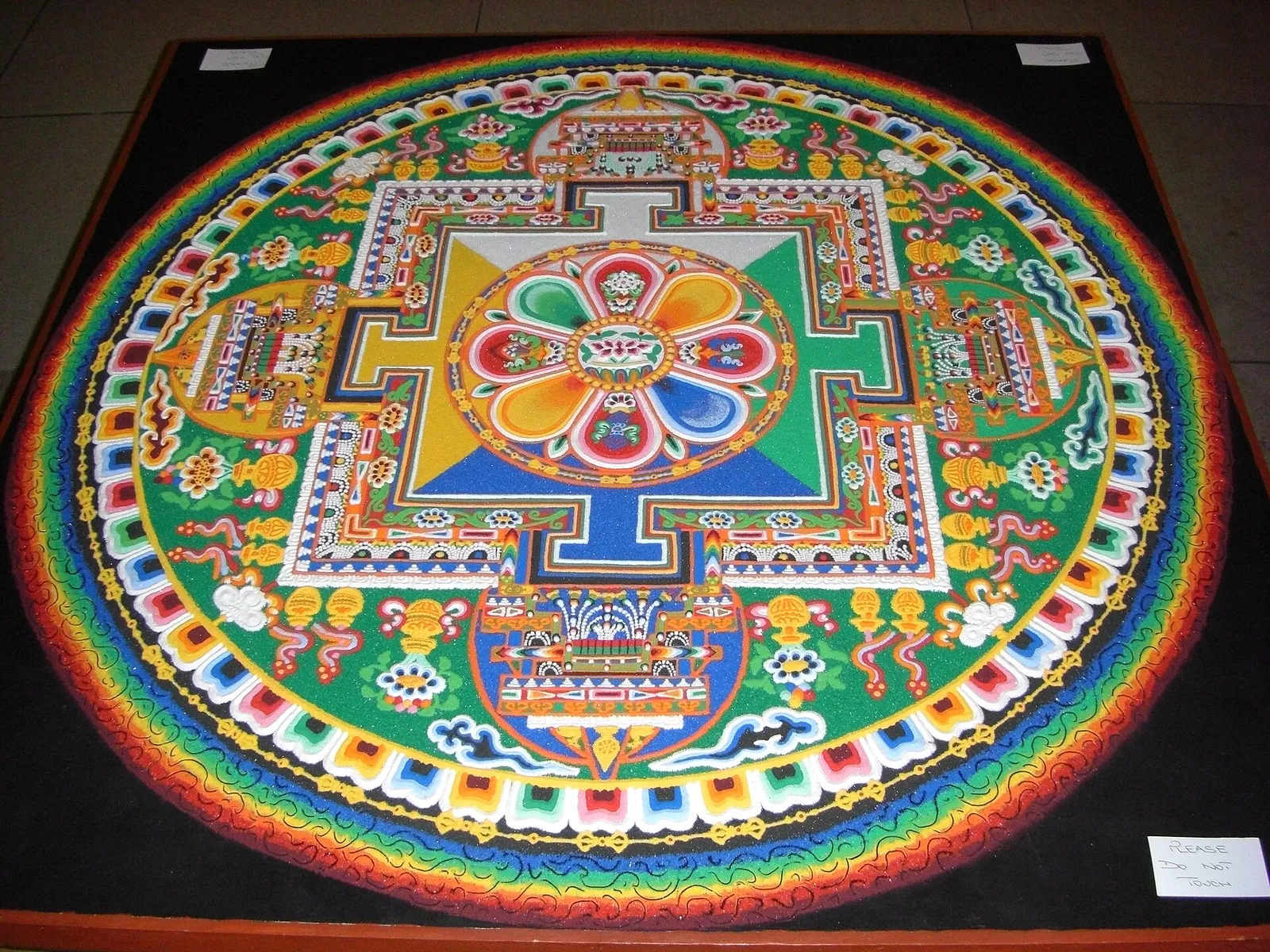
The sand mandala is the form of mandala that Indian and Tibetan ritual manuals treat as the most suitable basis for a major empowerment. Monks construct it over several days, the deities are invited to reside in it, the ceremony is performed, and the mandala is then dismantled. Its destruction is part of the rite and is often explained as a demonstration of impermanence. Because the Kalachakra empowerment is conferred from a sand mandala before large public gatherings, that design, with 722 deities, has become the best known.
The ground is a flat board. After consecrating the site, monks snap chalked strings to mark the axes and draw the full plan with compasses and rulers. The powder is finely crushed white stone dyed in a range of colours. It is poured through a long tapering metal funnel with a ridged surface, and rubbing a rod along the ridges makes the grains flow in a controlled trickle. Work proceeds from the centre outward, with several monks seated at the sides. Deities appear as dots, syllables or tiny emblems, and walls are built up in low relief.
At the conclusion the presiding master cuts through the design with a vajra, the sand is swept to the centre and placed in an urn, and part is distributed to those present. The rest is carried in procession to a river or lake and poured in, so that the blessing spreads through the water. Namgyal Monastery, the monastery of the Dalai Lamas, and the Gyuto and Gyume tantric colleges maintain the main Gelug traditions of the art. Since the late 1980s monks have also made sand mandalas in museums and public spaces around the world as a cultural presentation.
Connections
8 linked records across the archive.
Sources
References consulted for this record.
- 01Sand mandala — Wikipedia
- 02Mandala: Mandala Main Page — Himalayan Art Resources
- 03Barry Bryant, The Wheel of Time Sand Mandala: Visual Scripture of Tibetan Buddhism (HarperSanFrancisco, 1992)
- 04Martin Brauen, The Mandala: Sacred Circle in Tibetan Buddhism (Serindia, 1997)