FT·PLA·052Sacred Lake
Lake Manasarovar
མ་ཕམ་གཡུ་མཚོ
Wyliema pham g.yu mtshoSanskritMānasarovara
Freshwater lake at about 4,590 metres below Mount Kailash, revered by Hindus, Buddhists, Jains and Bonpos and circled on an 88-kilometre pilgrim route.
Also known asManasarovar · Mapham Yumtso · Mapam Yumco · Tso Mapham · Mansarovar
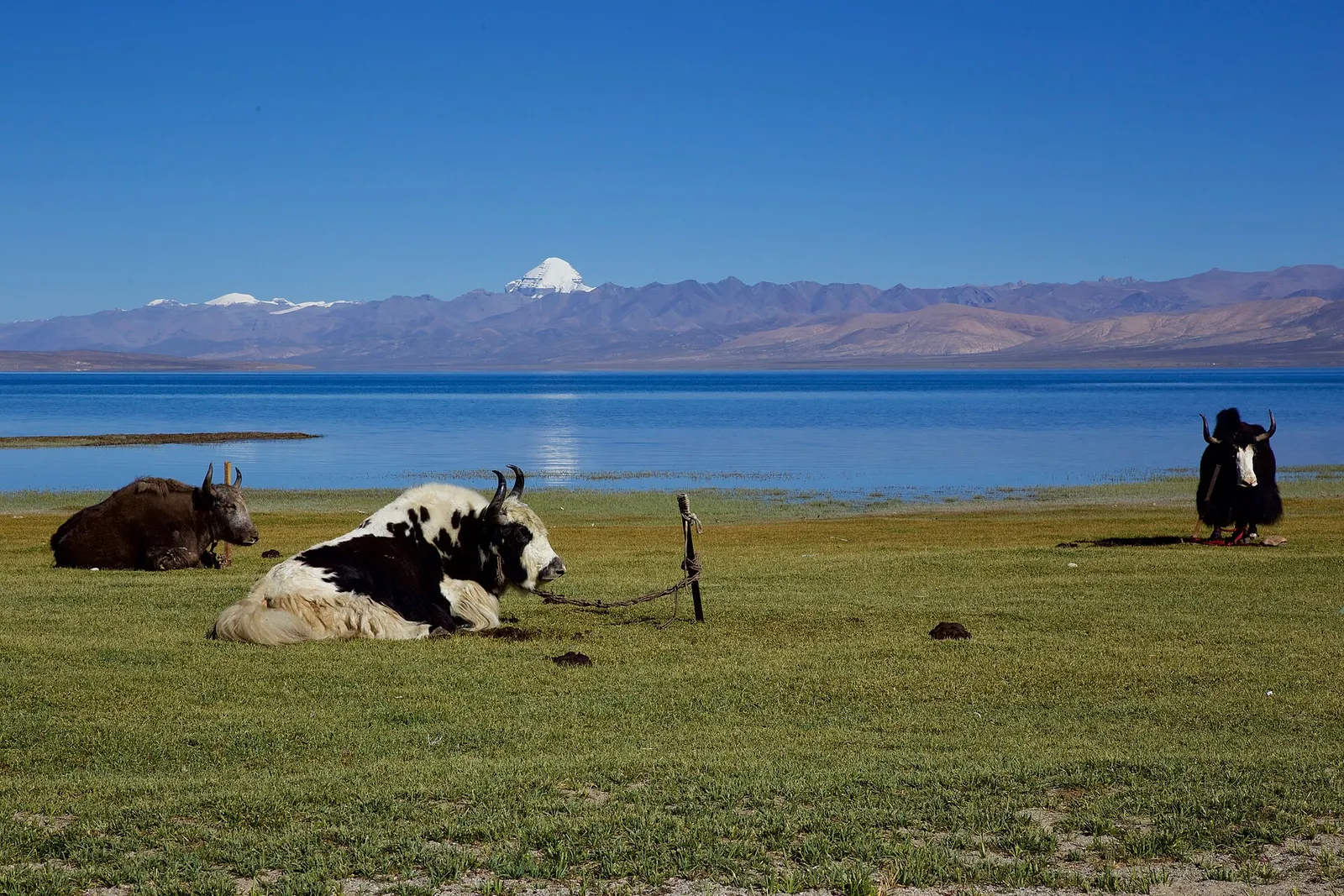
Lake Manasarovar lies some thirty kilometres south of Mount Kailash and forms with it the most celebrated pilgrimage landscape of the Tibetan plateau. Its Tibetan name, Mapham Yumtso, means ‘Unconquerable Turquoise Lake’. Hindu texts describe it as formed in the mind (manas) of the god Brahma, and bathing in it or drinking its water is held to cleanse wrongdoing. Buddhists identify it with Anavatapta, the cool lake at the centre of the world from which four great rivers flow, and Tibetan tradition says the Buddha’s mother bathed here before conceiving him.
The lake is nearly round, about 88 kilometres in circumference, with fresh, very clear water and a surface of roughly 400 square kilometres. The snow massif of Gurla Mandhata, 7,694 metres high, rises from its southern shore. A natural channel, the Ganga Chu, links it at times of high water to its western neighbour Rakshastal, a salt lake that tradition treats as its dark counterpart. Eight small monasteries once stood around the shore like the points of a wheel; the best known, Chiu, perches on a rock above the channel and contains a cave associated with Padmasambhava.
Pilgrims walk the circuit of the lake in four or five days, usually in combination with the kora of Kailash, though many now make it by vehicle on the road that follows part of the shore. Hindu pilgrims traditionally bathe at the water’s edge, while Tibetans more often drink or sprinkle the water and collect sand and pebbles as relics. The lakeside monasteries were destroyed in the Cultural Revolution and several, including Chiu, have been rebuilt. The lake and its wetlands are protected, and in recent years bathing has reportedly been restricted by the authorities on environmental grounds.
Connections
10 linked records across the archive.
Sources
References consulted for this record.
- 01Lake Manasarovar — Wikipedia
- 02John Snelling, The Sacred Mountain: Travellers and Pilgrims at Mount Kailas in Western Tibet (East-West Publications, 1990)
- 03Swami Pranavananda, Kailas–Manasarovar (S. P. League, 1949)