FT·ART·436Jewelry & Adornment
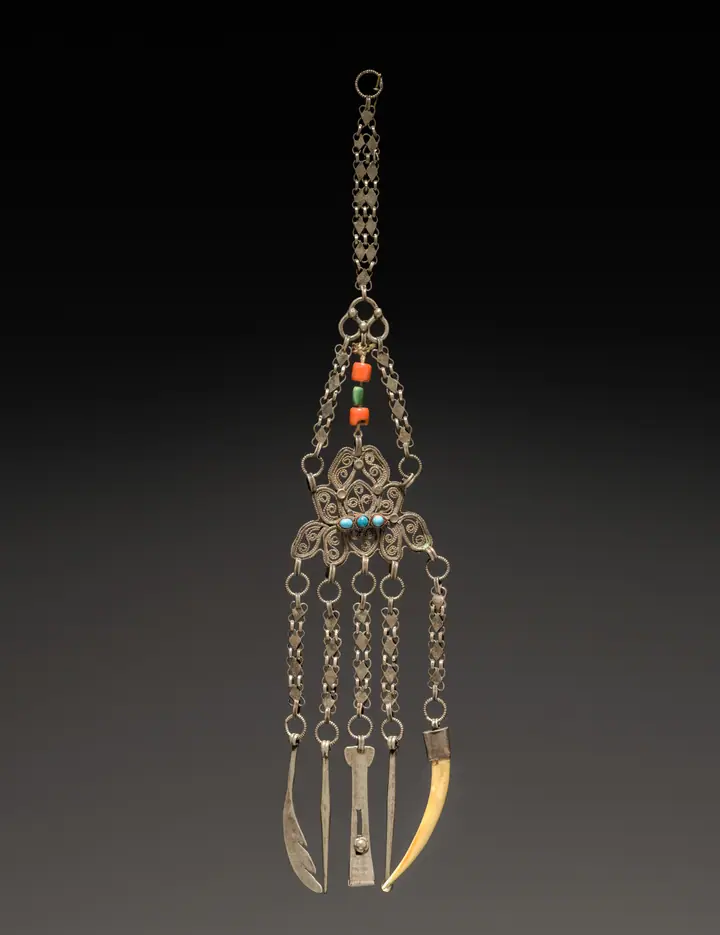
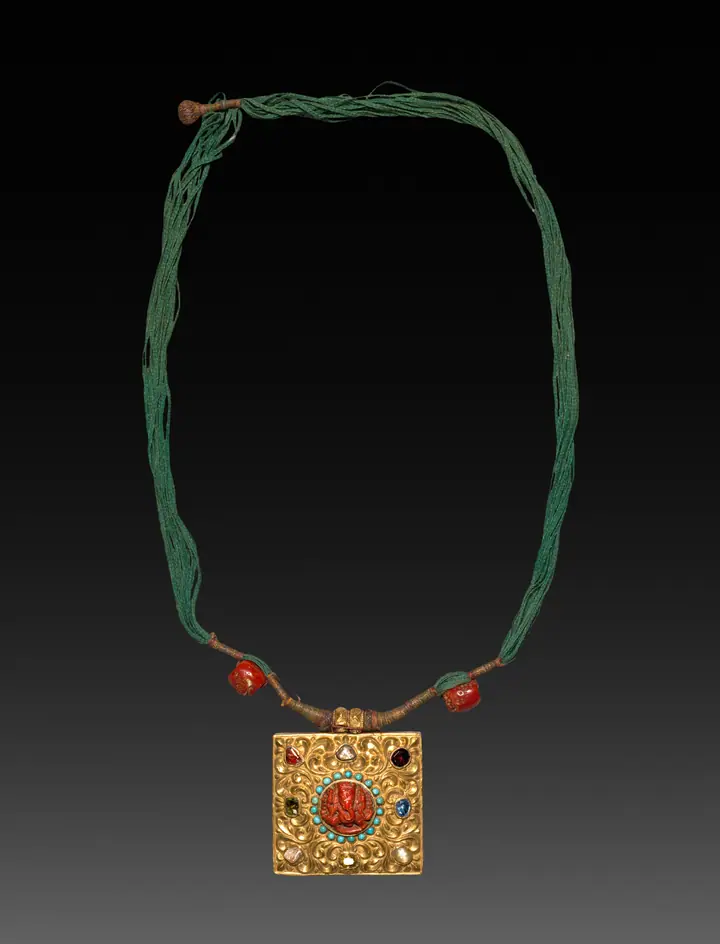
Girdle
1800s · Tibet(?)
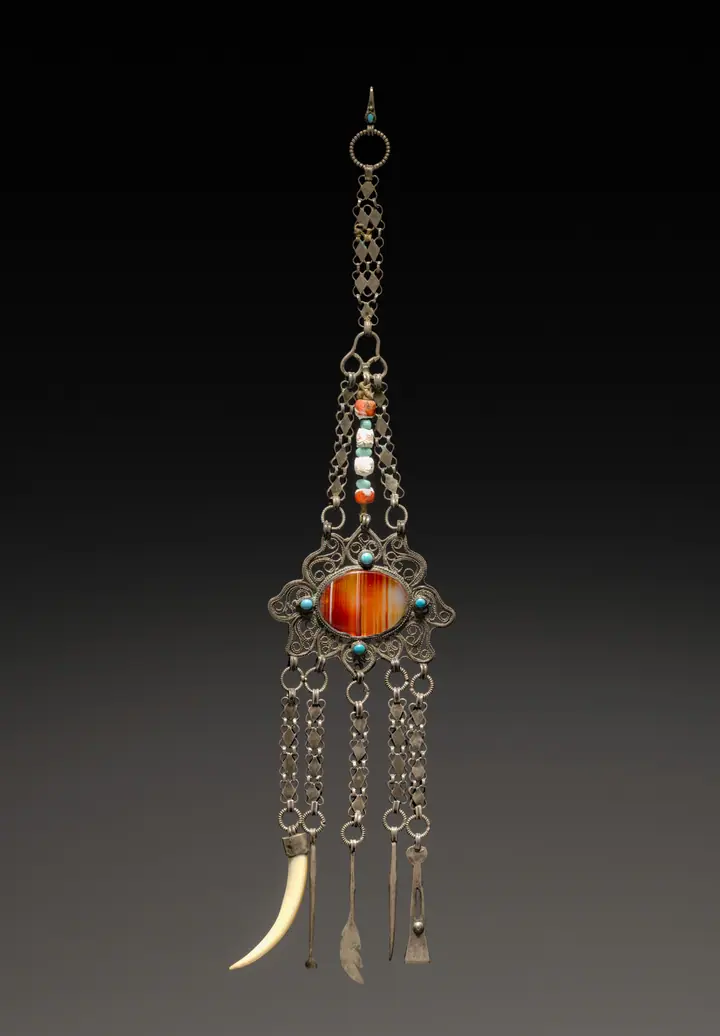
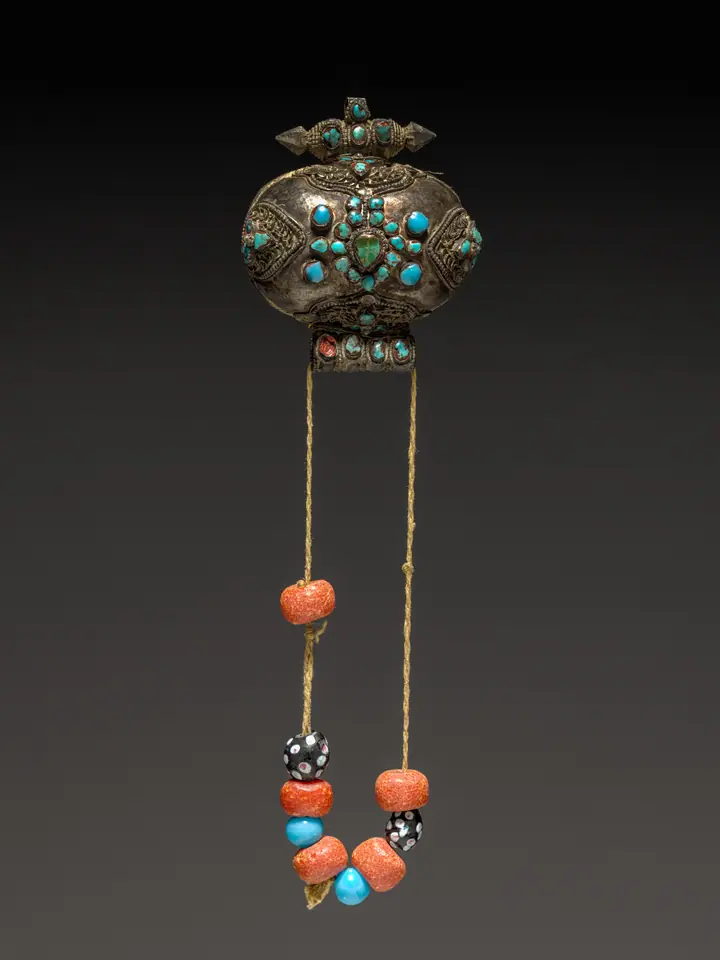
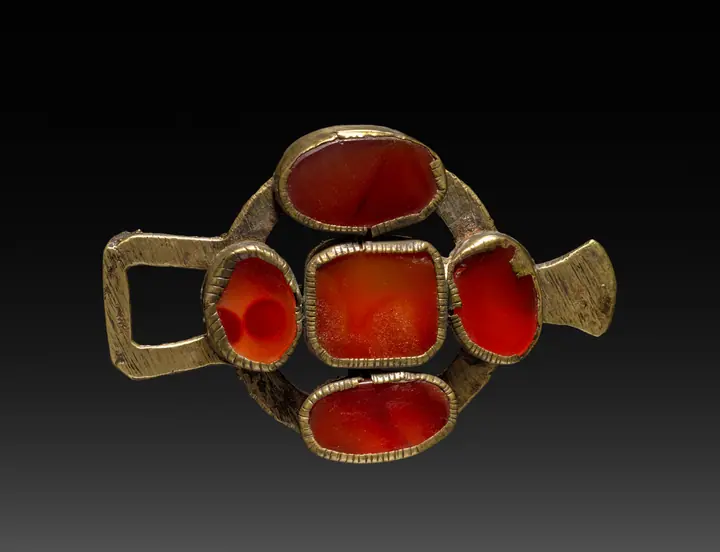
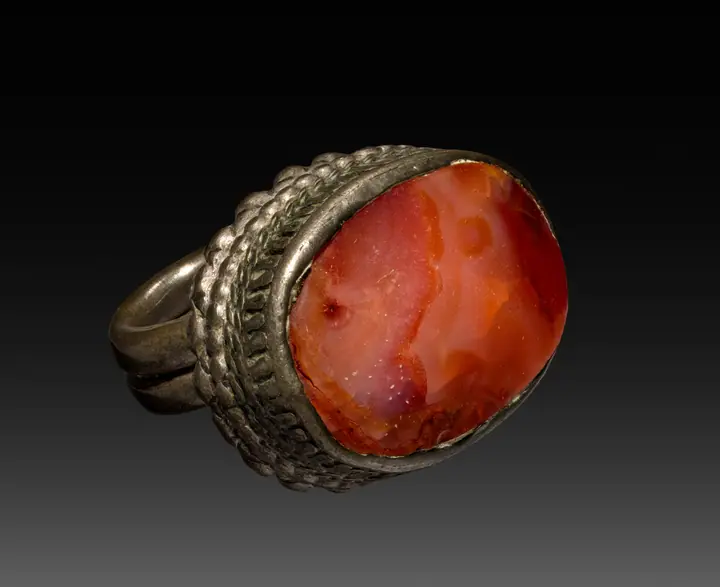
Tibetan girdles serve both as functional objects, to secure garments, and occasionally as protective adornments. Turquoise has long held protective associations in Tibet and is worn as a symbol of wealth. Jewelry and headdresses embedded with turquoise were commonly worn by Tibetan nobles, and the stone was central in social rituals involving gift giving, such as marriage. The demand for turquoise extended outside of the noble class, however, and lower quality turquoise was still used by poorer aristocrats and wealthy commoners. Tibet has historically obtained turquoise from the Hubei Province in Central China, though it may have also been imported from other mines in China and Iran for use in both religious and secular objects. This belt likely held protective, amuletic qualities for its wearer.
Text: The Cleveland Museum of Art, open-access catalogue.
- Date
- 1800s
- Culture
- Tibet(?)
- Medium
- silver with turquoise
- Dimensions
- Overall: 27.4 x 45.8 cm (10 13/16 x 18 1/16 in.)
- Classification
- Jewelry & Adornment
- Accession no.
- 1916.291
- Credit line
- Gift of Mr. and Mrs. J. H. Wade
- Holding museum
- The Cleveland Museum of Art
- Image rights
- Public domain (CC0)
Related works
Works that share a subject, a form or a century.