FT·ART·275Ritual & Decorative Object
Silver Vessels
c. late 600s–early 700s · Central Asia (Sogdiana) or Tibet
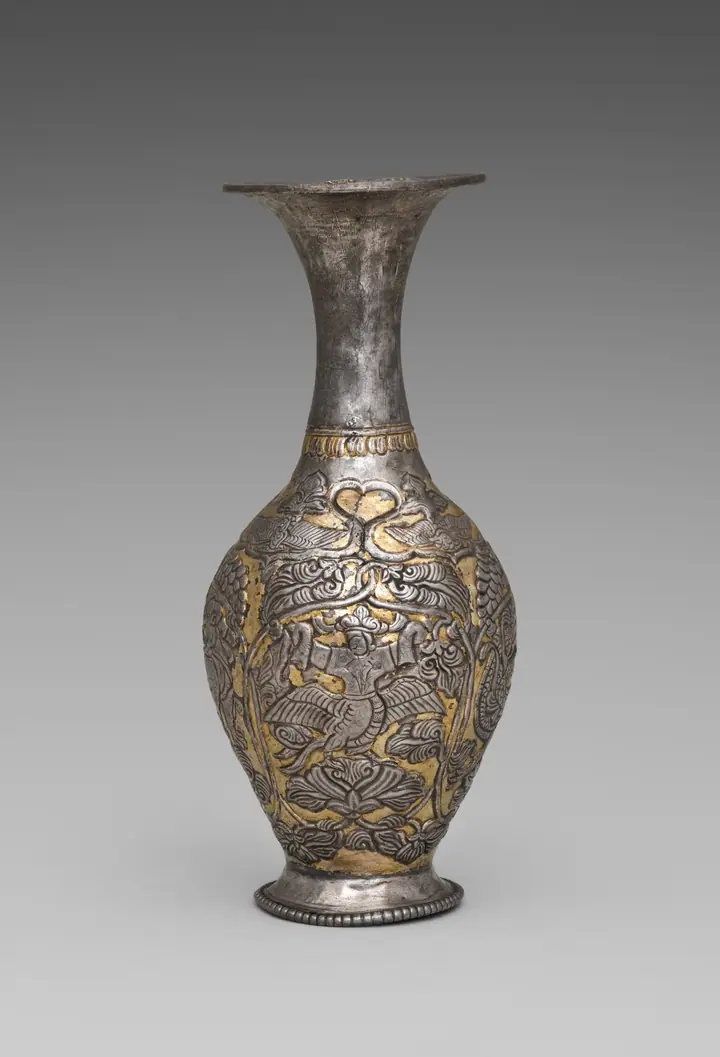
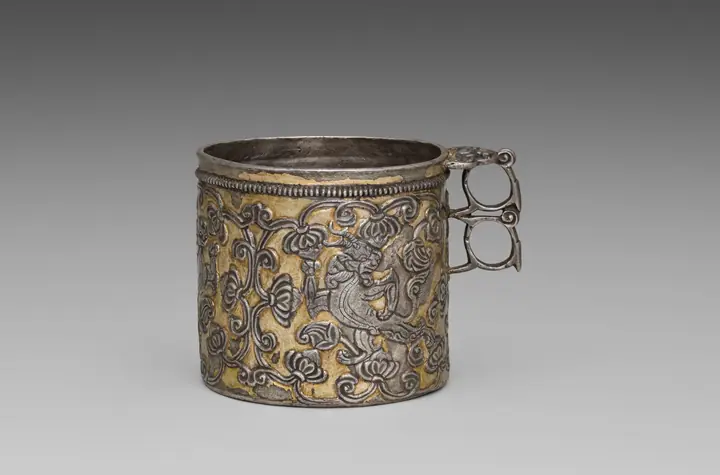
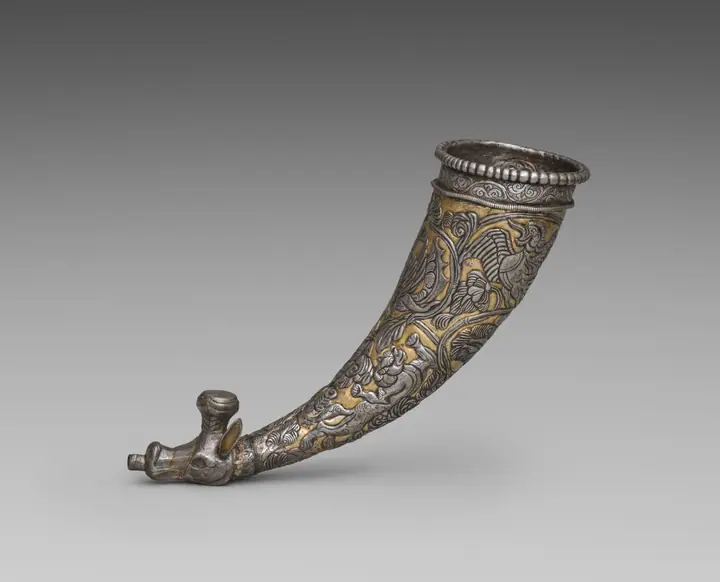
These vessels attest to the international climate that pervaded the regions of China, Tibet, and Central Asia during the time of the expansionist Tang dynasty (618–907). They are ornamented predominantly with Central Asian elements, including grape vines, beaded borders, heart-shaped motifs, and real and fantastic creatures. Stylistically, the Tibetan objects resemble the metalwork of Sogdian craftspeople, who came from the regions of modern-day Uzbekistan and Tajikistan and settled across Asia. These artists are known to have specialized in the technique of offsetting the silver repoussé design with gilded foil, using heat and pressure to adhere the foil to the silver surface of the vessel.
These banquet items may have been made specifically to be buried alongside a deceased person for use in the afterlife.
Text: The Cleveland Museum of Art, open-access catalogue.
- Date
- c. late 600s–early 700s
- Culture
- Central Asia (Sogdiana) or Tibet
- Medium
- Silver with gilded foil
- Dimensions
- Part 1: 22.9 cm (9 in.); Part 2: 10.2 x 10.2 cm (4 x 4 in.); Part 3: 500 g (1.1 lbs.)
- Classification
- Ritual & Decorative Object
- Accession no.
- 1988.67
- Credit line
- Purchase from the J. H. Wade Fund
- Holding museum
- The Cleveland Museum of Art
- Image rights
- Public domain (CC0)
Related works
Works that share a subject, a form or a century.