FT·ART·156Sculpture
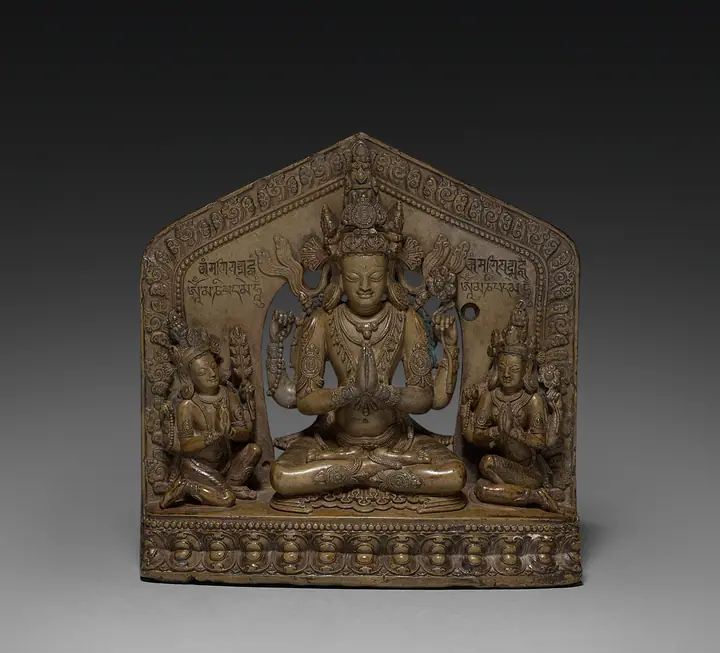
Bodhisattva Avalokitesvara
900–1200 · Himalyas, probably Tibet, 10th-12th century
This sculpture of a three-headed form of Avalokiteshvara, the Bodhisattva of Compassion, is a rare example of a wooden work surviving from such an early date. Conservation analysis shows that the wood, possibly padouk (also spelled padauk), was sourced from the Andaman Islands in the Bay of Bengal, which demonstrates that Tibetans engaged in international trade at this time. The back side is smooth and contains an opening with wrappings of fabric protruding with bits of paper, suggesting that it may have originally contained relics.
Holes left from wooden pegs indicate the figure originally had more arms and an additional level of heads.
Text: The Cleveland Museum of Art, open-access catalogue.
- Date
- 900–1200
- Culture
- Himalyas, probably Tibet, 10th-12th century
- Medium
- wood
- Dimensions
- Overall: 43.8 cm (17 1/4 in.)
- Classification
- Sculpture
- Accession no.
- 1988.66
- Credit line
- Andrew R. and Martha Holden Jennings Fund
- Holding museum
- The Cleveland Museum of Art
- Image rights
- Public domain (CC0)
Depicted and related
Related works
Works that share a subject, a form or a century.
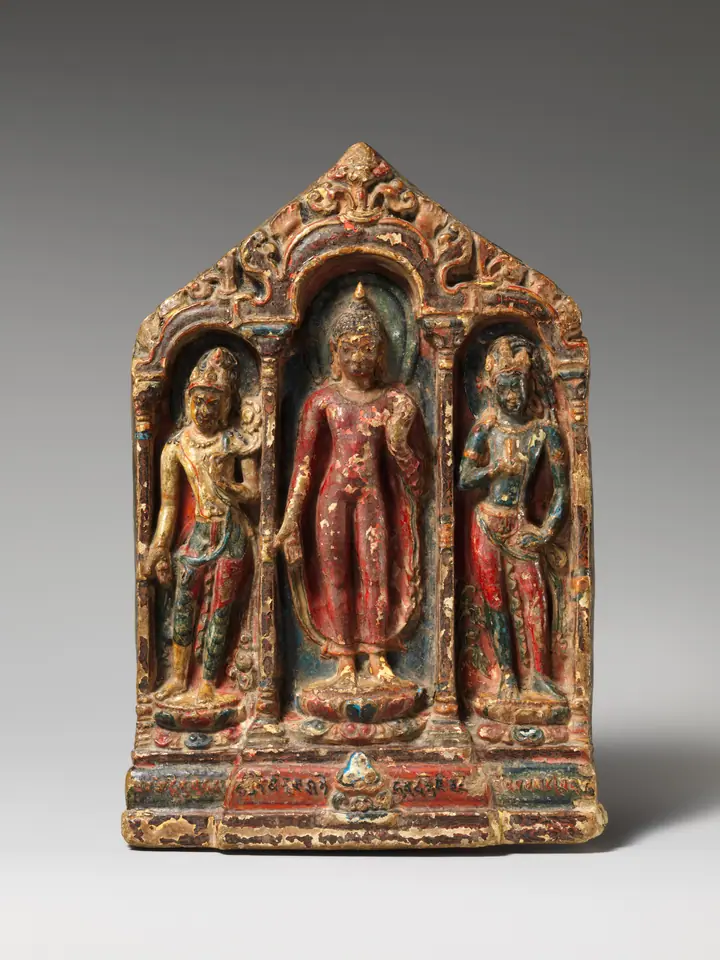
Buddha flanked by Avalokiteshvara-Padmapani and Vajrapani
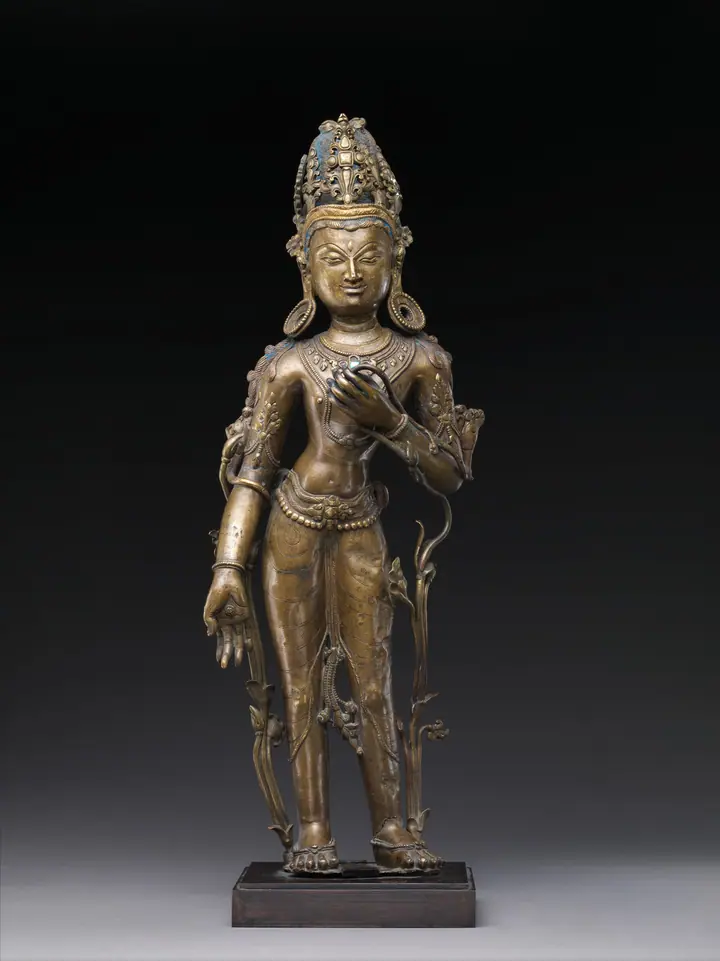
The Bodhisattva Avalokiteshvara in the Form of Padmapani, the Lotus Bearer
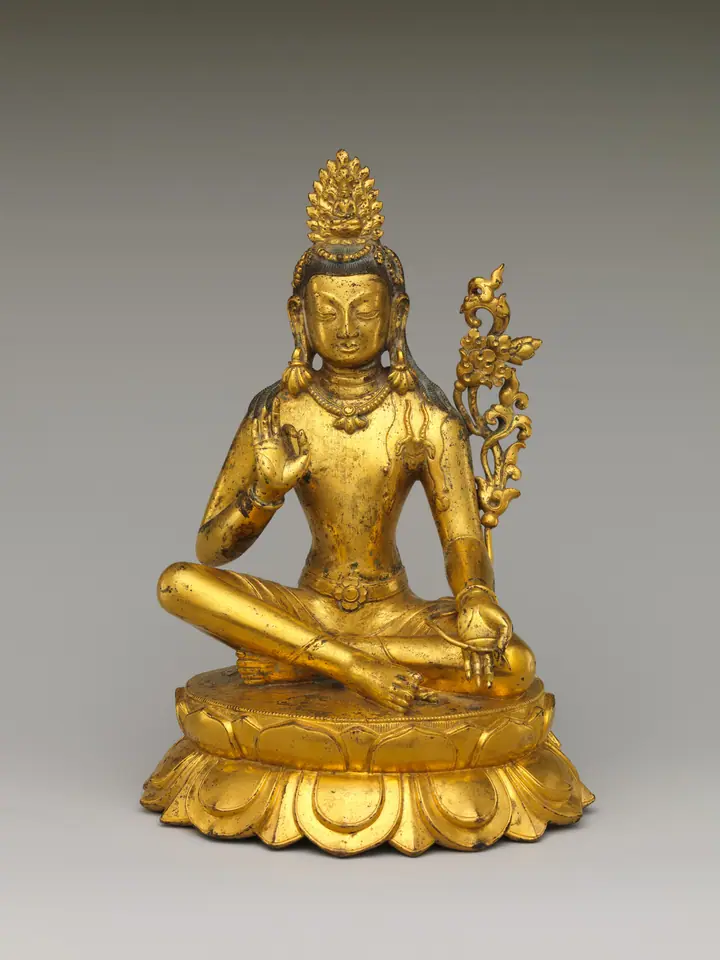
Seated Avalokiteshvara, the Buddha of Infinite Compassion
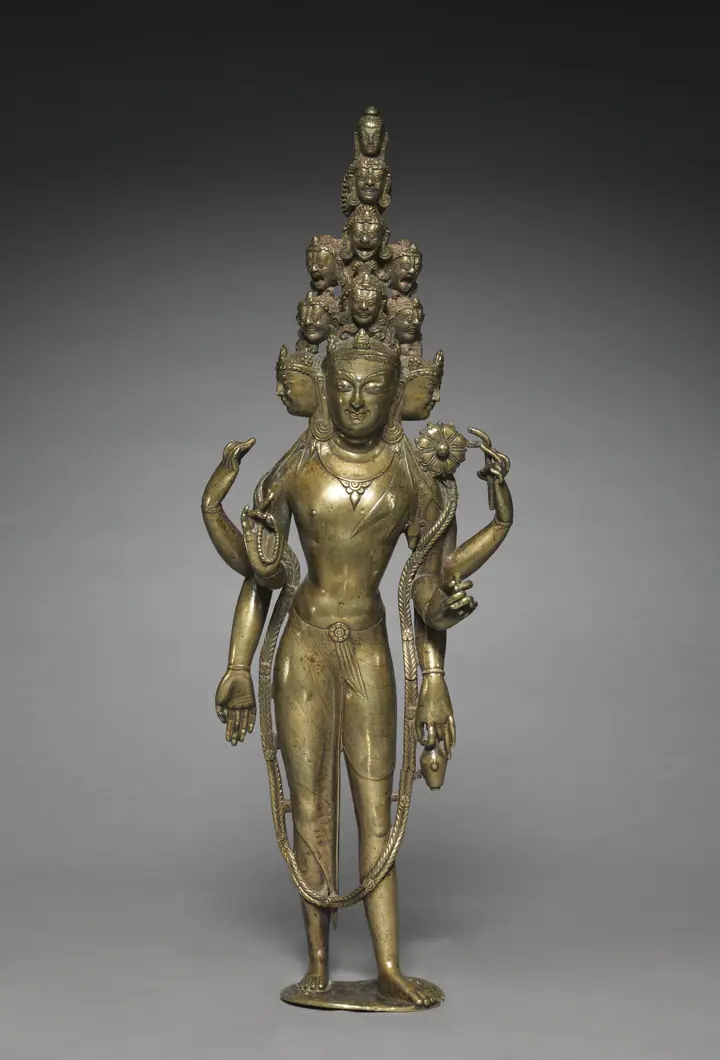
Eleven-Headed Bodhisattva of Compassion (Avalokiteshvara)
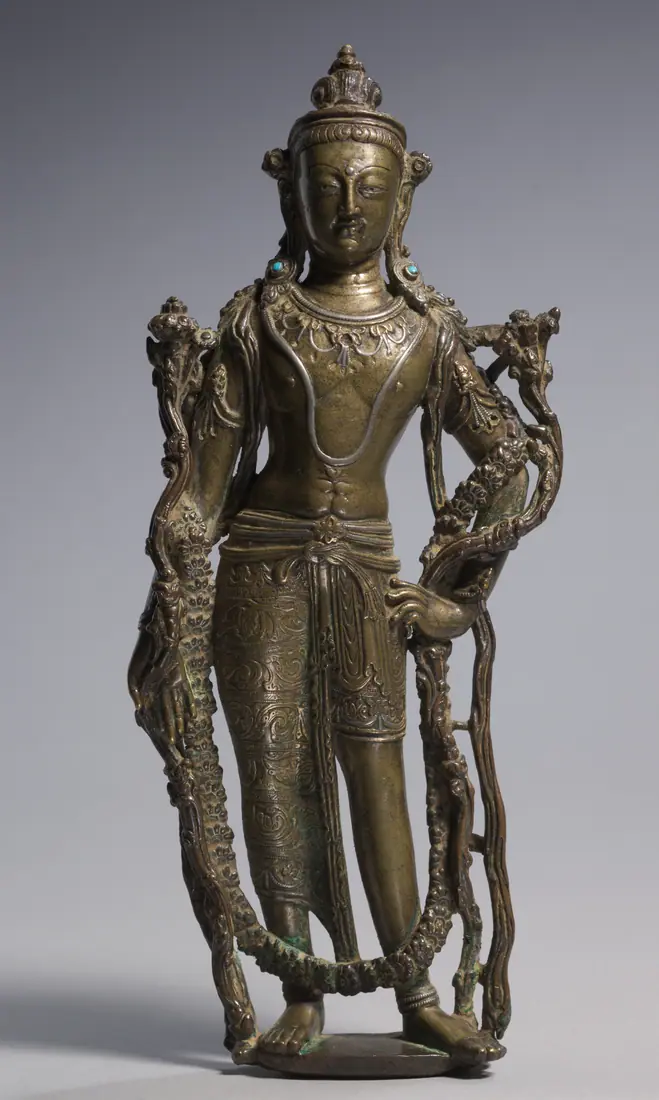
Bodhisattva Padmapani